Margins
The Selected Letters of John Berryman book cover
The Selected Letters of John Berryman
2020
First Published
4.42
Average Rating
736
Number of Pages

A wide-ranging, first-of-its-kind selection of Berryman’s correspondence with friends, loved ones, writers, and editors, showcasing the turbulent, fascinating life and mind of one of America’s major poets. The Selected Letters of John Berryman assembles for the first time the poet’s voluminous correspondence. Beginning with a letter to his parents in 1925 and concluding with a letter sent a few weeks before his death in 1972, Berryman tells his story in his own words. Included are more than 600 letters to almost 200 people―editors, family members, students, colleagues, and friends. The exchanges reveal the scope of Berryman’s ambitions, as well as the challenges of practicing his art within the confines of the publishing industry and contemporary critical expectations. Correspondence with Ezra Pound, Robert Lowell, Delmore Schwartz, Adrienne Rich, Saul Bellow, and other writers demonstrates Berryman’s sustained involvement in the development of literary culture in the postwar United States. We also see Berryman responding in detail to the work of writers such as Carolyn Kizer and William Meredith and encouraging the next generation―Edward Hoagland, Valerie Trueblood, and others. The letters show Berryman to be an energetic and generous interlocutor, but they also make plain his struggles with personal and familial trauma, at every stage of his career. An introduction by editors Philip Coleman and Calista McRae explains the careful selection of letters and contextualizes the materials within Berryman’s career. Reinforcing the critical and creative interconnectedness of Berryman’s work and personal life, The Selected Letters confirms his place as one of the most original voices of his generation and opens new horizons for appreciating and interpreting his poems.
Avg Rating
4.42
Number of Ratings
12
5 STARS
58%
4 STARS
25%
3 STARS
17%
2 STARS
0%
1 STARS
0%
goodreads

Author

John Berryman
John Berryman
Author · 20 books

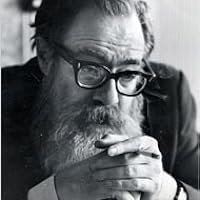
John Allyn Berryman (originally John Allyn Smith) was an American poet, born in McAlester, Oklahoma. He was a major figure in American poetry in the second half of the 20th century and often considered one of the founders of the Confessional school of poetry. He was the author of The Dream Songs, which are playful, witty, and morbid. Berryman committed suicide in 1972. A pamphlet entitled Poems was published in 1942 and his first proper book, The Dispossessed, appeared six years later. Of his youthful self he said, 'I didn't want to be like Yeats; I wanted to be Yeats.' His first major work, in which he began to develop his own unique style of writing, was Homage to Mistress Bradstreet, which appeared in Partisan Review in 1953 and was published as a book in 1956. Another pamphle. His thought made pockets & the plane buckt, followed. It was the collection called Dream Songs that earned him the most admiration. The first volume, entitled 77 Dream Songs, was published in 1964 and won the Pulitzer Prize for poetry. The second volume, entitled His Toy, His Dream, His Rest, appeared in 1968. The two volumes were combined as The Dream Songs in 1969. By that time Berryman, though not a "popular" poet, was well established as an important force in the literary world, and he was widely read among his contemporaries. In 1970 he published the drastically different Love & Fame. It received many negative reviews, along with a little praise, most notably from Saul Bellow and John Bailey. Despite its negative reception, its colloquial style and sexual forthrightness have influenced many younger poets, especially from Britain and Ireland. Delusions Etc., his bleak final collection, which he prepared for printing but did not live to see appear, continues in a similar vein. Another book of poems, Henry's Fate, culled from Berryman's manuscripts, appeared posthumously, as did a book of essays, The Freedom of the Poet, and some drafts of a novel, Recovery. The poems that form Dream Songs involve a character who is by turns the narrator and the person addressed by a narrator. Because readers assumed that these voices were the poet speaking directly of himself, Berryman's poetry was considered part of the Confessional poetry movement. Berryman, however, scorned the idea that he was a Confessional poet.

548 Market St PMB 65688, San Francisco California 94104-5401 USA
© 2026 Paratext Inc. All rights reserved