Margins




548 Market St PMB 65688, San Francisco California 94104-5401 USA
© 2026 Paratext Inc. All rights reserved
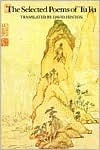
Tu Fu radically altered poetry as he found it in the High T’ang period. In addition to making formal innovations in language and structure, he extended the range of acceptable subject matter to include all aspects of public and private experience, thus becoming in the words of translator David Hinton, “the first complete poetic sensibility in Chinese literature.” This edition of The Selected Poems of Tu Fu is the only comprehensive selection of the poet's work currently available in English. While retaining a scholar's devotion to the text, Hinton has attempted “to recreate Tu Fu's poems as new systems of uncertainty." By reflecting all the ambiguity and density of the originals, he has created compelling English poems that significantly alter our conception of Chinese poetry. Included with the poems are the translator’s introduction and translation principles. as well as a biography of Tu Fu; together these provide a fascinating portrait of a uniquely sensitive spirit during one of the most tumultuous periods in Chinese history.