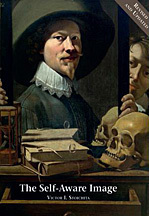
This text challenges the received ideas about the linear progression of Western painting, from the Renaissance, through Mannerism to the Baroque. Eschewing questions of style, it focuses instead on the painting as a framed, transportable and marketable object that is a specifically modern artistic medium. Arguing that panel painting, from its origins in the Early Renaissance, was a self-aware image, Stoichita demonstrates that the artists and his art were often the theme of the painting. The also examines the mirror effect and other splitting strategies such as the mise en abime and intertextual play. By analyzing these modalities of self-reflection, Stoichita offers a view of a period and the art it produced once considered to have been definitively classified.