Margins
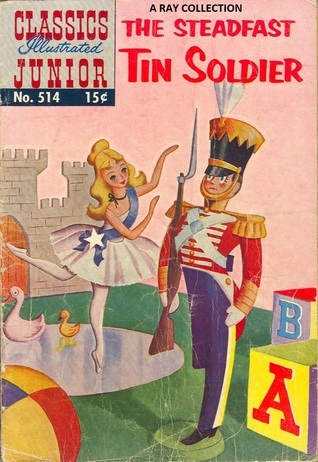
The Steadfast Tin Soldier book cover
The Steadfast Tin Soldier
1955
First Published
3.77
Average Rating
36
Number of Pages
Avg Rating
3.77
Number of Ratings
13
5 STARS
23%
4 STARS
38%
3 STARS
31%
2 STARS
8%
1 STARS
0%
goodreads

Authors

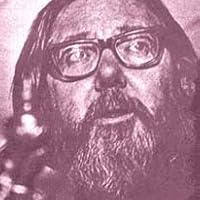
Dik Browne
Dik Browne
Author · 19 books

Dik Browne was born Richard Arthur Allan Browne in New York City. He was a popular cartoonist, best known for writing and drawing Hägar the Horrible and for drawing Hi and Lois. In the 1940s he worked as an illustrator for Newsweek as well as for an advertising company, where he created the trademark logo for Chiquita. In 1954 Browne and cartoonist Mort Walker co-created the comic strip Hi and Lois, a spin-off of Walker's popular Beetle Bailey strip, featuring Beetle's sister, brother-in-law, and their family. Walker wrote the strip, which Browne illustrated until his death. The series is now drawn by his son Chance and written by Walker's sons. In 1973 Browne created Hägar the Horrible about an ill-mannered red-bearded medieval viking. The comic is now produced by his son Chris. Both strips have been very successful, appearing in hundreds of newspapers each for decades. He was recognized for his work by the National Cartoonist Society with their Humor Comics Strip Award in 1959, 1960, 1972, and 1977 for Hi and Lois, and again in 1984 and 1986 for Hägar the Horrible. He also received their Reuben Award for Hi and Lois in 1962, for Hägar the Horrible in 1973, and their Elzie Segar Award in 1973. He died in Sarasota, Florida.

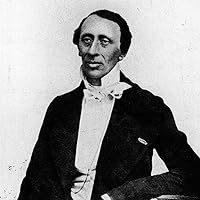
Hans Christian Andersen
Author · 318 books

Hans Christian Andersen (often referred to in Scandinavia as H.C. Andersen) was a Danish author and poet. Although a prolific writer of plays, travelogues, novels, and poems, Andersen is best remembered for his fairy tales. Andersen's popularity is not limited to children; his stories—called eventyr, or "fairy-tales" — express themes that transcend age and nationality. Andersen's fairy tales, which have been translated into more than 125 languages, have become culturally embedded in the West's collective consciousness, readily accessible to children, but presenting lessons of virtue and resilience in the face of adversity for mature readers as well. Some of his most famous fairy tales include "The Little Mermaid", "The Ugly Duckling", "The Nightingale", "The Emperor's New Clothes" and many more. His stories have inspired plays, ballets, and both live-action and animated films.

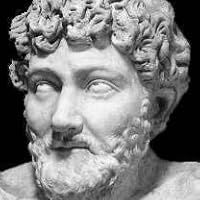
Aesop
Aesop
Author · 56 books

620 BC - 564 BC Tradition considers Greek fabulist Aesop as the author of Aesop's Fables , including "The Tortoise and the Hare" and "The Fox and the Grapes." This credited ancient man told numerous now collectively known stories. None of his writings, if they ever existed, survive; despite his uncertain existence, people gathered and credited numerous tales across the centuries in many languages in a storytelling tradition that continues to this day. Generally human characteristics of animals and inanimate objects that speak and solve problems characterize many of the tales. One can find scattered details of his life in ancient sources, including Aristotle, Herodotus, and Plutarch. An ancient literary work, called The Aesop Romance tells an episodic, probably highly fictional version of his life, including the traditional description of him as a strikingly ugly slave (δοῦλος), whose cleverness acquires him freedom as an adviser to kings and city-states. Older spellings of his name included Esop(e) and Isope. A later tradition, dating from the Middle Ages, depicts Aesop as a black Ethiopian. Depictions of Aesop in popular culture over the last two and a half millennia included several works of art and his appearance as a character in numerous books, films, plays, and television programs. Abandoning the perennial image of Aesop as an ugly slave, the movie Night in Paradise (1946) cast Turhan Bey in the role, depicting Aesop as an advisor to Croesus, king; Aesop falls in love with a Persian princess, the intended bride of the king, whom Merle Oberon plays. Lamont Johnson also plays Aesop the Helene Hanff teleplay Aesop and Rhodope (1953), broadcast on hallmark hall of fame. Brazilian dramatist Guilherme Figueiredo published A raposa e as uvas ("The Fox and the Grapes"), a play in three acts about the life of Aesop, in 1953; in many countries, people performed this play, including a videotaped production in China in 2000 under the title Hu li yu pu tao or 狐狸与葡萄 . Beginning in 1959, animated shorts under the title Aesop and Son recurred as a segment in the television series Rocky and His Friends and The Bullwinkle Show, its successor. People abandoned the image of Aesop as ugly slave; Charles Ruggles voiced Aesop, a Greek citizen, who recounted for the edification of his son, Aesop Jr., who then delivered the moral in the form of an atrocious pun. In 1998, Robert Keeshan voiced him, who amounted to little more than a cameo in the episode "Hercules and the Kids" in the animated television series Hercules. In 1971, Bill Cosby played him in the television production Aesop's Fables. British playwright Peter Terson first produced the musical Aesop's Fables in 1983. In 2010, Mhlekahi Mosiea as Aesop staged the play at the Fugard theatre in Cape Town, South Africa.

548 Market St PMB 65688, San Francisco California 94104-5401 USA
© 2026 Paratext Inc. All rights reserved