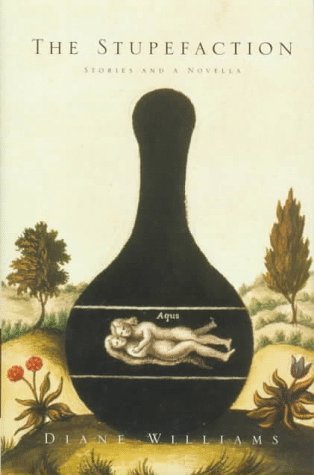
Praising her ingenious subversions of the conventions of narrative. The New York Times has called Diane Williams "a master spy, a double agent in the house of fiction." In this book she broadens the riotously disruptive program of her earlier collections. piecing together stories out of jagged shards of consciousness to give form to our most complicated longings. In the title novella, Williams offers her version of A woman runs off with a man on an enchanted journey across an enchanted landscape to an enchanted house, where their time is spent proving all the pleasures—eating, drinking, bathing, slumbering, and coupling—and where fantastic creatures, ravishing objects, and enthralling notions present themselves. But this sensual, blissful tale also becomes, in the female narrator's artful telling, a vehicle of discovery as she passes from state to state eluding our expectations of her. The novella, Williams' first longer work, is accompanied by forty-nine short pieces, all of them superbly wry and knowing instances of the "sudden fiction" for which she is renowned. The Stupefaction is a stunning illumination of the heart and mind from one of our most innovative and audacious writers.
Author
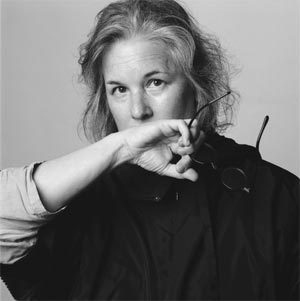
Diane Williams is an American author, primarily of short stories. She lives in New York City and is the founder and editor of the literary annual NOON (est. 2000). She has published 8 books and taught at Bard College, Syracuse University and The Center for Fiction in New York City. Her books have been reviewed in many publications, including the New York Times Book Review ("An operation worthy of a master spy, a double agent in the house of fiction") and The Los Angeles Times ("One of America's most exciting violators of habit is [Diane] Williams…the extremity that Williams depicts and the extremity of the depiction evoke something akin to the pity and fear that the great writers of antiquity considered central to literature. Her stories, by removing you from ordinary literary experience, place you more deeply in ordinary life. 'Isn't ordinary life strange?' they ask, and in so asking, they revivify and console”). Jonathan Franzen describes her as "one of the true living heroes of the American avant-garde. Her fiction makes very familiar things very, very weird." Ben Marcus suggested that her "outrageous and ferociously strange stories test the limits of behavior, of manners, of language, and mark Diane Williams as a startlingly original writer worthy of our closest attention."