Margins
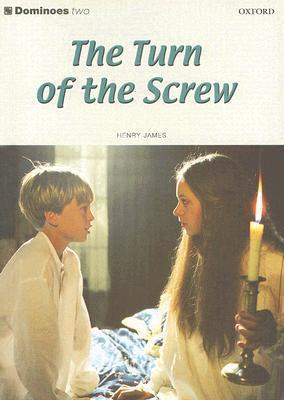
The Turn of the Screw book cover
The Turn of the Screw
1656
First Published
3.27
Average Rating
72
Number of Pages
A young woman arrives at a large country house. Her job is to look after the two children who live there, but she soon discovers that there is something very strange about both the house and the children. The longer she stays, the more she feels that the two children are in danger - or is it that the children are the danger, and the person in danger is herself?

Avg Rating
3.27
Number of Ratings
59
5 STARS
17%
4 STARS
20%
3 STARS
37%
2 STARS
24%
1 STARS
2%
goodreads

Authors

Christine Lindop
Author · 9 books

Christine Lindop was born in New Zealand where she began her teaching career. She later taught EFL in France and Spain before settling in Great Britain, and has worked as an editor, proofreader, and writer since 1993. With Oxford University Press, Christine has worked extensively on the Oxford Bookworms Library and is the Series Editor for Oxford Bookworms Factfiles. Her original titles include Sally's Phone and Red Roses (Starters), Ned Kelly: A True Story (Stage 1), and Australia and New Zealand (Stage 3). She has also adapted Goldfish (Stage 3) and two volumes of World Stories, The Long White Cloud: Stories from New Zealand (Stage 3) and Doors to a Wider Place: Stories from Australia (Stage 4), and edited A Tangled Web for the Oxford Bookworms Collection. She has worked on many other Oxford readers series as both an editor and a writer.

Henry James
Henry James
Author · 255 books

Henry James, OM (1843-1916), son of theologian Henry James Sr., brother of the philosopher and psychologist William James and diarist Alice James, was an American-born author, one of the founders and leaders of a school of realism in fiction. He spent much of his life in England and became a British subject shortly before his death. He is primarily known for a series of major novels in which he portrayed the encounter of America with Europe. His plots centered on personal relationships, the proper exercise of power in such relationships, and other moral questions. His method of writing from the point of view of a character within a tale allowed him to explore the phenomena of consciousness and perception, and his style in later works has been compared to impressionist painting. James insisted that writers in Great Britain and America should be allowed the greatest freedom possible in presenting their view of the world, as French authors were. His imaginative use of point of view, interior monologue and unreliable narrators in his own novels and tales brought a new depth and interest to realistic fiction, and foreshadowed the modernist work of the twentieth century. An extraordinarily productive writer, in addition to his voluminous works of fiction he published articles and books of travel writing, biography, autobiography, and criticism,and wrote plays, some of which were performed during his lifetime with moderate success. His theatrical work is thought to have profoundly influenced his later novels and tales.

548 Market St PMB 65688, San Francisco California 94104-5401 USA
© 2026 Paratext Inc. All rights reserved