



Sherwood Anderson was born on 13th September 1876 in Camden, Ohio. When his father’s business failed the family was forced to move on a regular basis before finally settling in Clyde, Ohio. Anderson, one of 7 children, left school at 14 to take a number of jobs to help with the family finances. These were difficult years. He moved to Chicago in search of opportunities before joining the Army for the US-Spanish War of 1898. He then entered Wittenberg Academy in Springfield, Ohio to complete his education before moving back to Chicago to take up a writing job. In 1904 he married Cornelia Lane, her family had resources and Anderson was keen, with this family backing, to run a business. The early years of their marriage produced 3 children but a nervous breakdown in 1907 and another in 1912, despite his success as a business entrepreneur, resulted in him abandoning his family and deciding that a literary career would be best for him. A move back to Chicago resulted in a job in advertising, a divorce from Cornelia and marriage to Tennessee Mitchell. That same year his first book ‘Windy McPherson’s Son’ was released and in 1919, his most famous book, ‘Winesburg, Ohio’, a collection of short stories about life in an Ohio town was released. Anderson continued to write short stories, novels and non-fiction but his only true bestseller came with ‘Dark Laughter’. His influence on writers that followed, from Faulkner to Hemingway, was immense. He also married a further two times. Sherwood Anderson died in in Colón, Panama, on the 8th March, 1941. He was 64. An autopsy revealed that a swallowed toothpick had resulted in peritonitis. His headstone epitaph reads ‘Life, Not Death is the Great Adventure.’
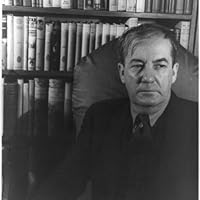
Author

Sherwood Anderson was an American writer who was mainly known for his short stories, most notably the collection Winesburg, Ohio. That work's influence on American fiction was profound, and its literary voice can be heard in Ernest Hemingway, William Faulkner, Thomas Wolfe, John Steinbeck, Erskine Caldwell and others. From PBS.org: Sherwood Anderson, (1876-1941), was an American short-story writer and novelist. Although none of his novels was wholly successful, several of his short stories have become classics. Anderson was a major influence on the generation of American writers who came after him. These writers included Ernest Hemingway, F. Scott Fitzgerald, and William Faulkner. Anderson thus occupies a place in literary history that cannot be fully explained by the literary quality of his work. Anderson was born on Sept. 13, 1876, in Camden, Ohio. He never finished high school because he had to work to support his family. By 1912, he was the successful manager of a paint factory in Elyria, Ohio, and the father of three children by the first of his four wives. In 1912, Anderson deserted his family and job. In early 1913, he moved to Chicago, where he devoted more time to his imaginative writing. He became a heroic model for younger writers because he broke with what they considered to be American materialism and convention to commit himself to art. Anderson's most important book is WINESBURG, OHIO (1919), a collection of 22 stories. The stories explore the lives of inhabitants of Winesburg, a fictional version of Clyde, Ohio, the small farm town where Anderson lived for about 12 years of his early life. These tales made a significant break with the traditional American short story. Instead of emphasizing plot and action, Anderson used a simple, precise, unsentimental style to reveal the frustration, loneliness, and longing in the lives of his characters. These characters are stunted by the narrowness of Midwestern small-town life and by their own limitations. read more