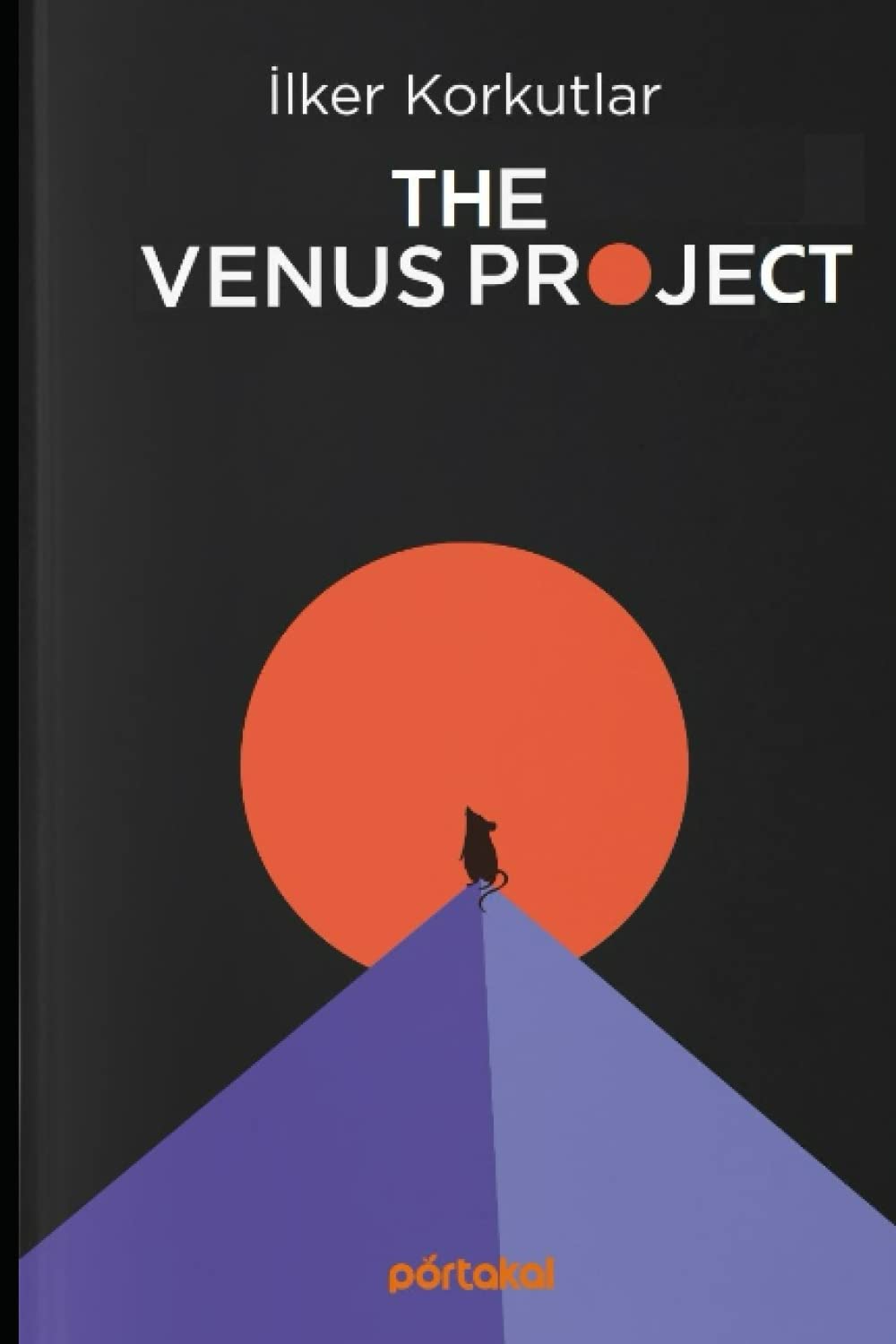



Her father was frozen when Derin Kaplan was six years old. A lot has changed in the world since then. The financial markets crashed when the quantum computer his father built intervened. Biological weapons killed almost all people. Derin and her mother survived and live in a female-only community in a building that rises like a platform above the sea. The year is 2044 and the cryogenic engineer Derin is working day and night to bring her father back to life. When he comes back, he will be three years older than her, but what does that change? He is still her father. She remembers his face from old videos, she set his voice as the voice of her personal robot. She misses him. Her mother asks her to think through this matter. Still, Derin is used to hearing all this. She is determined to do so. She manages to freeze and thaw one of the hamsters she's experimenting with, and one is still dead. There must be a difference in this process, she can't find it. She should ask AI, Quantus. Only she can help her. She won't give up, even if bringing her father back means that two of the women who have applied for a baby will be turned down. The system is very different. Unanimity voting is required, not the majority. She has to give a nice speech and convince the other women to bring her father back. However, when her own life is threatened by artificial intelligence, like other women, Derin begins to question everything she thought she knew until then and goes to see what is the object that appears and disappears in the sky. And the answers she finds will show her how all humanity came to earth and how they should live from now on. fiction; subgenre; end of civilization; existential; catastrophe; nuclear warfare; pandemic; extraterrestrial attack; impact event; cybernetic revolt; technological; singularity; dysgenics; supernatural; phenomena; divine; judgment; climate change; resource depletion; psychology; artificial; intelligence; Anunnaki; Sumerian; Egyptian
Authors


Orson Scott Card is the author of the novels Ender's Game, Ender's Shadow, and Speaker for the Dead, which are widely read by adults and younger readers, and are increasingly used in schools. Besides these and other science fiction novels, Card writes contemporary fantasy (Magic Street, Enchantment, Lost Boys), biblical novels (Stone Tables, Rachel and Leah), the American frontier fantasy series The Tales of Alvin Maker (beginning with Seventh Son), poetry (An Open Book), and many plays and scripts. Card was born in Washington and grew up in California, Arizona, and Utah. He served a mission for the LDS Church in Brazil in the early 1970s. Besides his writing, he teaches occasional classes and workshops and directs plays. He recently began a long-term position as a professor of writing and literature at Southern Virginia University. Card currently lives in Greensboro, North Carolina, with his wife, Kristine Allen Card, and their youngest child, Zina Margaret. For further details, see the author's Wikipedia page. For an ordered list of the author's works, see Wikipedia's List of works by Orson Scott Card. http://us.macmillan.com/author/orsons...

Ursula K. Le Guin published twenty-two novels, eleven volumes of short stories, four collections of essays, twelve books for children, six volumes of poetry and four of translation, and has received many awards: Hugo, Nebula, National Book Award, PEN-Malamud, etc. Her recent publications include the novel Lavinia, an essay collection, Cheek by Jowl, and The Wild Girls. She lived in Portland, Oregon. She was known for her treatment of gender (The Left Hand of Darkness, The Matter of Seggri), political systems (The Telling, The Dispossessed) and difference/otherness in any other form. Her interest in non-Western philosophies was reflected in works such as "Solitude" and The Telling but even more interesting are her imagined societies, often mixing traits extracted from her profound knowledge of anthropology acquired from growing up with her father, the famous anthropologist, Alfred Kroeber. The Hainish Cycle reflects the anthropologist's experience of immersing themselves in new strange cultures since most of their main characters and narrators (Le Guin favoured the first-person narration) are envoys from a humanitarian organization, the Ekumen, sent to investigate or ally themselves with the people of a different world and learn their ways.