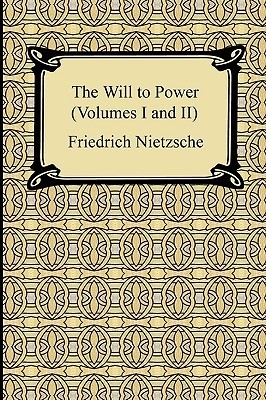
The Will to Power, Vols 1-2
2012
First Published
4.19
Average Rating
387
Number of Pages
First released in 1901, about one year after Nietzsche's death, "The Will to Power" is a collection of Nietzsche's unedited and unpublished writings. Though the title and all of the ideas are of the radical philosopher's own invention, the order and selection of Nietzsche's notebooks are due to the organization of his sister. As a result of his poor health, Nietzsche used his remaining energy to write a different work, leaving "The Will to Power" in the earliest stages of writing. The topics he explores vary widely and include nihilism, religion, morality, the theory of knowledge, and art. Some ideas are reflected in the works Nietzsche managed to complete in his lifetime, while others show his progression toward those ideas in his earlier life. Overall, "The Will to Power" is an opportunity to read the intellectual journaling of one of the nineteenth century's most brilliant thinkers.

Avg Rating
4.19
Number of Ratings
67
5 STARS
52%
4 STARS
27%
3 STARS
10%
2 STARS
9%
1 STARS
1%
goodreads
Author

Friedrich Nietzsche
Author · 110 books
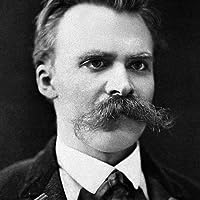
Friedrich Wilhelm Nietzsche (Ph.D., Philology, Leipzig University, 1869) was a German philosopher of the late 19th century who challenged the foundations of Christianity and traditional morality. He was interested in the enhancement of individual and cultural health, and believed in life, creativity, power, and the realities of the world we live in, rather than those situated in a world beyond. Central to his philosophy is the idea of “life-affirmation,” which involves a questioning of all doctrines that drain life's expansive energies, however socially prevalent those views might be. Often referred to as one of the first existentialist philosophers along with Søren Kierkegaard (1813–1855). From the Stanford Encyclopedia of Philosophy