Margins




548 Market St PMB 65688, San Francisco California 94104-5401 USA
© 2026 Paratext Inc. All rights reserved

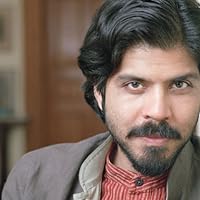
From one of our foremost public intellectuals, an essential reckoning with the war in Gaza that reframes our understanding of the ongoing conflict, its historical roots, and the fractured global response The postwar global order was in many ways shaped in response to the Holocaust. That event became the benchmark for atrocity, and, in the Western imagination, the paradigmatic genocide. Its memory orients so much of our thinking, and crucially, forms the basic justification for Israel’s right first to establish itself and then to defend itself. But in many parts of the world, ravaged by other conflicts and experiences of mass slaughter, the Holocaust’s singularity is not always taken for granted, even when its hideous atrocity is. Outside of the West, Pankaj Mishra argues, the dominant story of the twentieth century is that of decolonization. The World After Gaza takes the current war, and the polarized reaction to it, as the starting point for a broad reevaluation of two competing narratives of the last the Global North’s triumphant account of victory over totalitarianism and the spread of liberal capitalism, and the Global South’s hopeful vision of racial equality and freedom from colonial rule. At a moment when the world’s balance of power is shifting, and the Global North no longer commands ultimate authority, it is critically important that we understand how and why the two halves of the world are failing to talk to each other. As old touchstones and landmarks crumble, only a new history with a sharply different emphasis can reorient us to the world and worldviews now emerging into the light. In this concise, powerful, and pointed treatise, Mishra reckons with the fundamental questions posed by our present crisis—about whether some lives matter more than others, how identity is constructed, and what the role of the nation-state ought to be. The World After Gaza is an indispensable moral guide to our past, present, and future.