Margins
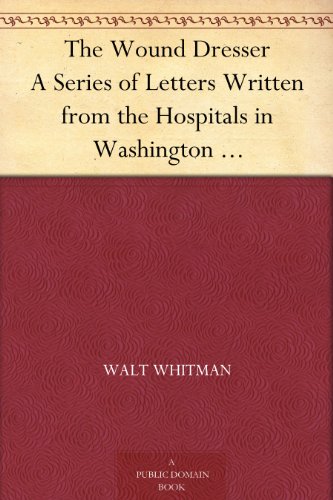
The Wound Dresser book cover
The Wound Dresser
1975
First Published
3.86
Average Rating
150
Number of Pages
Immerse yourself in the compassionate and intimate world of Walt Whitman's The Wound Dresser. This profound collection of wartime writings offers a firsthand account of Whitman's experiences as a Civil War nurse. Through his heartfelt prose and vivid descriptions, Whitman provides an unfiltered view of the physical and emotional wounds of soldiers. This audiobook is a testament to the power of empathy, the healing touch of literature, and the enduring impact of one of America's greatest poets.

Avg Rating
3.86
Number of Ratings
73
5 STARS
38%
4 STARS
22%
3 STARS
29%
2 STARS
10%
1 STARS
1%
goodreads

Author

Walt Whitman
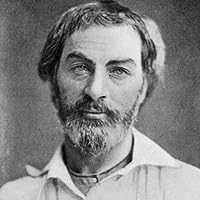
Walt Whitman
Author · 95 books

Walter Whitman (1819-1892) was an American poet, essayist, journalist, and humanist. He was a part of the transition between Transcendentalism and realism, incorporating both views in his works. Whitman is among the most influential poets in the American canon, often called the father of free verse. Born on Long Island, Whitman worked as a journalist, a teacher, a government clerk, and a volunteer nurse during the American Civil War in addition to publishing his poetry. Early in his career, he also produced a temperance novel, Franklin Evans (1842). After working as clerk, teacher, journalist and laborer, Whitman wrote his masterpiece, Leaves of Grass, pioneering free verse poetry in a humanistic celebration of humanity, in 1855. Emerson, whom Whitman revered, said of Leaves of Grass that it held "incomparable things incomparably said." During the Civil War, Whitman worked as an army nurse, later writing Drum Taps (1865) and Memoranda During the War (1867). His health compromised by the experience, he was given work at the Treasury Department in Washington, D.C. After a stroke in 1873, which left him partially paralyzed, Whitman lived his next 20 years with his brother, writing mainly prose, such as Democratic Vistas (1870). Leaves of Grass was published in nine editions, with Whitman elaborating on it in each successive edition. In 1881, the book had the compliment of being banned by the commonwealth of Massachusetts on charges of immorality. A good friend of Robert Ingersoll, Whitman was at most a Deist who scorned religion. D. 1892. More: http://www.whitmanarchive.org/ http://philosopedia.org/index.php/Wal... http://www.poets.org/poet.php/prmPID/126 http://www.poetryfoundation.org/bio/w... http://en.wikipedia.org/wiki/Walt\_Whi... http://www.poemhunter.com/walt-whitman/

548 Market St PMB 65688, San Francisco California 94104-5401 USA
© 2025 Paratext Inc. All rights reserved