Margins
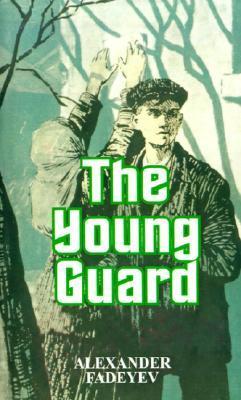
The Young Guard book cover
The Young Guard
1946
First Published
4.00
Average Rating
645
Number of Pages
Alexander Fadeyev entered Soviet literature and at once justly occupied a place in the top ranks with his novel The Rout, a supremely striking book, which is, perhaps, the most stern and striking of the books about the Civil War. The last finished work was The Young Guard, a similarly stern, truthful novel about the Great Patriotic War, the German occupation, the tragic and decisive year of 1942. The writer turned grey, stepped past the borders of thirty, forty and fifty years of age, but his own revolutionary youth was ever before him as a period of inestimable value which make him kin with the ideas of Bolshevism - and for that he was thankful to his youth and loved it. The fact that it was namely Fadeyev who in the fourth year of the Patriotic War began to write about the Komsomols of Krasnodon was no accident. The Tragedy of the events in Krasnodon did not disconcert him. On the contrary, it attracted him. The Rout was written when the Civil Was had ended victoriously; The Young Guard was written when the war was drawing to a victorious close. Fadeyev wanted to show the full force of what that cost and what qualities people must have in order ultimately to win in such a war, in order to win in the future no matter in what circumstances. There is no doubt that was the inner feeling with which The Young Guard was written.

Avg Rating
4.00
Number of Ratings
7
5 STARS
43%
4 STARS
29%
3 STARS
14%
2 STARS
14%
1 STARS
0%
goodreads

Author

Alexander Fadeyev
Alexander Fadeyev
Author · 4 books

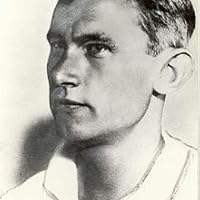
Alexander Alexandrovich Fadeyev (Russian: Александр Алексaндрович Фадеев) was a Soviet writer, one of the co-founders of the Union of Soviet Writers and its chairman from 1946 to 1954. From 1908 to 1912 he lived in Chuguyevka, Primorsky Krai. He took part in the guerrilla movement against the Japanese interventionists and the White Army during the Russian Civil War. In 1927, he published the novel The Rout (also known as The Nineteen), in which he described youthful guerrilla fighters. In 1945 he wrote the novel Young Guard (based upon real events of World War II) about the underground anti-fascist Komsomol organization named Young Guard, which fought against the Nazis in the occupied city Krasnodon (in the Ukrainian SSR). For this novel, Fadeyev was awarded the Stalin Prize (1946). In 1948, a Soviet film The Young Guard, based on the book, was released, and later revised in 1964 to correct inaccuracies in the book. Fadeyev was a champion of Joseph Stalin, proclaiming him "the greatest humanist the world has ever known". During the 1940s, he actively promoted Zhdanovshchina, a campaign of criticism and persecution against many of the Soviet Union's foremost composers. However, he was a friend of Mikhail Sholokhov. Fadeyev married a famous stage actress, Angelina Stepanova (1905–2000). In the last years of his life Fadeyev became an alcoholic. Some sources claim, that this was mostly due to the denunciation of Stalinism during the Khrushchev Thaw. He eventually committed suicide at his dacha in Peredelkino, leaving a dying letter, from which one can see Fadeyev's strictly negative attitude to new leaders of the Party. His death occasioned an epigram by Boris Pasternak, his neighbor. Alexander Fadeyev is buried in the Novodevichy Cemetery in Moscow.

548 Market St PMB 65688, San Francisco California 94104-5401 USA
© 2026 Paratext Inc. All rights reserved