Margins
Theater in the Americas book cover 1
Theater in the Americas book cover 2
Theater in the Americas book cover 3
Theater in the Americas
Series · 29
books · 2002-2022

Books in series

Adapturgy book cover
#1

Adapturgy

The Dramaturg's Art and Theatrical Adaptation

2017

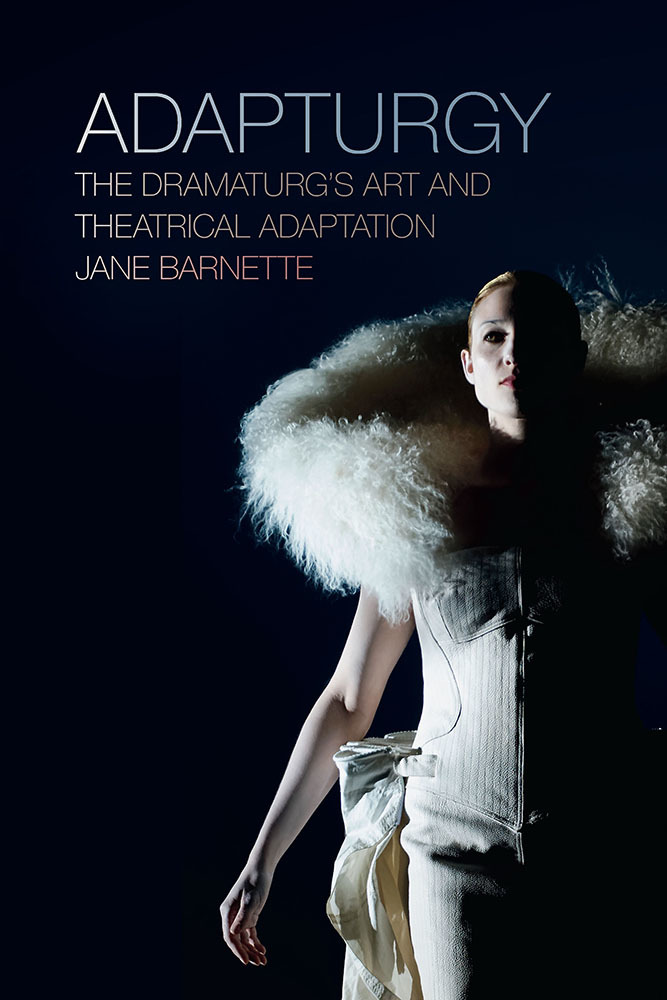
Dramaturg Jane Barnette has put together an essential guide for theatre scholars and practitioners seeking to understand and participate in the process of adaptation for the stage. Employing the term “adapturgy”—her neologism for the art of adaptation dramaturgy—Barnette redefines the dramaturg’s role and thoroughly refutes the commonplace point of view that adapted works are somehow less creative than “original” plays. The dual nature of dramaturgy and adaptation as both process and product is reflected in the structure and organization of the book. Part 1 explores the ways that linking adaptation to dramaturgy advances our understanding of both practices. Part 2 demonstrates three different methods—each grounded in a detailed case study—for analyzing theatrical adaptations. Part 3 offers concrete strategies for the dramaturgy for the adapted script; the production dramaturgy of stage adaptations; and the role of the dramaturg in the postmortem for a production. Rounding out the book are two appendixes containing interviews with adapters and theatre-makers and representative program notes from different play adaptations. Plays adapted from literature and other media represent a rapidly growing part of the theatre. This book offers both practical and theoretical tools for understanding and creating these new works.
Caffe Cino book cover
#5

Caffe Cino

The Birthplace of Off-Off-Broadway

2005

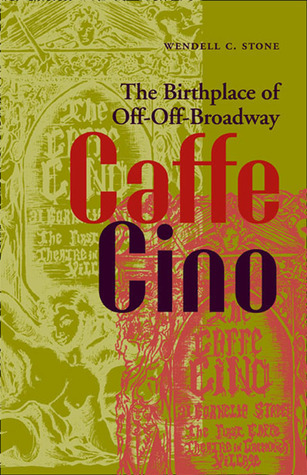
“It’s Magic Time!” That colorful promise began each performance at the Caffe Cino, the storied Greenwich Village coffeehouse that fostered the gay and alternative theatre movements of the 1960s and launched the careers of such stage mainstays as Sam Shepard, Lanford Wilson, Robert Heide, Harry Koutoukas, Robert Patrick, Robert Dahdah, Helen Hanft, Al Pacino, and Bernadette Peters. As Off-Off-Broadway productions enjoy a deserved resurgence, theatre historian and actor Wendell C. Stone reopens the Cino’s doors in this vibrant look at the earliest days of OOB. Rife with insider interviews and rich with evocative photographs, Caffe Cino: The Birthplace of Off-Off-Broadway provides the first detailed account of Joe Cino’s iconic café theatre and its influence on American theatre. A hub of artistic innovation and haven for bohemians, beats, hippies, and gays, the café gave a much-sought outlet to voices otherwise shunned by mainstream entertainment. The Cino’s square stage measured only eight feet, but the dynamic ideas that emerged there spawned the numerous alternative theatre spaces that owe their origins to the risky enterprise on Cornelia Street.
Californios, Anglos, and the Performance of Oligarchy in the U.S. West book cover
#6

Californios, Anglos, and the Performance of Oligarchy in the U.S. West

2018

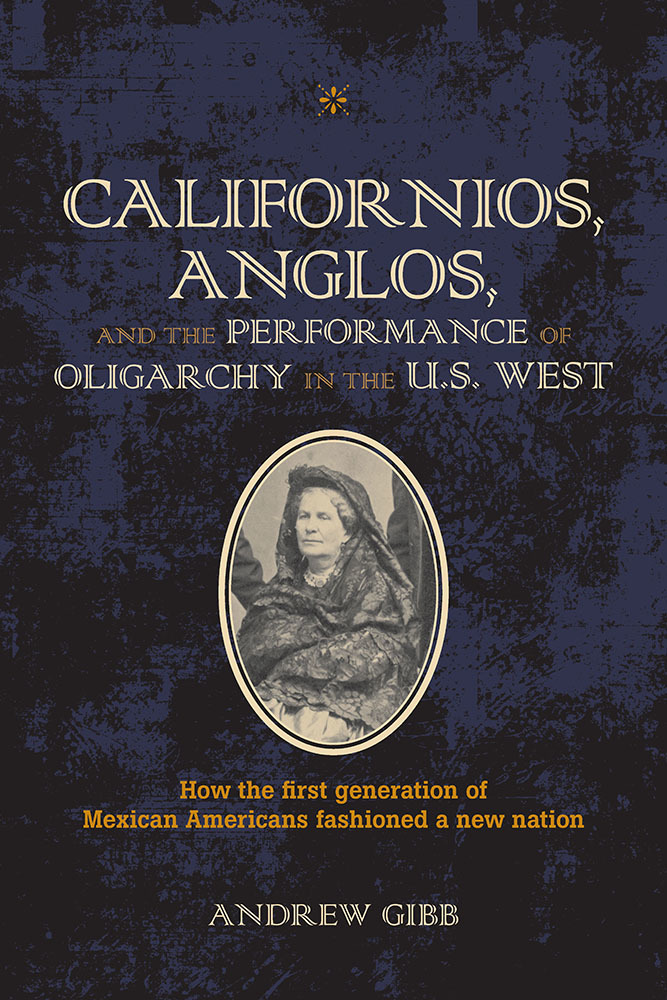
In Californios, Anglos, and the Performance of Oligarchy in the U.S. West, author Andrew Gibb argues that the mid-nineteenth-century encounter between Anglos and californios—the Spanish-speaking elites who ruled Mexican California between 1821 and 1848—resulted not only in the Americanization of California but also the “Mexicanization” of Americans. Employing performance studies methodologies in his analysis of everyday and historical events, Gibb traces how oligarchy evolved and developed in the region. This interdisciplinary study draws on performance studies, theatre historiography, and New Western History to identify how the unique power relations of historical California were constituted and perpetuated through public performances—not only traditional theatrical productions but also social events such as elite weddings and community dances—and historical events like the U.S. seizure of the city of Monterey, the feting of Commodore Stockton in San Francisco, and the Bear Flag Revolt.
Childhood and Nineteenth-Century American Theatre book cover
#7

Childhood and Nineteenth-Century American Theatre

The Work of the Marsh Troupe of Juvenile Actors

2015

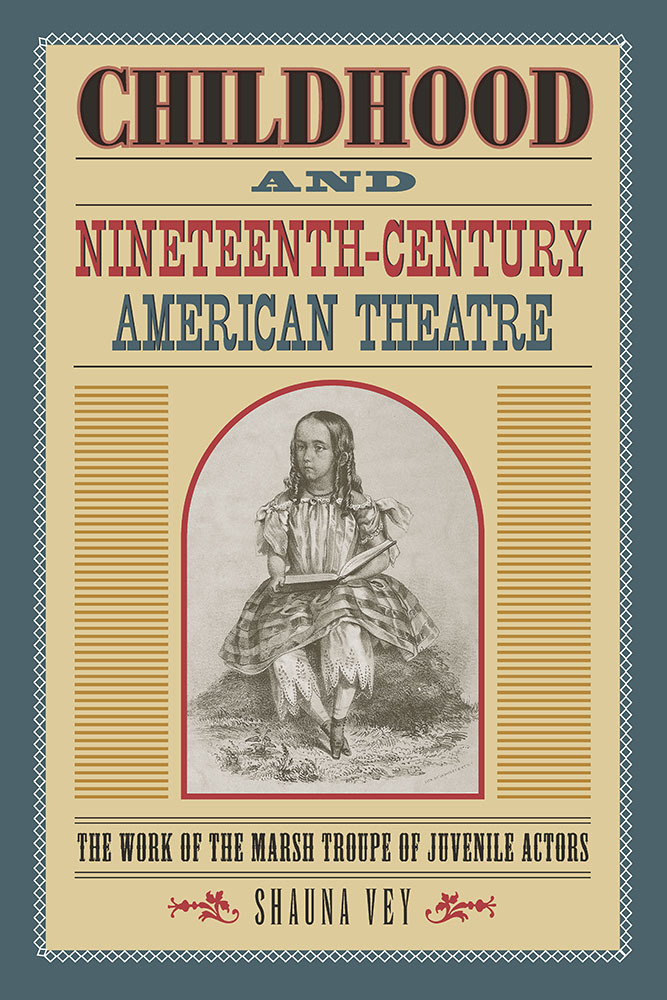
From 1855 until 1863, the Marsh Troupe of Juvenile Comedians, a professional acting company of approximately thirty children, entertained audiences with their nuanced performances of adult roles on stages around the globe. In Childhood and Nineteenth-Century American The Work of the Marsh Troupe of Juvenile Actors, author Shauna Vey provides an insightful account not only of this unique antebellum stage troupe but also of contemporary theatre practices and the larger American culture, including shifts in the definition of childhood itself. Looking at the daily work lives of five members of the Marsh Troupe—the father and manager, Robert Marsh, and four child performers, Mary Marsh, Alfred Stewart, Louise Arnot, and Georgie Marsh—Vey reveals the realities of the antebellum theatre and American the rise of the nineteenth-century impresario; the emerging societal constructions of girlhood and goodness; the realities of child labor; the decline of the apprenticeship model of actor training; shifts in gender roles and the status of working women; and changes in the economic models of theatre production, including the development of the stock company system. Both a microhistory of a professional theatre company and its juvenile players in the decade before the Civil War and a larger narrative of cultural change in the United States, Childhood and Nineteenth-Century American Theatre sheds light on how childhood was idealized both on and off the stage, how the role of the child in society shifted in the nineteenth century, and the ways economic value and sentiment contributed to how children were viewed.
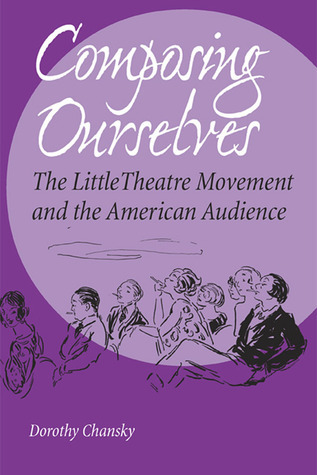
Composing Ourselves book cover
#8

Composing Ourselves

The Little Theatre Movement and the American Audience

2004

When movies replaced theatre as popular entertainment in the years 1910–20, the world of live drama was wide open for reform. American advocates and practitioners founded theatres in a spirit of anticommercialism, seeking to develop an American audience for serious theatre, mounting plays in what would today be called “alternative spaces,” and uniting for the cause an eclectic group of professors, social workers, members of women’s clubs, bohemians, artists, students, and immigrants. This rebellion, called the Little Theatre Movement, also prompted and promoted the college theatre major, the inclusion of theatre pedagogy in K–12 education, prototypes for the nonprofit model, and the notion that theatre is a valuable form of self-expression. Composing Ourselves: The Little Theatre Movement and the American Audience argues that the movement was a national phenomenon, not just the result of aspirants copying the efforts of the much-storied Provincetown Players, Washington Square Players, Neighborhood Playhouse, and Chicago Little Theatre. Going beyond the familiar histories of the best-known groups, Dorothy Chansky traces the origins of both the ideas and the infrastructures for serious theatre that are ordinary parts of the American cultural landscape today; she also investigates the gender discrimination, racism, and class insensitivity that were embedded in reformers’ ideas of the “universal” and that still trouble the rhetoric of regional, educational, and community theatre. An important piece of revisionist history, Composing Ourselves shows how theatre reform, in keeping with other Progressive Era activism, took on corporate, conservative society, but did so in ways that were sometimes contradictory. For example, women constituted the majority of ticket buyers and the bulk of unsung labor, yet plays by women were considered inferior. Most reformers were comfortably middle class and sought change that would eliminate the anomie of modernity but not challenge their privileged positions. Chansky deliberates on antifeminist images of women theatergoers in literature and cartoons and considers the achievements and failures of the Drama League of America, a network of women’s clubs, following up with a case study of the playwright Alice Gerstenberg to point out that theatre history has not fully realized the role of women in the Little Theatre Movement. Even as women were earning the majority of degrees in newly minted theatre programs, their paths were barred to most professional work except teaching. Chansky also considers a blackface production of a play about rural African Americans, which was a step towards sympathetic portrayals of minority characters yet still a reinforcement of white upper- and middle-class perspectives.
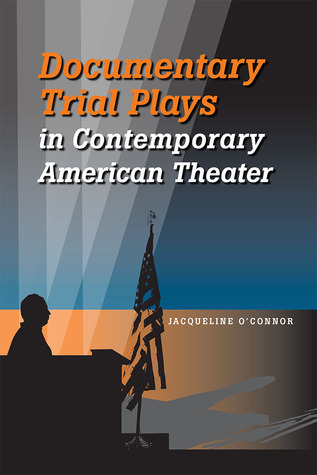
Documentary Trial Plays in Contemporary American Theater book cover
#11

Documentary Trial Plays in Contemporary American Theater

2013

From the Chicago Conspiracy Trial and the O. J. Simpson trial to the Clarence Thomas/Anita Hill congressional hearings, legal and legislative proceedings in the latter part of the twentieth-century kept Americans spellbound. Situated on the shifting border between imagination and the law, trial plays edit, arrange, and reproduce court records, media coverage, and first-person interviews, transforming these elements into a performance. In this first book-length critical study of contemporary American documentary theater, Jacqueline O’Connor examines in depth ten such plays, all written and staged since 1970, and considers the role of the genre in re-creating and revising narratives of significant conflicts in contemporary history. Documentary theater, she shows, is a particularly appropriate and widely utilized theatrical form for engaging in debate about tensions between civil rights and institutional power, the inconsistency of justice, and challenges to gender norms. For each of the plays discussed, including T he Trial of the Catonsville Nine, Unquestioned The Hill/Thomas Hearings, and The Laramie Project, O'Connor provides historical context and a brief production history before considering the trial the play focuses on. Grouping plays historically and thematically, she demonstrates how dramatic representation advances our understanding of the law's power while revealing the complexities that hinder society's pursuit of justice.
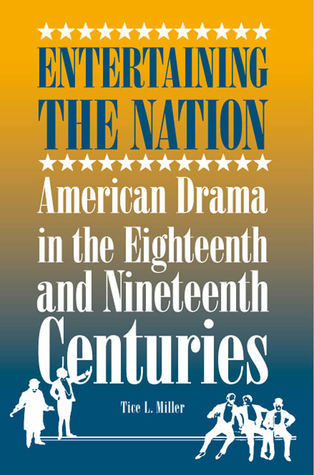
Entertaining the Nation book cover
#12

Entertaining the Nation

American Drama in the Eighteenth and Nineteenth Centuries

2007

In this survey of eighteenth- and nineteenth-century American drama, Tice L. Miller examines American plays written before a canon was established in American dramatic literature and provides analyses central to the culture that produced them. Entertaining the American Drama in the Eighteenth and Nineteenth Centuries evaluates plays in the early years of the republic, reveals shifts in taste from the classical to the contemporary in the 1840s and 1850s, and considers the increasing influence of realism at the end of the nineteenth century. Miller explores the relationship between American drama and societal issues during this period. While never completely shedding its English roots, says Miller, the American drama addressed issues important on this side of the Atlantic such as egalitarianism, republicanism, immigration, slavery, the West, Wall Street, and the Civil War. In considering the theme of egalitarianism, the volume notes Alexis de Tocqueville’s observation in 1831 that equality was more important to Americans than liberty. Also addressed is the Yankee character, which became a staple in American comedy for much of the nineteenth century. Miller analyzes several English plays and notes how David Garrick’s reforms in London were carried over to the colonies. Garrick faced an increasingly middle-class public, offers Miller, and had to make adjustments to plays and to his repertory to draw an audience. The volume also looks at the shift in drama that paralleled the one in political power from the aristocrats who founded the nation to Jacksonian democrats. Miller traces how the proliferation of newspapers developed a demand for plays that reflected contemporary society and details how playwrights scrambled to put those symbols of the outside world on stage to appeal to the public. Steamships and trains, slavery and adaptations of Uncle Tom’s Cabin, and French influences are presented as popular subjects during that time. Entertaining the Nation effectively outlines the civilizing force of drama in the establishment and development of the nation, ameliorating differences among the various theatergoing classes, and provides a microcosm of the changes on and off the stage in America during these two centuries.
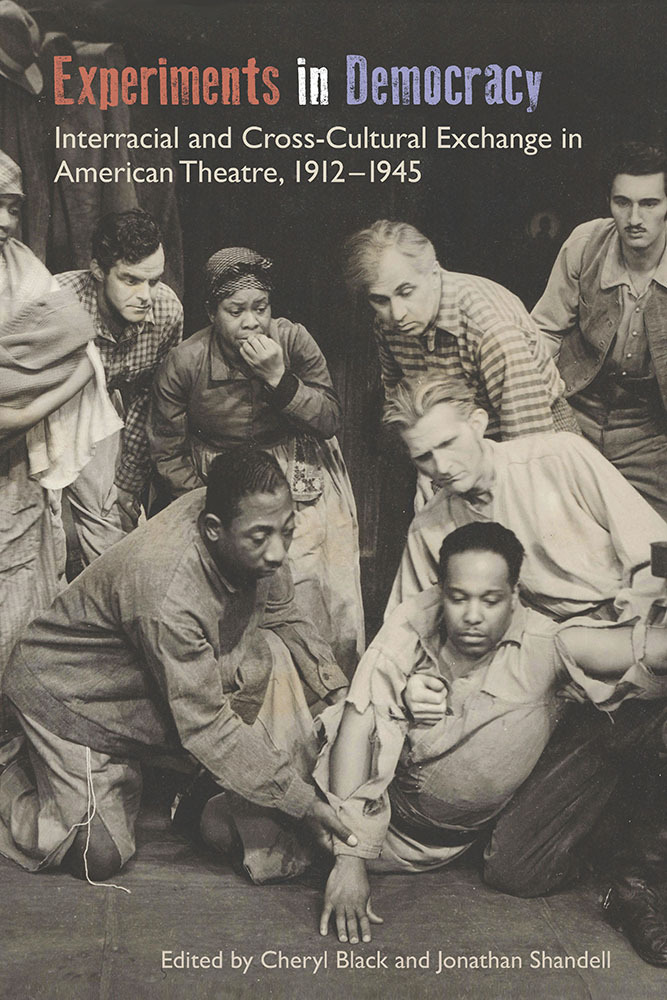
Experiments in Democracy book cover
#13

Experiments in Democracy

Interracial and Cross-Cultural Exchange in American Theatre, 1912-1945

2016

In the first half of the twentieth century, a number of American theatres and theatre artists fostered interracial collaboration and socialization on stage, behind the scenes, and among audiences. In an era marked by entrenched racial segregation and inequality, these artists used performance to bridge America’s persistent racial divide and to bring African American, Latino/Latina, Asian American, Native American, and Jewish American communities and traditions into the nation’s broader cultural conversation. In Experiments in Democracy, edited by Cheryl Black and Jonathan Shandell, theatre historians examine a wide range of performances—from Broadway, folk plays and dance productions to scripted political rallies and radio dramas. Contributors look at such diverse groups as the Theatre Union, La Unión Martí-Maceo, and the American Negro Theatre, as well as individual playwrights and their works, including Theodore Browne’s folk opera Natural Man, Josefina Niggli’s Soldadera, and playwright Lynn Riggs’s Cherokee Night and Green Grow the Lilacs (the basis for the musical Oklahoma!). Exploring the ways progressive artists sought to connect isolated racial and cultural groups in pursuit of a more just and democratic society, contributors take into account the blind spots, compromised methods, and unacknowledged biases at play in their practices and strategies. Essays demonstrate how the gap between the ideal of American democracy and its practice—mired in entrenched systems of white privilege, economic inequality, and social prejudice—complicated the work of these artists. Focusing on questions of race, ethnicity, gender, and sexuality on the stage in the decades preceding the Civil Rights era, Experiments in Democracy fills an important gap in our understanding of the history of the American stage—and sheds light on these still-relevant questions in contemporary American society.
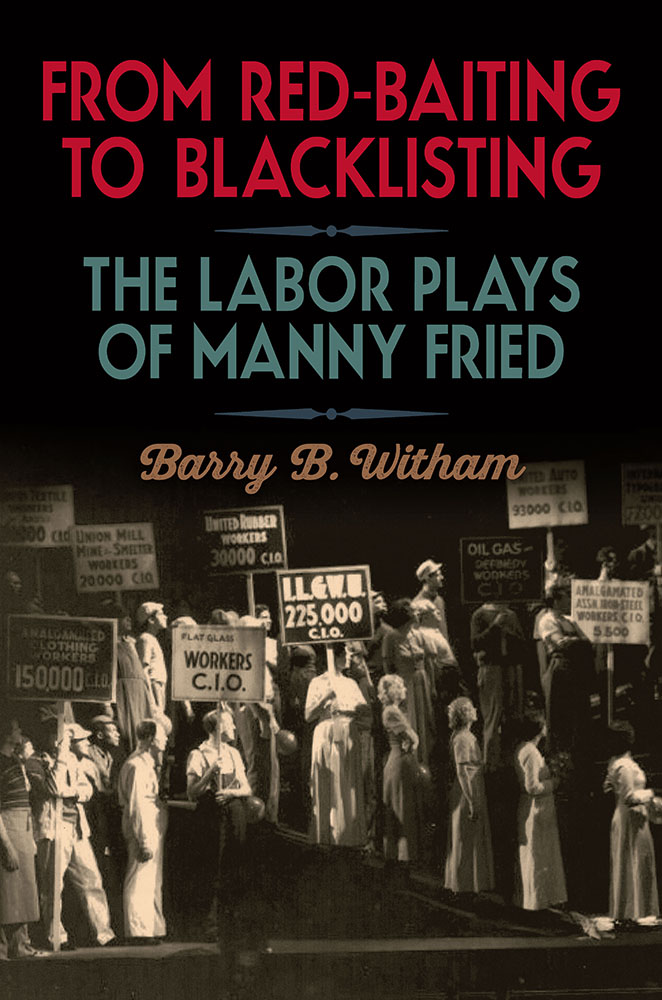
From Red-Baiting to Blacklisting book cover
#14

From Red-Baiting to Blacklisting

The Labor Plays of Manny Fried

2020

Author Barry B. Witham reclaims the work of Manny Fried, an essential American playwright so thoroughly blacklisted after he defied the House Committee on Un-American Activities in 1954, and again in 1964, that his work all but completely disappeared from the canon. Witham details Manny Fried’s work inside and outside the theatre and examines his three major labor plays and the political climate that both nurtured and disparaged their productions. Drawing on never-before-published interview materials, Witham reveals the details of how the United States government worked to ruin Fried’s career. From Red-Baiting to Blacklisting includes the complete text of Fried’s major labor plays, all long out of print. In Elegy for Stanley Gorski, Fried depicts one of the many red-baiting campaigns that threatened countless unions in the wake of the Taft-Hartley Act and the collusion of the Catholic Church with these activities. In Drop Hammer, Fried tackles the issues of union dues, misappropriation, and potential criminal activities. In the third play, The Dodo Bird, perhaps his most popular, Fried achieves a remarkable character study of a man outsourced from his job by technology and plant closures. Manny Fried’s plays portray the hard edges of capitalism and government power and illuminate present-day struggles with hostility to labor unions and the passage in several states of right-to-work laws. Fried had no illusions about the government’s determination to destroy communism and unionism—causes to which he was deeply committed.
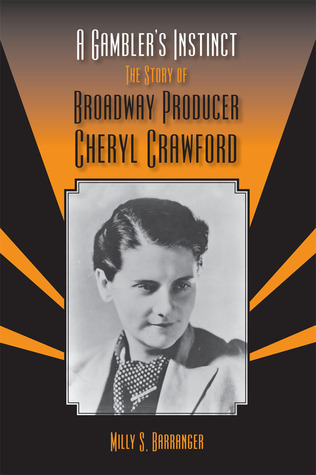
A Gambler’s Instinct book cover
#15

A Gambler’s Instinct

The Story of Broadway Producer Cheryl Crawford

2010

Broadway producer Cheryl Crawford (1902–1986) declared in her 1977 autobiography, “The theatre has been my life.” Crawford was notoriously circumspect about her private life, and only now, with Milly S. Barranger’s insightful biography, is her full story revealed. A major Broadway producer in an era when women producers were exceedingly rare, Crawford found unprecedented success with the plays of Tennessee Williams, including The Rose Tattoo and Sweet Bird of Youth, but her enduring legend is as a musical producer, having brought Kurt Weill’s One Touch of Venus, Lerner and Loewe’s Brigadoon and Paint Your Wagon to the stage. Her commercial success, though, was balanced with the founding of studios that would enable actors to explore their art outside the strictures of commercial theater. She cofounded the Group Theatre with Harold Clurman and Lee Strasberg, the American Repertory Theatre with Margaret Webster and Eva Le Gallienne, and the Actors Studio with Elia Kazan and Robert Lewis, but her idealism was constantly frustrated by unfulfilled artistic promises from her male counterparts and by the chronic shortage of funding for the nonprofit enterprises. As Barranger traces Crawford’s career as an independent producer, she tells the parallel story of American theater in the mid-twentieth century, making A Gambler’s Instinct both an enjoyable and informative biography of a remarkable woman and an important addition to the literature of the modern theater.
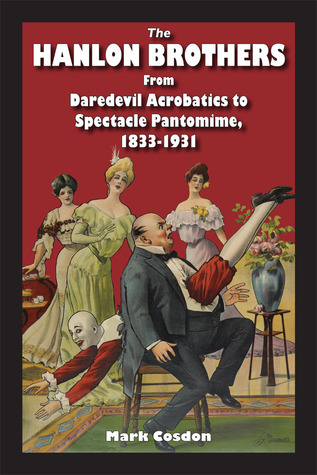
The Hanlon Brothers book cover
#17

The Hanlon Brothers

From Daredevil Acrobatics to Spectacle Pantomime, 1833-1931

2010

The Hanlons—a family of six brothers from Manchester, England—were one of the world’s premiere performing troupes in the mid-nineteenth and early twentieth centuries, yet their legacy has been mostly forgotten. In The Hanlon From Daredevil Acrobatics to Spectacle Pantomime, 1833–1931, Mark Cosdon carefully documents the careers of this talented family and enumerates their many contributions to modern popular entertainment. As young men, the Hanlons stunned audiences all over the world with their daring acrobatic feats. After a tragic accident severely injured one brother (and indirectly led to his suicide in a manner achievable only by someone with considerable acrobatic talents), they moved into the safer arena of spectacle pantomime, where they became the rage of Parisian popular theatre. They achieved fame with their uproariously funny and technically astonishing production of Le Voyage en Suisse . After settling permanently in the northeastern United States, they developed two more full-length pantomimes, Fantasma and Superba . The three shows toured for more than thirty years, a testament to their popularity and to the Hanlons’ impressive business acumen. The book’s illustrations—including sketches of their performances, studio photographs of the Hanlons, and posters for all three of their major pantomimes—are essential to the understanding of their work. The Hanlon Brothers is painstakingly researched yet accessible and engaging. Cosdon has managed to provide a thorough and engrossing account of the Hanlons’ lives and careers, which will no doubt help to reestablish their legacy in the world of popular entertainment.
The Humana Festival book cover
#18

The Humana Festival

The History of New Plays at Actors Theatre of Louisville

2008

Far from the glittering lights of Broadway, in a city known more for its horse racing than its artistic endeavors, an annual festival in Louisville, Kentucky, has transformed the landscape of the American theater. The Actors Theatre of Louisville—the Tony Award–winning state theater of Kentucky—in 1976 successfully created what became the nation's most respected new-play festival, the Humana Festival of New American Plays. The Humana Festival: The History of New Plays at Actors Theatre of Louisville examines the success of the festival and theater’s Pulitzer Prize–winning productions that for decades have reflected new-play trends in regional theaters and on Broadway—the result of the calculated decisions, dogged determination, and good luck of its producing director, Jon Jory. The volume details how Actors Theatre of Louisville was established, why the Humana Festival became successful in a short time, and how the event’s success has been maintained by the Louisville venue that has drawn theater critics from around the world for more than thirty years. Author Jeffrey Ullom charts the theater’s early struggles to survive, the battles between troupe leaders, and the desperate measures to secure financial support from the Louisville community. He examines how Jory established and expanded the festival to garner extraordinary local support, attract international attention, and entice preeminent American playwrights to premier their works in the Kentucky city. In The Humana Festival, Ullom provides a broad view of new-play development within artistic, administrative, and financial contexts. He analyzes the relationship between Broadway and regional theaters, outlining how the Humana Festival has changed the process of new-play development and even Broadway’s approach to discovering new work, and also highlights the struggles facing regional theaters across the country as they strive to balance artistic ingenuity and economic viability. Offering a rare look at the annual event, The Humana Festival provides the first insider’s view of the extraordinary efforts that produced the nation’s most successful new-play festival.
Messiah of the New Technique book cover
#20

Messiah of the New Technique

John Howard Lawson, Communism, and American Theatre, 1923-1937

2006

Messiah of the New Technique: John Howard Lawson, Communism, and American Theatre, 1923–1937 is a critical and political biography and a cultural and social history that focuses on Lawson’s career in the theatre. Using a materialist methodology, Jonathan L. Chambers emphasizes the evolution and interplay of the playwright’s artistic vision and political ideology, considering his art as both a documentation of this evolution and a product of the socio-political and cultural matrix in which he was immersed. Spanning the playwright’s career, the volume details Lawson’s early indoctrination in and commitment to the avant-garde, his use and development of various nonrealistic playwriting techniques, his subtle though unfocused attacks on bourgeois society, and the varied critical responses he received. Chambers addresses Lawson’s involvement with the New Playwrights’ Theatre and his participation in the protests surrounding the case of Nicola Sacco and Bartolomeo Vanzetti, which stimulated his growing commitment to left-wing politics and radical causes. Chambers also analyzes the social and cultural factors that shaped Lawson’s growing interest in revolutionary politics, his tutelage in Marxism under Edmund Wilson, and his tenure as president of the Screen Writers Guild. He also covers the final phase of Lawson’s playwriting career, which reveals the playwright’s internal struggle. That struggle, suggests Chambers, pitted Lawson’s view of aesthetics against his political ideology and is reflected in his scripts and theoretical writings. Messiah of the New Technique provides a wealth of new material about both the playwright and the period, offering a critical synopsis of the artist’s career, addressing his often vehement rebuttals to his critics, and summarizing both his political activism and his creative and critical endeavors in the last forty years of his life.
Off Sites book cover
#21

Off Sites

Contemporary Performance beyond Site-Specific

2018

Honorable Mention, ATHE's 2018 Outstanding Book Award Contextualizing the techniques and methods of the incredibly rich and vital genre of site-specific performance, author Bertie Ferdman traces the evolution of that term. Originally used for experimental staging practices and then later also for engaged situational events, site-specific is no longer sufficient for the genre’s many contemporary variations. Using the term off-site, Ferdman illustrates five distinct ways artists have challenged the disciplinary framework of site-specific blurring the traditional boundaries between the fictional and the real; changing how the audience and actor interact with each other and whether they are physically together or apart; fabricating sites from physically bound, conceptually constructed, or virtual spaces; staging live situations in real/nonreal and often mediated encounters; and challenging our preconceived notions of time and space. Tracing the genealogy of site-based work through the twentieth and twenty-first centuries, Ferdman outlines the theoretical groundwork for her study in the introduction. Individual chapters focus on distinct types of off-sites—the interdisciplinary discourse of disciplinary sites ; the spaces of audience engagement with spectator sites ; the dislocation of time for temporal sites ; and the historiographical spaces of mapping for urban sites . Ferdman examines site-based work being done in the Americas by contemporary companies and artists experimenting with new forms and practices for site-driven theatre. Key productions discussed include Private Moment by David Levine, Geyser Land by Mary Ellen Strom and Ann Carlson, Jim Findlay’s Dream of the Red Chamber, and Lola Arias’ Mi Vida Después .
Our Land Is Made of Courage and Glory book cover
#22

Our Land Is Made of Courage and Glory

Nationalist Performance of Nicaragua and Guatemala

2005

Our Land Is Made of Courage and Glory: Nationalist Performance of Nicaragua and Guatemala adds to a growing and timely body of work on nationalist drama. Examining important twentieth-century plays that few people have written about in English, E. J. Westlake analyzes the phenomenon of nation as performance by focusing on the definition of a people, national metaphors, and the uses of national history. Westlake discerns the common characteristics that constitute nationalist plays, a genre that seeks to legitimate the nature of a nation by defining its boundaries, race, language, citizens, and history. Particularly relevant in an era influenced by imperialism, migration, and globalization, the volume probes the concepts of nation and nationalism in the context of postcolonial literary and performance theory. Our Land Is Made of Courage and Glory covers the political and theatrical history of Nicaragua and Guatemala. Westlake examines how the blending of races factors into nationalism with a look at the play El tren amarillo by Manuel Galich and uses Nobel laureate Miguel Ángel Asturias’s Soluna to show how nationalists appropriate Mayan culture to create a sense of the Guatemalan people and culture. She discusses the mapping of history as a linear progression in Alan Bolt’s Banana republic and as a cycle of patricide in Por los caminos van los campesinos by Pablo Cuadra. Westlake also suggests that Rolando Steiner’s La noche de Wiwilí, a play taken from an eyewitness account, acts as a site of official national memory, and she examines as well the canonizing of the folk ballet El Güegüence to further explore the notion of sites of memory versus lived memory. Raising essential questions about the future of nationalism and nationalist performance, Our Land Is Made of Courage and Glory will be of interest to scholars and students in drama, Latin American theatre studies, political science, and history.
Presidential Libraries as Performance book cover
#24

Presidential Libraries as Performance

Curating American Character from Herbert Hoover to George W. Bush

2016

How do the funding, setting architecture, and exhibition of a presidential library shape our understanding of the president’s character? And how do diverse performances of the presidency create radically different opportunities for the practice of American citizenship? In Presidential Libraries as Curating American Character from Herbert Hoover to George W. Bush, Jodi Kanter analyzes presidential libraries as performances that encourage visitors to think in particular ways about executive leadership and about their own roles in public life. Kanter considers the moments in the presidents’ lives the museums choose to interpret, and not to interpret, and how the libraries approach common subjects in the presidential museum narrative—the presidents’ early years in relation to cultural ideals, the libraries’ representations of presidential failures, personal and political, and the question of presidential legacy. Identifying the limited number of strategies the libraries currently use to represent the diversity of the American experience and American character, Kanter offers concrete suggestions for reinventing and reshaping the practices of museum professionals and visitors within the walls of these institutions. Presidential museums can tell us important things about the relationships between performance and politics, entertainment and history, and leaders and the people they lead. Kanter demonstrates how the presidential libraries generate normative narratives about individual presidents, historical events, and what it means to be an American.
Rediscovering Mordecai Gorelik book cover
#25

Rediscovering Mordecai Gorelik

Scene Design and the American Theatre

2009

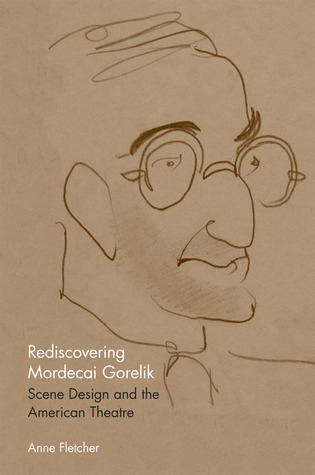
Rediscovering Mordecai Gorelik explores the life and work of the pioneering scene designer whose career spanned decades in American theatre. Anne Fletcher’ s insightful volume draws intriguing parallels and contrasts between Gorelik’ s productions and the theatrical movements of the twentieth century, exposing the indelible mark he left on the stage. Through in-depth analysis of his letters, diaries, designs, and theoretical works, Fletcher examines the ways in which Gorelik’ s productions can be used as a mirror to reflect the shifting dramatic landscapes of his times. Fletcher places Gorelik against the colorful historical backdrops that surrounded him—including the avant-garde movement of the 1920s, World War II, the Cold War, and absurdism—using the designer’ s career as a window into the theatre during these eras. Within these cultural contexts, Gorelik sought to blaze his own unconventional path through the realms of theatre and theory. Fletcher traces Gorelik’ s tenures with such companies as the Provincetown Players, the Theatre Guild, and the Theatre Union, as well as his relationships with icons such as Bertolt Brecht, revealing how his interactions with others influenced his progressive designs and thus set the stage for major dramatic innovations. In particular, Fletcher explores Gorelik’ s use of scenic metaphor: the employment of stage design techniques to subtly enhance the tone or mood of a production. Fletcher also details the designer’ s written contributions to criticism and theory, including the influential volume New Theatres for Old, as well as other articles and publications. In addition to thorough examinations of several of Gorelik’ s most famous projects, Rediscovering Mordecai Gorelik contains explications of productions by such legends as John Howard Lawson, Clifford Odets, and Arthur Miller. Also included are numerous full-color and black-and-white illustrations of Gorelik’ s work, most of which have never been available to the public until now. More than simply a portrait of one man, this indispensable volume is a cultural history of American theatre as seen through the career of a visionary designer and theoretician.
Richard Barr book cover
#26

Richard Barr

The Playwright's Producer

2013

In Richard Barr: The Playwright’s Producer, author David A. Crespy investigates the career of one of the theatre’s most vivid luminaries, from his work on the film and radio productions of Orson Welles to his triumphant—and final—production of Stephen Sondheim’s Sweeney Todd: The Demon Barber of Fleet Street. Explored in detail along the way are the producer’s relationship with playwright Edward Albee, whose major plays such as A Zoo Story and Who’s Afraid of Virginia Woolf Barr was the first to produce, and his innovative productions of controversial works by playwrights like Samuel Beckett, Terrence McNally, and Sam Shepard. Crespy draws on Barr’s own writings on the theatre, his personal papers, and more than sixty interviews with theatre professionals to offer insight into a man whose legacy to producers and playwrights resounds in the theatre world. Also included in the volume are a foreword and an afterword by Edward Albee, a three-time Pulitzer Prize–winning playwright and one of Barr’s closest associates.
Shadowed Cocktails book cover
#27

Shadowed Cocktails

The Plays of Philip Barry from Paris Bound to The Philadelphia Story

2010

An important and prolific playwright, Philip Barry wrote hit plays such as The Philadelphia Story and Holiday. However, he has been largely forgotten and no book-length analysis of his work has appeared in more than forty years. With this book, Donald R. Anderson rescues the playwright from obscurity. Although Barry’s successes were with comedies of manners, he also wrote dramatic and experimental works. Anderson analyzes all of Barry’s plays (twenty-one in total) and questions the traditional characterization of the American playwright’s work. He begins with Barry’s early plays concerning intergenerational tensions and lessons learned from the Great War. Subsequent chapters explore Barry’s preoccupation with fidelity and infidelity, his struggles with his Catholic beliefs, and his investigations into sources of evil and despair. Anderson also looks at the plays of the late 1930s and the 1940s, including the posthumously produced Second Threshold. One chapter is devoted to Barry’s synergistic relationship with Katharine Hepburn: her role in lifting the playwright out of a mid-1930s slump and his role in rescuing her from the label of “box-office poison” with both The Philadelphia Story and the World War II drama Without Love. Anderson places Barry within the context of his times but also shows him drawing on past influences and anticipating theatrical developments of the latter part of the twentieth century. Part cultural history, part literary analysis, Shadowed Cocktails is sure to revitalize interest in this remarkable American author.
A Spectacle of Suffering book cover
#28

A Spectacle of Suffering

Clara Morris on the American Stage

2009

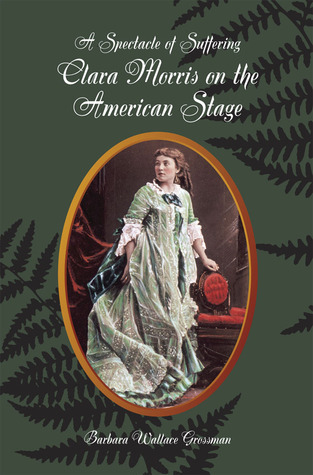
Once called "America's greatest actress," renowned for the passion and power of her performances, Clara Morris (1847-1925) has been largely forgotten. A Spectacle of Clara Morris on the American Stage is the first full-length study of the actress' importance as a feminist in the late nineteenth and early twentieth centuries. Detailing her daunting health problems and the changing tastes in entertainment that led to her retirement from the stage, Barbara Wallace Grossman explores Morris' dramatic reinvention as an author. During a second robust career, she published hundreds of newspaper and magazine articles and nine books―six works of fiction and three memoirs. Grossman draws on the fifty-four-volume diary that Morris kept from 1868 until 1924, as well as on the manuscript fragments and notes of journalist George T. MacAdam, who died in 1929 before completing the actress' biography. Grossman provides a dramatic account of Morris' life and work from her troubled early years, through an unhappy marriage, morphine addiction, and invalidism, to the challenges of touring, the decline of her artistic reputation, and the demands of the writing career she pursued so tenaciously. A Spectacle of Suffering reveals how Morris, even after experiencing blindness and the loss of her home, livelihood, and family, did not succumb to despair and found comfort in the small pleasures of her circumscribed life. A Spectacle of Suffering recovers an important figure in American theatre and ensures that Morris will be remembered not simply as an actress but as a respected writer and beloved public figure, admired for her courage in dealing with adversity. The book, which is enhanced by twenty-four illustrations, is the only published biography of Clara Morris. It is as much a tribute to the power of the human spirit as it is an effective means of exploring American theatre and society in the Gilded Age.
Stage for Action book cover
#29

Stage for Action

U.S. Social Activist Theatre in the 1940s

2016

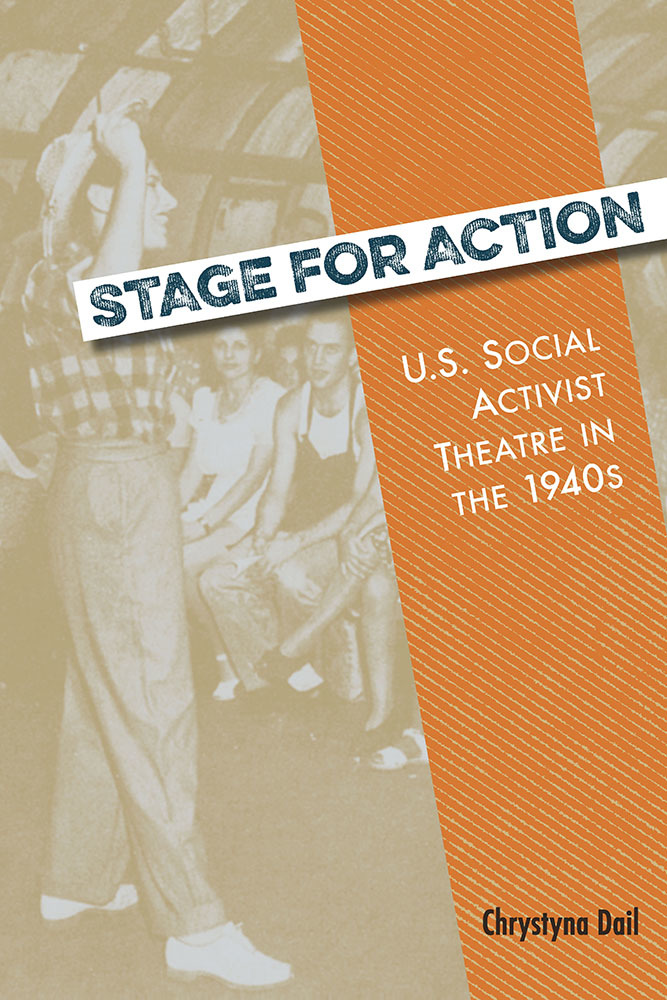
Drawing on underexplored and only recently available archives, author Chrystyna Dail examines the influence of Stage for Action, a theatre group founded in 1943, on social activist theatre in the 1940s, early 1950s, and beyond. The group embraced subjects not taken up by earlier activist theatre companies—advocating for the rights of Puerto Ricans, calling attention to the lack of child care for working mothers, and demanding the cessation of all nuclear warfare. Exploring the intersection between performance and politics and the direct impact of the arts on social activism, Dail argues Stage for Action is a theatrical reflection of progressivism and the pro-working-class theatrical aesthetic of the 1940s. The theatre group, which used performance to encourage direct action and personal responsibility for change, eventually would function as the theatrical voice of the United States Progressive Party in the failed presidential campaign of former vice president Henry A. Wallace. Calling into question the widely held belief that U.S. theatre in the early years of the Cold War was indifferent to activism, Stage for Action offers historians a new interpretation of social activist performance at midcentury.
Stage, Page, Scandals, & Vandals book cover
#30

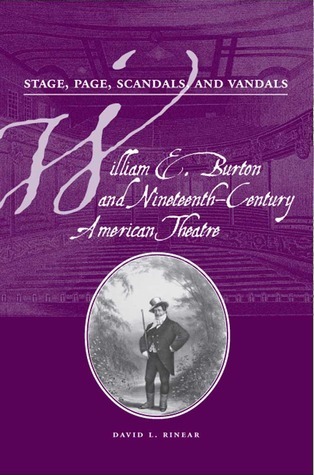
Stage, Page, Scandals, & Vandals

William E. Burton and Nineteenth-Century American Theatre

2004

In this first modern book-length biography of native Englander William E. Burton, theatre historian David L. Rinear explores Burton’s diary, letters, published reviews, and various reminiscences to reveal the tumultuous personal and professional lives of the mid-nineteenth-century actor/manager and his role in American literary history. Stage, Page, Scandals, and William E. Burton and Nineteenth-Century American Theatre also provides insight into the cultural and artistic climate of an early period in American history when the country was still forming a national identity. Burton fled England in 1834 and came to America in the wake of a public scandal caused by his marriage to a sixteen-year-old orphan. Burton was then already married with a ten-year-old son. Settling in Philadelphia, the thirty-two-year-old actor rapidly established himself in the city’s theatrical productions and quickly became an audience favorite. In 1837, while continuing to act, Burton founded and edited The Gentleman’s Magazine, a monthly literary publication later called Burton’s Gentleman’s Magazine . Burton hired struggling author Edgar Allan Poe as coeditor, and the journal achieved literary acclaim as it first published many of Poe’s short stories and poems. Burton sold the journal in 1841 and used the money to build a new theatre, which he managed, although the depression of the early 1840s soon drove his venture out of business. After declaring bankruptcy the following year, Burton worked as a touring actor before returning to theatre management in 1845. For the next thirteen years, Burton managed a succession of theatres in Philadelphia, Baltimore, and New York. Burton’s work as a producer of Shakespearean comedies and romances marks him as the first of the intellectual theatre managers to raise the theatrical experience from mere popular culture to high art. Burton made a fortune in his ventures, amassed the finest private Shakespearean library in the country, and built a grand seaside estate in Glen Cove, Long Island. Shrewd in his personal affairs and in business, Burton also had a violent temper, which led him to viciously attack his competitors. His peculiar domestic relationships marred his brilliant career as an actor, manager, and man of letters; he may have been married to three women at once and lived with two of these women simultaneously. Fully revealing Burton’s contributions to American culture, Rinear traces Burton’s personal and professional pursuits from his emigration to his death in 1860. Bolstered by twenty-two illustrations, Stage, Page, Scandals, and Vandals sheds light on the history of American entertainment during the antebellum era, exposes the ruthless business practices required to succeed in theatre and literary magazine publishing, and reveals a sense of what constituted celebrity status in mid-nineteenth-century America.
Staging Social Justice book cover
#32

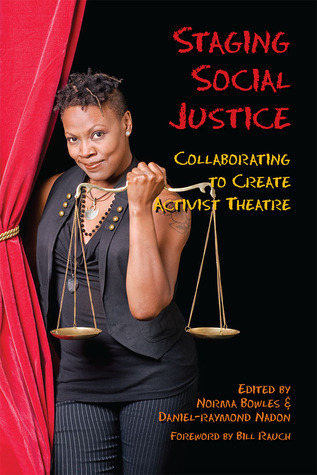
Staging Social Justice

Collaborating to Create Activist Theatre

2013

Fringe Benefits, an award-winning theatre company, collaborates with schools and communities to create plays that promote constructive dialogue about diversity and discrimination issues. Staging Social Justice is a groundbreaking collection of essays about Fringe Benefits’ script-devising methodology and their collaborations in the United States, Australia, Canada and the United Kingdom. The anthology also vividly describes the transformative impact of these creative initiatives on participants and audiences. By reflecting on their experiences working on these projects, the contributing writers—artists, activists and scholars—provide the readerwith tools and inspiration to create their own theatre for social change. “Contributors to this big-hearted collection share Fringe Benefits’ play devising process, and a compelling array of methods for measuring impact, approaches to aesthetics (with humor high on the list), coalition and community building, reflections on safe space, and acknowledgement of the diverse roles needed to apply theatre to social justice goals. The book beautifully bears witness to both how generative Fringe Benefits’ collaborations have been for participants and to the potential of engaged art in multidisciplinary ecosystems more broadly.”—Jan Cohen-Cruz, editor of Public: A Journal of Imagining America
Swim Pretty book cover
#33

Swim Pretty

Aquatic Spectacles and the Performance of Race, Gender, and Nature

2017

Drawing on cultural associations with bodies of water, the spectacle of pretty women, and the appeal of the concept of “family-friendly” productions, performative aquatic spectacles portray water as an exotic fantasy environment exploitable for the purpose of entertainment. In Swim Pretty, Jennifer A. Kokai reveals the influential role of aquatic spectacles in shaping cultural perceptions of aquatic ecosystems in the United States over the past century. Examining dramatic works in water and performances at four water parks, Kokai shows that the evolution of these works and performances helps us better understand our ever-changing relationship with the oceans and their inhabitants. Kokai sorts the regard for and harnessing of water in aquatic spectacles into three categories—natural, tamed, and domesticated—and discusses the ways in which these modes of water are engaged in the performances throug an aesthetics of descension. Ultimately, this study links the uncritical love of aquatic spectacles to a disregard for the rights of marine animals and lack of concern for the marine environment.
Systemic Dramaturgy book cover
#34

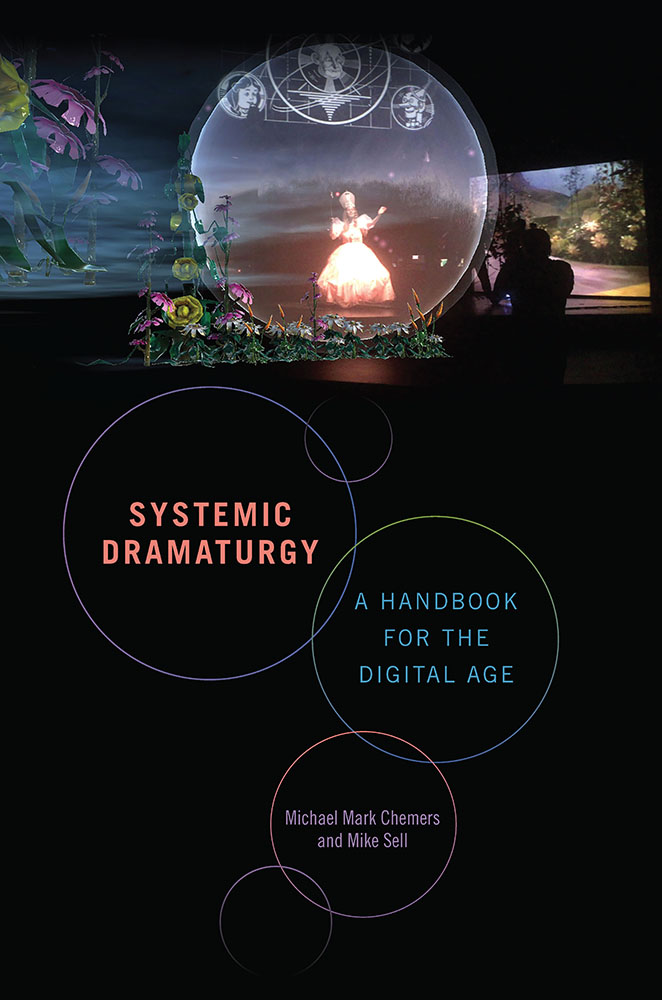
Systemic Dramaturgy

A Handbook for the Digital Age

2022

Working theatrically with technology Systemic Dramaturgy offers an invigorating, practical look at the daunting cultural problems of the digital age as they relate to performance. Authors Michael Mark Chemers and Mike Sell reject the incompatibility of theatre with robots, digital media, or video games. Instead, they argue that technology is the original problem of How can we tell this story and move this audience with these tools? And if we have different tools, how can that change the stories we tell? This volume attunes readers to “systemic dramaturgy”—the recursive elements of signification, innovation, and history that underlie all performance—arguing that theatre must be understood as a system of systems, a concatenation of people, places, things, politics, feelings, and interpretations, ideally working together to entertain and edify an audience. The authors discuss in-depth the application of time-tested dramaturgical skills to extra-theatrical endeavors, including multi-platform performance, installations, and videogames. And they identify the unique interventions that dramaturgs can and must make into these art forms. More than any other book that has been published in the field, Systemic Dramaturgy places historical dramaturgy in conversation with technologies as old as the deus ex machina and as new as artificial intelligence. Spirited and playful in its approach, this volume collates histories, transcripts, and case studies and applies the concepts of systemic dramaturgy to works both old and avant-garde. Between chapters, Chemers and Sell talk with with some of the most forward-thinking, innovative, and creative people working in live media as they share their diverse approaches to the challenges of making performances, games, and digital media that move both heart and mind. This volume is nothing less than a guide for thinking about the future evolution of performance.
Teaching Performance Studies book cover
#35

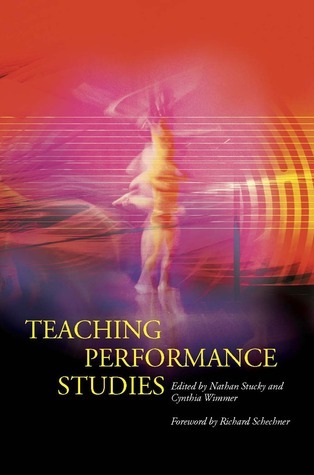
Teaching Performance Studies

2002

Edited by Nathan Stucky and Cynthia Wimmer, Teaching Performance Studies is the first organized treatment of performance studies theory, practice, and pedagogy. This collection of eighteen essays by leading scholars and educators reflects the emergent and contested nature of performance studies, a field that looks at the broad range of human performance from everyday conversation to formal theatre and cultural ritual. The cross-disciplinary freedom enacted by the writers suggests a new vision of performance studies—a deliberate commerce between field and classroom.
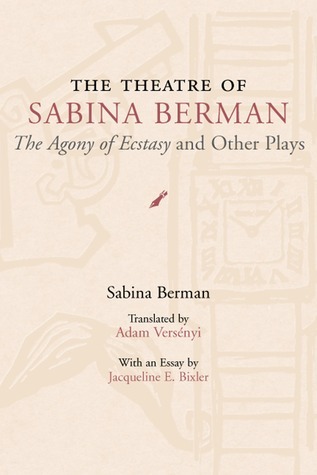
The Theatre of Sabina Berman book cover
#38

The Theatre of Sabina Berman

The Agony of Ecstasy and Other Plays

2002

The Theatre of Sabina Berman introduces and makes accessible to an English-speaking audience the work of the contemporary Mexican playwright Sabina Berman. The book contains translations of the four plays that established Berman’s career: The Agony of Ecstasy, Yankee, Puzzle, and Heresy. An introduction by Adam Versényi provides a critical assessment of each play, a discussion of the specific problems of translation involved, and placement of Berman’s work in the larger Mexican and Latin American context. It is evident that Sabina Berman’s theatrical acumen matches the depth of her dramatic design whether it is the sheer variety of techniques from song to staged tableau that appear in The Agony of Ecstasy; the physicalization of what it means to be interrogated and to interrogate in Yankee; the final enigmatic image of a soldier alone on stage, silently aiming his firearm at an undefined threat that potentially emanates from the audience in Puzzle; or the manner in which the family narrates its own “heretical” actions in Heresy. It is the combination of theatrical technique with universal themes of self-definition that cuts across cultures and ultimately makes these plays translatable.
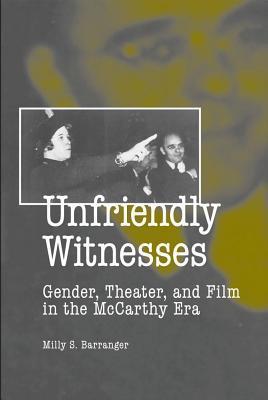
Unfriendly Witnesses book cover
#40

Unfriendly Witnesses

Gender, Theater, and Film in the McCarthy Era

2008

Unfriendly Witnesses: Gender, Theater, and Film in the McCarthy Era examines the experiences of seven prominent women of stage and screen whose lives and careers were damaged by the McCarthy-era witch hunts for Communists and Communist sympathizers in the entertainment industry: Judy Holliday, Anne Revere, Lillian Hellman, Dorothy Parker, Margaret Webster, Mady Christians, and Kim Hunter. The effects on women of the anti-Communist crusades that swept the nation between 1947 and 1962 have been largely overlooked by cultural critics and historians, who have instead focused their attention on the men of the period. Author Milly S. Barranger looks at the gender issues inherent in the investigations and at the destructive impact the investigations had on the lives and careers of these seven women and on American film and theater and culture in general. Issues of gender and politics surface in the women s testimony before the committeemen, labeled unfriendly because the women refused to name names. "Unfriendly Witnesses "redresses the absence of women s histories during this era of modern political history and identifies the enduring strains of McCarthyism in postmillennial America. Barranger recreates the congressional and state hearings that addressed the alleged Communist influence in the entertainment industry and examines in detail the cases of these seven women, including the appearance of actress Judy Holliday before the committee of Senator Pat McCarran, who aimed to limit the immigration of Eastern Europeans; actress Anne Revere and playwright Lillian Hellman, appearing before the House Un-American Activities Committee, sought the protections of the Fifth Amendment with different outcomes; of writer Dorothy Parker, who testified before a New York state legislative committee investigating contributions to front groups; and of director Margaret Webster, before Senator Joseph McCarthy s subcommittee, whose aim was the indictment of Senator J. William Fulbright and the U.S. State Department. None escaped subsequent blacklisting, denial of employment, and notations in FBI files that they were threats to national security. "Unfriendly Witnesses" is enhanced by nine illustrations and extensive excerpts from "Red Channels: The Report of Communist Influence in Radio and Television, " originally published in 1950 at the height of the Red Scare, and which listed 151 allegedly subversive writers, directors, and performers. Barranger includes the complete entries from "Red Channels "for the seven women she discusses, which include the subversive affiliations that prompted the women s interrogation by the government.
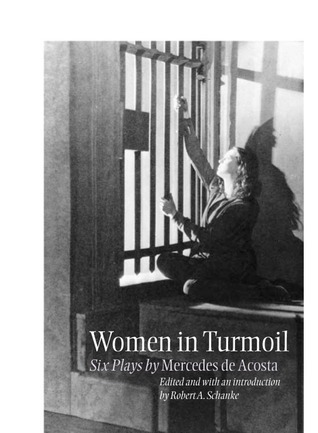
Women in Turmoil book cover
#41

Women in Turmoil

Six Plays by Mercedes de Acosta

2003

In this first publication of six plays by the flamboyantly uninhibited author, poet, and playwright Mercedes de Acosta (1893–1968), theater historian Robert A. Schanke rescues these lost theatrical writings from the dusty margins of obscurity. Often autobiographical, always rife with gender struggle, and still decidedly stageworthy, Women in Turmoil: Six Plays by Mercedes de Acosta constitutes a significant find for the canon of gay and lesbian drama. In her 1960 autobiography Here Lies the Heart, de Acosta notes that as she was contemplating marriage to a man in 1920, she was "in a strange turmoil about world affairs, my own writing, suffrage, sex, and my inner spiritual development." The voice in these plays is that of a lesbian in turmoil, marginalized and ignored. Her same-sex desires and struggles for acceptance fueled her writings, and nowhere is that more evident than in the plays contained herein. The women characters struggle with unfulfilling marriages, divorce, unrequited sexual desire, suppressed identity, and a longing for recognition. Of the six plays, only the first two were ever produced. Jehanne d’Arc (1922) premiered in Paris with de Acosta’s lover at the time, Eva Le Gallienne, starring and Norman Bel Geddes designing the set and lights. In 1934, de Acosta adapted it into a screenplay for Greta Garbo, then her lover, but it was never filmed. Portraying rampant anti-Semitism in a small New England town, Jacob Slovak (1923) was performed both on Broadway and in London, with the London production starring John Gielgud and Ralph Richardson. The Mother of Christ (1924) is a long one-act play written for the internationally known actress Eleonora Duse. After Duse’s death, several other actresses including Eva Bartok, Jeanne Eagels, and Lillian Gish explored productions of the play. Igor Stravinsky wrote a score, Norman Bel Geddes designed a set, and Gladys Calthrop designed costumes. However, the play was never produced. Her most autobiographical play, World Without End (1925), and her most sensational play, The Dark Light (1926), both unfold through plots of sibling rivalry, incest, and suicide. With overtones of Ibsen, Illusion (1928) continues the themes of de Acosta’s previous plays with her rough and seedy cast of characters, but here the playwright’s drama grows to incorporate a yearning for belonging as well as strong elements of class conflict. What notoriety remains associated with de Acosta has less to do with her writing than with her infamous romances with the likes of Greta Garbo, Marlene Dietrich, Isadora Duncan, Alla Nazimova, Eva Le Gallienne, Tamara Karsavina, Pola Negri, and Ona Munson. Through this collection of six powerfully poignant dramas, editor Robert A. Schanke strives to correct myths about Mercedes de Acosta and to restore both her name and her literary achievements to their proper place in history. Robert A. Schanke has authored the original biography, “That Furious Lesbian:” The Story of Mercedes de Acosta, also available from Southern Illinois University Press.


Authors

548 Market St PMB 65688, San Francisco California 94104-5401 USA
© 2026 Paratext Inc. All rights reserved