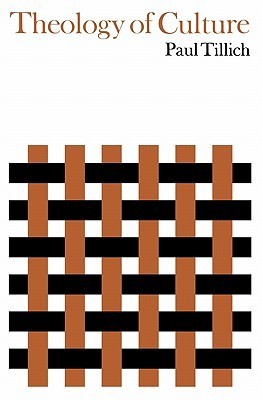
Theology of Culture draws together fifteen of Dr. Tillich's finest essays, in which a diversity of contemporary attitudes and problems is brought within the wide scope of his philosophy. His classic essay, The Two Types of Philosophy of Religion, is included here as a focal arguement for closing the fateful gap between religion and culture, thus reconciling concerns which are not strange to each other. Dr. Tillich consequently shows the religious dimension in many special spheres of man's cultural activity by discussing religion in relation to art, Existentialism, psychoanalysis, science, and education. He also argues against spiritual and intellectual provincialism by comparing the cultures of Europe and Americal, America and Russia, and the philosophies of Protestantism and Judaism. To those already familiar with Dr.Tillich's writings, this book makes available a selection of his previously scattered esays. For those who are reading his book for the first time, this book brings together the grand motifs of the thought of a great theologian and philosopher.