Margins
Theosophical Manuals book cover 1
Theosophical Manuals book cover 2
Theosophical Manuals book cover 3
Theosophical Manuals
Series · 7 books · 1889-1917

Books in series

The Seven Principles of Man book cover
#1

The Seven Principles of Man

1900

This Elibron Classics book is a facsimile reprint of a 1892 edition by Theosophical Publishing Society, London etc..
#2

Reincarnation

1910

This work has been selected by scholars as being culturally important, and is part of the knowledge base of civilization as we know it. This work was reproduced from the original artifact, and remains as true to the original work as possible. Therefore, you will see the original copyright references, library stamps (as most of these works have been housed in our most important libraries around the world), and other notations in the work. This work is in the public domain in the United States of America, and possibly other nations. Within the United States, you may freely copy and distribute this work, as no entity (individual or corporate) has a copyright on the body of the work.As a reproduction of a historical artifact, this work may contain missing or blurred pages, poor pictures, errant marks, etc. Scholars believe, and we concur, that this work is important enough to be preserved, reproduced, and made generally available to the public. We appreciate your support of the preservation process, and thank you for being an important part of keeping this knowledge alive and relevant.
Death—and After? book cover
#3

Death—and After?

1893

This book was converted from its physical edition to the digital format by a community of volunteers. You may find it for free on the web. Purchase of the Kindle edition includes wireless delivery.
Karma book cover
#4

Karma

1917

""Karma"" is a philosophical book written by Annie Besant, a prominent Theosophist and feminist of the late 19th and early 20th centuries. The book explores the concept of karma, which is a central tenet of Hindu, Buddhist, and Jainist philosophy. Besant argues that karma is not simply a matter of fate or destiny, but rather a law of cause and effect that operates on both the physical and spiritual planes. She discusses the different types of karma, such as individual, collective, and cosmic karma, and how they affect our lives and the world around us. Besant also explores the relationship between karma and reincarnation, and how our actions in this life can influence our future incarnations. Throughout the book, Besant emphasizes the importance of taking responsibility for our actions and striving to live in harmony with the laws of karma. ""Karma"" is a thought-provoking and insightful exploration of one of the most fundamental concepts in Eastern philosophy.1897. Besant, the Founder/President of the Theosophical Society delivers the fourth in a series of manuals designed to meet public demand for a simple exposition of Theosophical teachings with the hope that it will lead the reader to penetrate more deeply into its philosophy, its science and its religion. This fascinating book deals with the subject of Karma. See other titles by this author available from Kessinger Publishing.This scarce antiquarian book is a facsimile reprint of the old original and may contain some imperfections such as library marks and notations. Because we believe this work is culturally important, we have made it available as part of our commitment for protecting, preserving, and promoting the world's literature in affordable, high quality, modern editions, that are true to their original work.

The Astral Plane book cover
#5

The Astral Plane

1895

With the knowledge of the forces of nature which the resources of the astral plane place at the command of its inhabitants the production of what are called "spirit lights" is a very easy matter...-from The Astral PlaneAn engrossing document of the public fascination with the paranormal at the turn of the 20th century, this 1895 volume explains one aspect of theosophy, the metaphysical doctrine that seeks to find the unified truth buried in all of humanity's religions. On this guided tour of one of the "various planes of the universe," you'll meet black magicians, vampires, werewolves, elemental essences, fairies, and angels. You'll encounter phenomena including churchyard ghosts, mysterious bell ringing, clairvoyance, second sight, spirit photographs, slate writing, and levitation. And you'll learn why darkness is absolutely required at a seance. Don't leave this plane of existence without it.CHARLES WEBSTER LEADBEATER (1847-1934) was one of the foremost writings on theosophical topics of the early 20th century. He is also the author of The Aura: An Enquiry into the Nature and Functions of the Luminous Mist Seen about Human and Other Bodies (1895) and Dreams: What They Are and How They Are Caused (1896).
Devachanic Plane Or The Heaven World book cover
#6

Devachanic Plane Or The Heaven World

1889

This scarce antiquarian book is a facsimile reprint of the original. Due to its age, it may contain imperfections such as marks, notations, marginalia and flawed pages. Because we believe this work is culturally important, we have made it available as part of our commitment for protecting, preserving, and promoting the world's literature in affordable, high quality, modern editions that are true to the original work.
Man and His Bodies book cover
#7

Man and His Bodies

1900

Annie Wood Besant (1847-1933) was a prominent Theosophist, women's rights activist, writer and orator. She was born in London into a middle-class family of Irish origin. She fought for the causes she thought were right, starting with freedom of thought, women's rights, secularism (she was a leading member of the National Secular Society), birth control, Fabian socialism and workers' rights. Soon she was earning a small weekly wage by writing a column for the National Reformer, the newspaper of the National Secular Society. She was also one of the leading figures in Theosophy. Soon after becoming a member of the Theosophical Society she went to India for the first time (in 1893). She devoted much of her energy not only to the Society, but also to India's freedom and progress. Among her famous works are: Autobiographical Sketches (1885), Annie Besant: An Autobiography (1893), London Lectures of 1907 (1907), The Basis of Morality (1915) and The Case for India (1917).

Authors

Charles Leadbeater
Charles Leadbeater
Author · 22 books

Charles Webster Leadbeater (/ˈlɛdˌbɛtər/; 16 February 1854 – 1 March 1934) was an influential member of the Theosophical Society, author on occult subjects and co-initiator with J. I. Wedgwood of the Liberal Catholic Church. Originally a priest of the Church of England, his interest in spiritualism caused him to end his affiliation with Anglicanism in favour of the Theosophical Society, where he became an associate of Annie Besant. He became a high-ranking officer of the society, but resigned in 1906 amid a scandal. Accusations of his detractors were never proven and, with Besant's assistance, he was readmitted a few years later. Leadbeater went on to write over 69 books and pamphlets that examined in detail the hidden side of life as well as maintain regular speaking engagements. His efforts on behalf of the society assured his status as one of its leading members until his death in 1934.

Annie Besant
Annie Besant
Author · 29 books

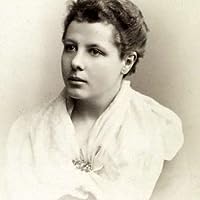
Annie Wood Besant (1 October 1847 – 20 September 1933) was a prominent British socialist, theosophist, women's rights activist, writer and orator and supporter of Irish and Indian self-rule. She married aged 20 to Frank Besant, but separated from him over religious differences. She then became a prominent speaker for the National Secular Society (NSS) and writer and a close friend of Charles Bradlaugh. In 1877 they were prosecuted for publishing a book by birth control campaigner Charles Knowlton. The scandal made them famous, and Bradlaugh was elected M.P. for Northampton in 1880. She became involved with union actions including the Bloody Sunday demonstration and the London matchgirls strike of 1888. She was a leading speaker for the Fabian Society and the Marxist Social Democratic Federation (SDF). She was elected to the London School Board for Tower Hamlets, topping the poll even though few women were qualified to vote at that time. In 1890 Besant met Helena Blavatsky and over the next few years her interest in theosophy grew while her interest in secular matters waned. She became a member of the Theosophical Society and a prominent lecturer on the subject. As part of her theosophy-related work, she travelled to India. In 1898 she helped establish the Central Hindu College and in 1922 she helped establish the Hyderabad (Sind) National Collegiate Board in Mumbai,India . In 1902, she established the first overseas Lodge of the International Order of Co-Freemasonry, Le Droit Humain. Over the next few years she established lodges in many parts of the British Empire. In 1907 she became president of the Theosophical Society, whose international headquarters were in Adyar, Madras, (Chennai). She also became involved in politics in India, joining the Indian National Congress. When World War I broke out in 1914, she helped launch the Home Rule League to campaign for democracy in India and dominion status within the Empire. This led to her election as president of the Indian National Congress in late 1917. After the war, she continued to campaign for Indian independence and for the causes of theosophy, until her death in 1933. She fought for the causes she thought were right, starting with freedom of thought, women's rights, secularism (she was a leading member of the National Secular Society alongside Charles Bradlaugh), birth control, Fabian socialism and workers' rights. Once free of Frank Besant and exposed to new currents of thought, she began to question not only her long-held religious beliefs but also the whole of conventional thinking. She began to write attacks on the churches and the way they controlled people's lives. In particular she attacked the status of the Church of England as a state-sponsored faith. Soon she was earning a small weekly wage by writing a column for the National Reformer, the newspaper of the NSS. The NSS stood for a secular state and an end to the special status of Christianity, and allowed her to act as one of its public speakers. Public lectures were very popular entertainment in Victorian times. Besant was a brilliant speaker, and was soon in great demand. Using the railway, she crisscrossed the country, speaking on all of the most important issues of the day, always demanding improvement, reform and freedom. For many years Besant was a friend of the National Secular Society's leader, Charles Bradlaugh. Bradlaugh, a former soldier, had long been separated from his wife; Besant lived with him and his daughters, and they worked together on many issues. He was an atheist and a republican; he was also trying to get elected as Member of Parliament (MP) for Northampton. Besant and Bradlaugh became household names in 1877 when they published a book by the American birth-control campaigner Charles Knowlton. It claimed that working-class families could never be happy until they were able to decide how many children they wanted. It suggested ways to limit the size of their famil

548 Market St PMB 65688, San Francisco California 94104-5401 USA
© 2026 Paratext Inc. All rights reserved
Theosophical Manuals