1383
First Published
3.67
Average Rating
77
Number of Pages
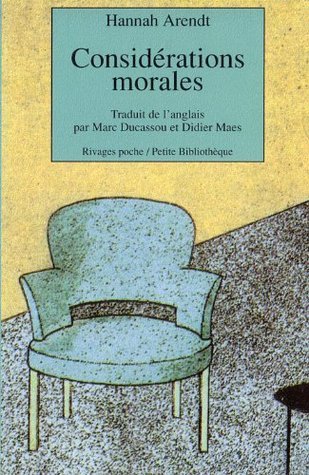
Est-ce que notre aptitude à juger; à distinguer le bien du mal, le beau du laid, est dépendante de notre faculté de penser ?Tant d''années après le procès Eichmann, Hannah Arendt revient dans ce bref essai, écrit en 1970, à la question du mal. Eichmann n''était ni monstrueux ni démoniaque, et la seule caractéristique décelable dans son passé comme dans son comportement durant le procès et l''interrogatoire était un fait négatif : ce n''était pas de la stupidité mais une extraordinaire superficialité. Une curieuse et authentique inaptitude à penser.La question que Hannah Arendt pose est : l''activité de penser en elle-même, l''habitude de tout examiner et de réfléchir à tout ce qui arrive, sans égard au contenu spécifique, et sans souci des conséquences, cette activité peut-elle être de nature telle qu''elle conditionne les hommes à ne pas faire le mal ? Est-ce que le désastreux manque de ce que nous nommons conscience n''est pas finalement qu''une inaptitude à penser ?
Avg Rating
3.67
Number of Ratings
158
5 STARS
18%
4 STARS
41%
3 STARS
33%
2 STARS
6%
1 STARS
2%
goodreads
Author
Hannah Arendt
Author · 72 books
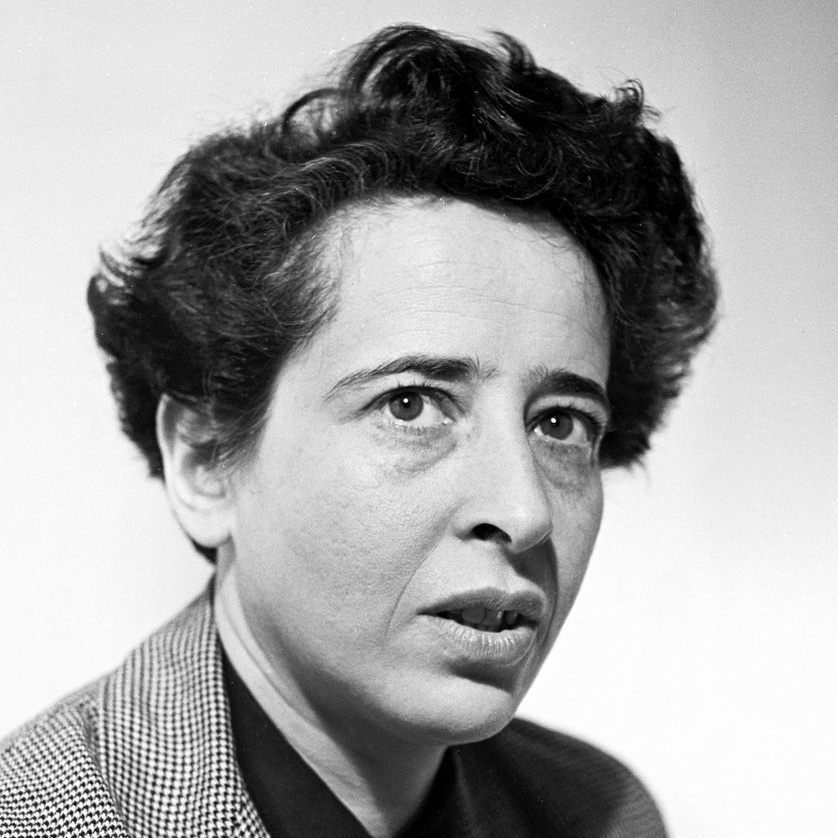
Hannah Arendt (1906 – 1975) was one of the most influential political philosophers of the twentieth century. Born into a German-Jewish family, she was forced to leave Germany in 1933 and lived in Paris for the next eight years, working for a number of Jewish refugee organisations. In 1941 she immigrated to the United States and soon became part of a lively intellectual circle in New York. She held a number of academic positions at various American universities until her death in 1975. She is best known for two works that had a major impact both within and outside the academic community. The first, The Origins of Totalitarianism, published in 1951, was a study of the Nazi and Stalinist regimes that generated a wide-ranging debate on the nature and historical antecedents of the totalitarian phenomenon. The second, The Human Condition, published in 1958, was an original philosophical study that investigated the fundamental categories of the vita activa (labor, work, action). In addition to these two important works, Arendt published a number of influential essays on topics such as the nature of revolution, freedom, authority, tradition and the modern age. At the time of her death in 1975, she had completed the first two volumes of her last major philosophical work, The Life of the Mind, which examined the three fundamental faculties of the vita contemplativa (thinking, willing, judging).