Margins




548 Market St PMB 65688, San Francisco California 94104-5401 USA
© 2026 Paratext Inc. All rights reserved
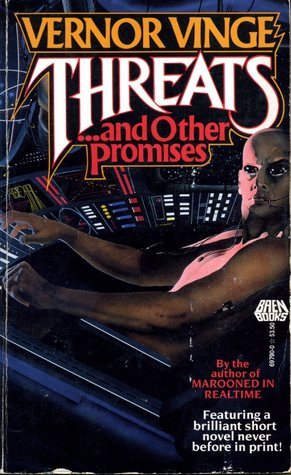
Threats and Promises: HOW DO YOU TELL THE DIFFERENCE? Take for example the "promises" inherent in computers: super-human intelligences to do our every bidding and make our every wish come true; mind links with those mechanical intelligences to give us the gift of instant knowledge-on-demand of anything that has ever been recorded or can be calculated. Computer realities that aren't just as good as everyday life—but much, much better. But once we have such servants civilization will no longer be recognizable, or even comprehensible to such as us. Once you mind link with that super-intelligence you will no longer be human—you might not even be you. And the world that "you" inhabit may be nothing more than a dream in the mind of a computer. What was once a threat will have become a promise, and what was once a promise will be some kind of... joke. Contents: Apartness (1965) Conquest by Default (1968) The Whirligig of Time (1974) Gemstone (1983) Just Peace (1971) with William Rupp Original Sin (1972) The Blabber (1988)