Margins
Margins
548 Market St PMB 65688, San Francisco California 94104-5401 USA
hello@margins.app
·
+1 (650) 223-5283
Privacy Policy
·
Terms of Use
© 2026 Paratext Inc. All rights reserved
Timothy Trant
Timothy Trant
Series · 7 books · 1937-1964
By
Q. Patrick
,
Patrick Quentin
Books in series
#1
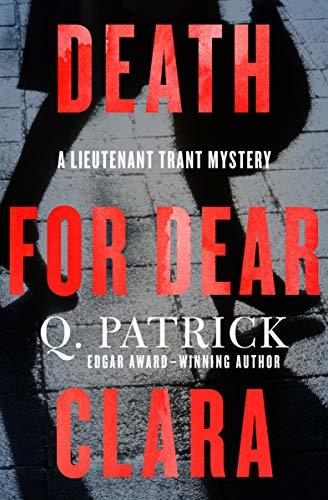
Death for Dear Clara
1937
A dapper detective tracks a high-society killer in Manhattan—from the Edgar Award–winning author who wrote the Peter Duluth Mysteries as Patrick Quentin.
Patrick Quentin, best known for the Peter Duluth puzzle mysteries, also penned outstanding detective novels from the 1930s through the 1960s under other pseudonyms, including Q. Patrick and Jonathan Stagge. Anthony Boucher wrote: “Quentin is particularly noted for the enviable polish and grace which make him one of the leading American fabricants of the murderous comedy of manners; but this surface smoothness conceals intricate and meticulous plot construction as faultless as that of Agatha Christie.” After tumbling from the Park Avenue set to penurious widowhood, the resilient Clara Van Heuten has started her own business offering counsel to aspiring writers. When it comes to advice, she’s full of it. Maybe that’s why she ends up with a knife in her back. Timothy Trant, once the pride of Princeton, now one of New York’s finest, uses his IQ to figure out a killer’s MO. This time all the lieutenant has to work with is a stack of unpublishable manuscripts and the hoity-toity guest list of Van Heuten’s last get-together—until he discovers that the widow had reason to believe she was going to be murdered . . .
#3
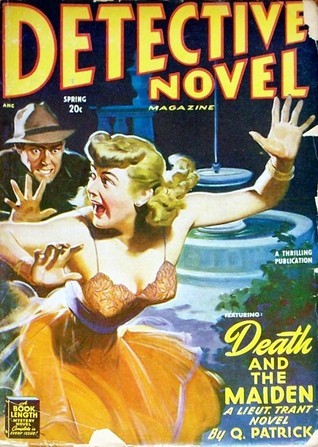
Death and the Maiden
1939
Lieutenant Trant is on the case in this "fun to read" mystery by the Edgar Award-winning author who wrote the Peter Duluth Mysteries as Patrick Quentin (Kirkus Reviews). Patrick Quentin, best known for the Peter Duluth puzzle mysteries, also penned outstanding detective novels from the 1930s through the 1960s under other pseudonyms, including Q. Patrick and Jonathan Stagge. Anthony Boucher wrote: "Quentin is particularly noted for the enviable polish and grace which make him one of the leading American fabricants of the murderous comedy of manners; but this surface smoothness conceals intricate and meticulous plot construction as faultless as that of Agatha Christie." Lee Loverling knew her roommate, Grace, had become somewhat of an enigma. After her father's suicide and her family's failed fortunes, Grace had changed into a willful woman whose romantic dalliances bordered on reckless—and whose moods had become almost sinister. But Lee could not have known just how far Grace had fallen until, after a night of fun in New York City, she's found dead in a river, apparently the victim of murder. All of Wentworth College is abuzz with the tragedy, and Lee is suddenly at the center of an investigation led by the intrepid Lieutenant Trant of the New York Homicide Squad that threatens to expose a great many people—both students and faculty—to the scandals Grace left in her wake. Working together, Lieutenant Trant and Lee must unravel the tangled web of Grace's life to uncover the truth behind the young woman's death.
#4
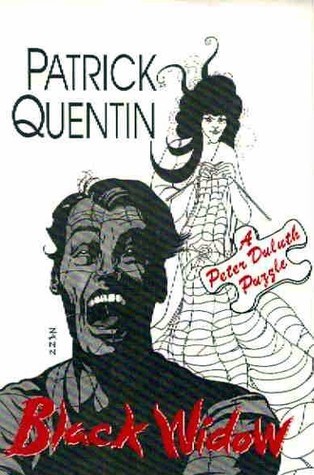
Black Widow
1952
Duluth, a Broadway producer and amateur detective, is baffled when his wife, Iris, discovers the body of Nanny Ordway, an aspiring writer he had recently befriended.
#5
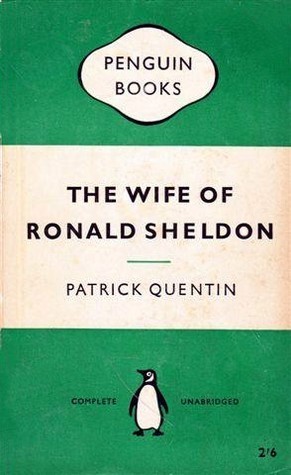
The Wife of Ronald Sheldon
1954
In this mystery from an Edgar Award-winning author, sleuth Peter Duluth steps in when his rebellious nephew is charged with murder. Patrick Quentin, best known for the Peter Duluth puzzle mysteries, also penned outstanding detective novels from the 1930s through the 1960s under other pseudonyms, including Q. Patrick and Jonathan Stagge. Anthony Boucher wrote: "Quentin is particularly noted for the enviable polish and grace which make him one of the leading American fabricants of the murderous comedy of manners; but this surface smoothness conceals intricate and meticulous plot construction as faultless as that of Agatha Christie." Jake Duluth is a man alone. Three years after the suicide of his beloved wife, the wall between Jake and his son, Bill, has only grown higher. Bill's constant impulsiveness has driven Jake to distraction, while Jake's constant concern for his publishing business alienates Bill even more. But when Bill is accused of murdering Jake's business partner after falling in love with the man's much younger wife, Jake has no choice but to believe his son and call in someone with much more experience in such sinister matters—his brother, Peter. Now, with Bill's life at stake, Jake and Peter must follow a trail of secrets and twisted loyalties if they are going to uncover a culprit neither could have ever imagined.
#6
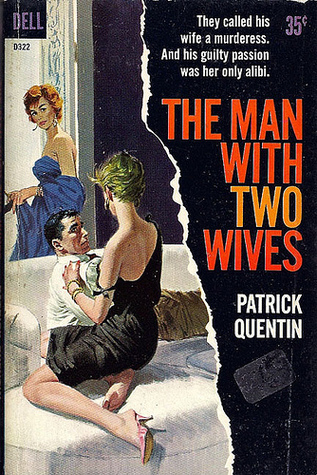
The Man with Two Wives
1955
They called his wife a murderess. And his guilty passion was her only alibi.
#7
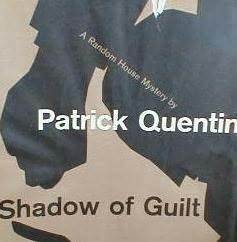
Shadow of Guilt
1959
A middle-aged man with a socially correct wife is trying to break his chains because of a loving secretary, and when a playboy is murdered, with suspicion attached to his about to be married niece and her fiancé — his is the problem. To sacrifice his wife, his mistress, his niece—his own dream of happiness—is the torment through which George Hadley veers while smooth New York City's Inspector Trant hovers over all the ins- and outs—that George and his family devise.
#8
Familienschande
1964
A “hard to solve and easy to read” mystery from the Edgar Award–winning author of the Peter Duluth series (Kirkus Reviews). Patrick Quentin, best known for the Peter Duluth puzzle mysteries, also penned outstanding detective novels from the 1930s through the 1960s under other pseudonyms, including Q. Patrick and Jonathan Stagge. Anthony Boucher wrote: “Quentin is particularly noted for the enviable polish and grace which make him one of the leading American fabricants of the murderous comedy of manners; but this surface smoothness conceals intricate and meticulous plot construction as faultless as that of Agatha Christie.” Lewis Denham has always been the black sheep of the family. Adopted into the “proper” Denham household after his working-class parents died, Lew never quite fit in with the rest of the clan—or maybe he simply couldn’t keep his nose elevated that high for that long without getting frostbite. Either way, when he announces his marriage to a British girl without checking how blue her blood is, the family is aghast. But things become truly appalling when Lew finds a dead man in his apartment—and it seems the lower-class victim had a connection with his upper-crust family. Now, feeling more outside the Denham ranks than ever, Lew will have to look past his family’s elite façade and find out who they really are. And he’s about to learn that none of them are too good to get a little blood on their hands . . .
Authors
Q. Patrick
Author · 9 books
Patrick Quentin
Author · 18 books