Margins
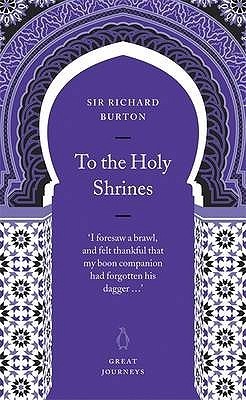
To the Holy Shrines book cover
To the Holy Shrines
1855
First Published
3.27
Average Rating
112
Number of Pages
Disguised as a Persian dervish, Sir Richard Burton (1821-1890) set out to become the first Christian to penetrate the Muslim shrines of Medina and Mecca - a reckless stunt that would have resulted in his being executed if discovered. Endlessly observant, amused, boastful and engaging, Burton here describes his time in Cairo (including a memorable drinking contest with a ferocious Albanian mercenary captain), his crossing of the Red Sea in a crazily overloaded pilgrim boat and his arrival in the fabled Nejd. "Great Journeys" allows readers to travel both around the planet and back through the centuries - but also back into ideas and worlds frightening, ruthless and cruel in different ways from our own. Few reading experiences can begin to match that of engaging with writers who saw astounding great civilisations, walls of ice, violent and implacable jungles, deserts and mountains, multitudes of birds and flowers new to science. Reading these books is to see the world afresh, to rediscover a time when many cultures were quite strange to each other, where legends and stories were treated as facts and in which so much was still to be discovered.

Avg Rating
3.27
Number of Ratings
133
5 STARS
11%
4 STARS
29%
3 STARS
41%
2 STARS
13%
1 STARS
6%
goodreads

Author

Richard Francis Burton
Author · 33 books

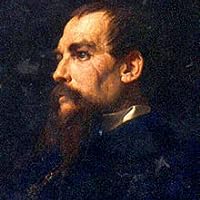
Captain Sir Richard Francis Burton KCMG FRGS was a British geographer, explorer, translator, writer, soldier, orientalist, cartographer, ethnologist, spy, linguist, poet, fencer and diplomat. He was known for his travels and explorations within Asia, Africa and the Americas as well as his extraordinary knowledge of languages and cultures. According to one count, he spoke 29 European, Asian, and African languages. Burton's best-known achievements include travelling in disguise to Mecca, an unexpurgated translation of One Thousand and One Nights (also commonly called The Arabian Nights in English after Andrew Lang's adaptation), bringing the Kama Sutra to publication in English, and journeying with John Hanning Speke as the first Europeans led by Africa's greatest explorer guide, Sidi Mubarak Bombay, utilizing route information by Indian and Omani merchants who traded in the region, to visit the Great Lakes of Africa in search of the source of the Nile. Burton extensively criticized colonial policies (to the detriment of his career) in his works and letters. He was a prolific and erudite author and wrote numerous books and scholarly articles about subjects including human behaviour, travel, falconry, fencing, sexual practices, and ethnography. A unique feature of his books is the copious footnotes and appendices containing remarkable observations and unexpurgated information. He was a captain in the army of the East India Company serving in India (and later, briefly, in the Crimean War). Following this he was engaged by the Royal Geographical Society to explore the east coast of Africa and led an expedition guided by the locals and was the first European to see Lake Tanganyika. In later life he served as British consul in Fernando Po, Santos, Damascus and, finally, Trieste. He was a Fellow of the Royal Geographical Society and was awarded a knighthood (KCMG) in 1886.

548 Market St PMB 65688, San Francisco California 94104-5401 USA
© 2026 Paratext Inc. All rights reserved