



To the Old Pagan Religion Olympian gods! how can I let ye go, And pin my faith to this new Christian creed? Can I resign the deities I know, for him who on a cross for man did bleed? How in my weakness can my hopes depend On one lone god, tho' mighty be his pow'r? Why can Jove's host no more assistance lend, To Soothe my pain, and cheer my troubled hour? Are there no dryads on these wooded mounts O'er which I oft in desolation roam? Are there no naiads in these crystal founts Or nereids upon the ocean foam? Fast spreads the new; the older faith declines; The name of Christ resounds upon the air; But my wrack'd soul in solitude repines And gives the gods their last-received pray'r.
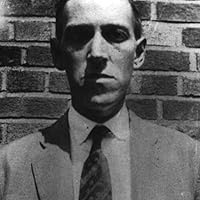
Author

Howard Phillips Lovecraft, of Providence, Rhode Island, was an American author of horror, fantasy and science fiction. Lovecraft's major inspiration and invention was cosmic horror: life is incomprehensible to human minds and the universe is fundamentally alien. Those who genuinely reason, like his protagonists, gamble with sanity. Lovecraft has developed a cult following for his Cthulhu Mythos, a series of loosely interconnected fictions featuring a pantheon of human-nullifying entities, as well as the Necronomicon, a fictional grimoire of magical rites and forbidden lore. His works were deeply pessimistic and cynical, challenging the values of the Enlightenment, Romanticism and Christianity. Lovecraft's protagonists usually achieve the mirror-opposite of traditional gnosis and mysticism by momentarily glimpsing the horror of ultimate reality. Although Lovecraft's readership was limited during his life, his reputation has grown over the decades. He is now commonly regarded as one of the most influential horror writers of the 20th Century, exerting widespread and indirect influence, and frequently compared to Edgar Allan Poe. — Wikipedia