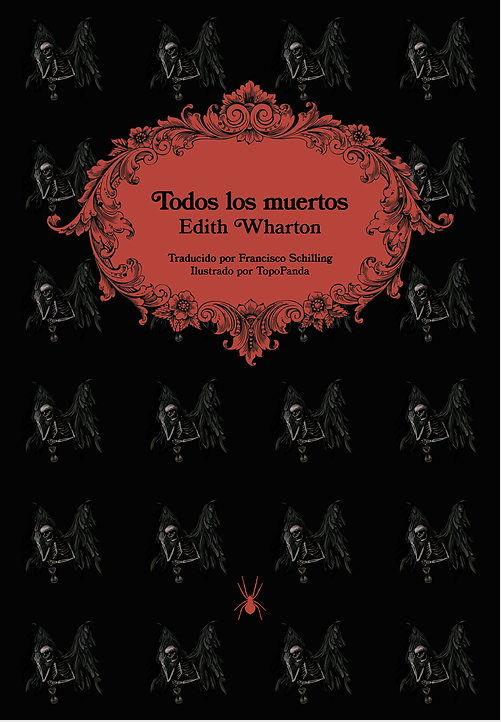



Todos los muertos reúne una selección de cuatro cuentos de Edith Wharton, que se enmarcan en cuatro momentos de su obra—de 1901 a 1937—, y que abordan algunos de los temas más recurrentes de su escritura: la muerte, los fantasmas y los ritos paganos. En ellos es posible encontrar los elementos clásicos de la narrativa gótica, como el horror y lo sobrenatural, la persistencia fantasmagórica del pasado, los cementerios, los castillos y la brujería, pero también la presencia de una crítica constante hacia la condición subalterna de las mujeres en Occidente. A partir de ello, Wharton narra desde un gótico doméstico que gira en torno a diversas formas de denuncia y resistencia ante la dominación machista y religiosa, la condena de la sexualidad y las innumerables formas de invisibilización y violencia ejercidas contra las mujeres. Con una capacidad de fabulación extraordinaria, Wharton nos transporta a un castillo en ruinas custodiado por perros mudos que apenas se mueven; a la desesperación de una mujer que, luego de un accidente, queda abandonada en una mansión aislada del mundo; al horror de un vínculo determinado por el machismo dentro de una casona fantasmagórica; y a la persistencia del dominio de un marido sobre su esposa incluso después de muerta.
Author

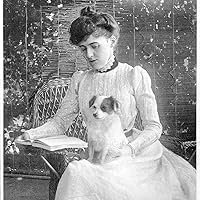
Edith Newbold Jones was born into such wealth and privilege that her family inspired the phrase "keeping up with the Joneses." The youngest of three children, Edith spent her early years touring Europe with her parents and, upon the family's return to the United States, enjoyed a privileged childhood in New York and Newport, Rhode Island. Edith's creativity and talent soon became obvious: By the age of eighteen she had written a novella, (as well as witty reviews of it) and published poetry in the Atlantic Monthly. After a failed engagement, Edith married a wealthy sportsman, Edward Wharton. Despite similar backgrounds and a shared taste for travel, the marriage was not a success. Many of Wharton's novels chronicle unhappy marriages, in which the demands of love and vocation often conflict with the expectations of society. Wharton's first major novel, The House of Mirth, published in 1905, enjoyed considerable literary success. Ethan Frome appeared six years later, solidifying Wharton's reputation as an important novelist. Often in the company of her close friend, Henry James, Wharton mingled with some of the most famous writers and artists of the day, including F. Scott Fitzgerald, André Gide, Sinclair Lewis, Jean Cocteau, and Jack London. In 1913 Edith divorced Edward. She lived mostly in France for the remainder of her life. When World War I broke out, she organized hostels for refugees, worked as a fund-raiser, and wrote for American publications from battlefield frontlines. She was awarded the French Legion of Honor for her courage and distinguished work. The Age of Innocence, a novel about New York in the 1870s, earned Wharton the Pulitzer Prize for fiction in 1921 — the first time the award had been bestowed upon a woman. Wharton traveled throughout Europe to encourage young authors. She also continued to write, lying in her bed every morning, as she had always done, dropping each newly penned page on the floor to be collected and arranged when she was finished. Wharton suffered a stroke and died on August 11, 1937. She is buried in the American Cemetery in Versailles, France.
- Barnesandnoble.com