Margins
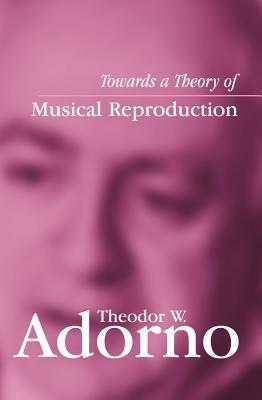
Towards a Theory of Musical Reproduction book cover
Towards a Theory of Musical Reproduction
Notes, a Draft and Two Schemata
2001
First Published
4.33
Average Rating
304
Number of Pages
At the beginning of his career in the 1920s, Adorno sketched a plan to write a major work on the theory of musical reproduction, a task he returned to time and again throughout his career but never completed. The choice of the word reproduction as opposed to interpretation indicates a primary that there is a clearly defined musical text whose precision exceeds what is visible on the page, and that the performer has the responsibility to reproduce it as accurately as possible, beyond simply playing what is written. This task, according to Adorno, requires a detailed understanding of all musical parameters in their historical context, and his reflections upon this task lead to a fundamental study of the nature of notation and musical sense. In the various notes and texts brought together in Towards a Theory of Musical Reproduction, one finds Adorno constantly circling around an irresolvable interpretation can only fail the work, yet only through it can musics true essence be captured. While he at times seems more definite in his pronouncement of a musical scores absolute value just as a book is read silently, not aloud his discourse repeatedly displays his inability to cling to that belief. It is this quality of uncertainty in his reflections that truly indicates the scope of the discourse and its continuing relevance to musical thought and practice today.
Avg Rating
4.33
Number of Ratings
12
5 STARS
50%
4 STARS
33%
3 STARS
17%
2 STARS
0%
1 STARS
0%
goodreads

Author

Theodor W. Adorno
Theodor W. Adorno
Author · 51 books

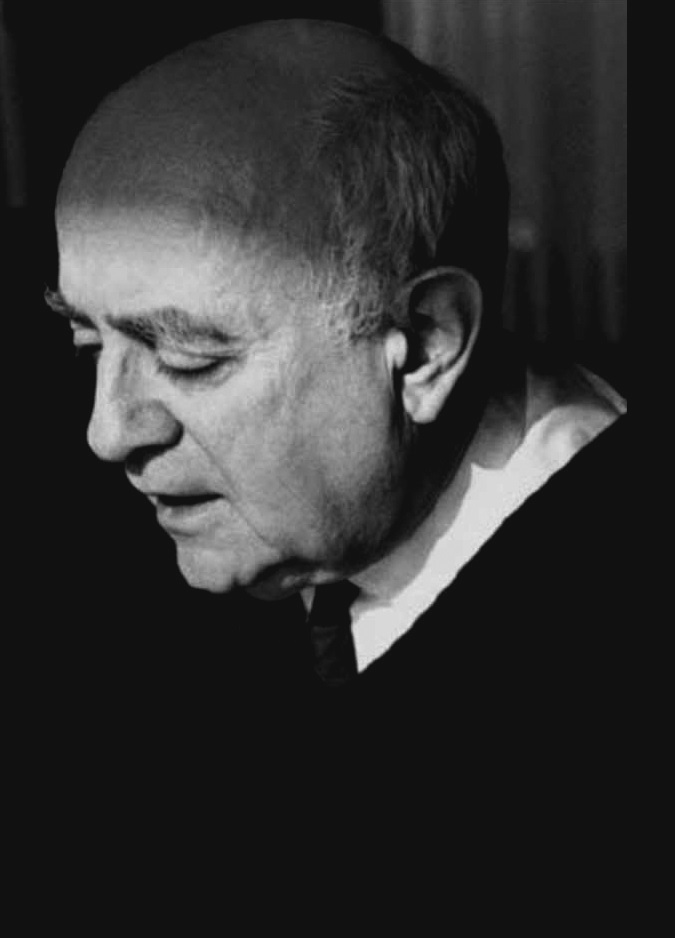
Theodor Wiesengrund Adorno was one of the most important philosophers and social critics in Germany after World War II. Although less well known among anglophone philosophers than his contemporary Hans-Georg Gadamer, Adorno had even greater influence on scholars and intellectuals in postwar Germany. In the 1960s he was the most prominent challenger to both Sir Karl Popper's philosophy of science and Martin Heidegger's philosophy of existence. Jürgen Habermas, Germany's foremost social philosopher after 1970, was Adorno's student and assistant. The scope of Adorno's influence stems from the interdisciplinary character of his research and of the Frankfurt School to which he belonged. It also stems from the thoroughness with which he examined Western philosophical traditions, especially from Kant onward, and the radicalness to his critique of contemporary Western society. He was a seminal social philosopher and a leading member of the first generation of Critical Theory. Unreliable translations hampered the initial reception of Adorno's published work in English speaking countries. Since the 1990s, however, better translations have appeared, along with newly translated lectures and other posthumous works that are still being published. These materials not only facilitate an emerging assessment of his work in epistemology and ethics but also strengthen an already advanced reception of his work in aesthetics and cultural theory.


548 Market St PMB 65688, San Francisco California 94104-5401 USA
© 2026 Paratext Inc. All rights reserved