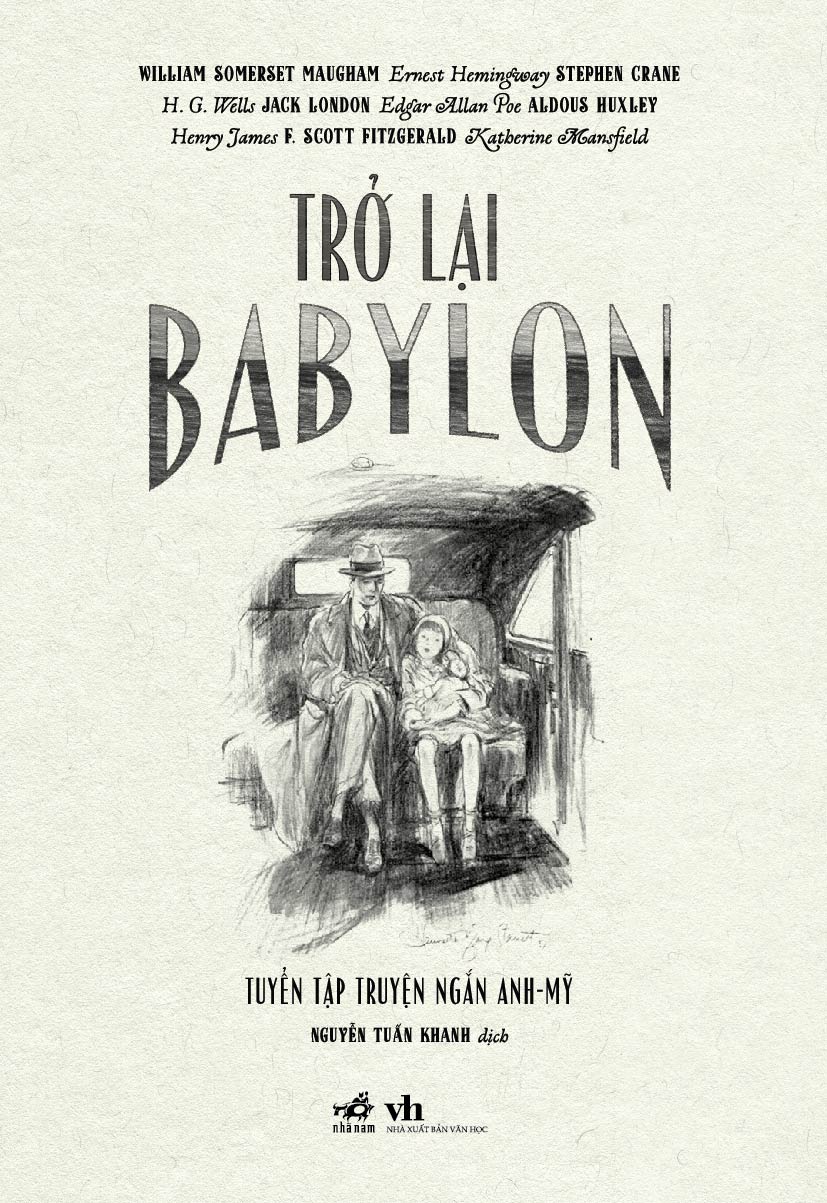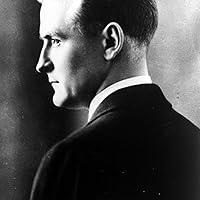



Tuyển tập truyện ngắn của mười tên tuổi lớn trong nền văn học Anh - Mỹ, những người có thể coi là một đỉnh cao, tỏa bóng và để lại ảnh hưởng lên rất nhiều thế hệ nhà văn sau này: William Somerset Maugham Ernest Hemingway Stephen Crane H. G. Wells Jack London Edgar Allan Poe Aldous Huxley Henry James F. Scott Fitzgerald Katherine Mansfield Đến với cuốn sách, độc giả có thể tự do tiếp cận nội dung trong sách theo ý muốn của mình: đọc lần lượt các câu chuyện để có một cái nhìn bao quát nhất, hoặc dừng chân ở một truyện ngắn bất kỳ mà nhấm nháp sự độc đáo trong phong cách, sự sắc sảo trong tư tưởng, hay sự nồng nhiệt trong tình cảm của những người cầm bút. Cuốn sách này ra đời với hy vọng có thể mở ra con đường giúp các bạn độc giả có một hành trình phiêu lưu vào trong thế giới của văn chương.
Authors

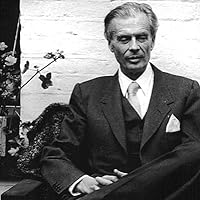
Brave New World (1932), best-known work of British writer Aldous Leonard Huxley, paints a grim picture of a scientifically organized utopia. This most prominent member of the famous Huxley family of England spent the part of his life from 1937 in Los Angeles in the United States until his death. Best known for his novels and wide-ranging output of essays, he also published short stories, poetry, travel writing, and film stories and scripts. Through novels and essays, Huxley functioned as an examiner and sometimes critic of social mores, norms and ideals. Spiritual subjects, such as parapsychology and philosophical mysticism, interested Huxley, a humanist, towards the end of his life. People widely acknowledged him as one of the pre-eminent intellectuals of his time before the end of his life.

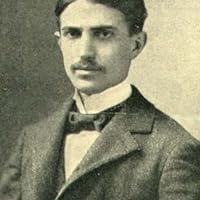
Stephen Crane (1871-1900) was an American novelist, poet and journalist, best known for the novel, The Red Badge of Courage. That work introduced the reading world to Crane's striking prose, a mix of impressionism, naturalism and symbolism. He died at age 28 in Badenweiler, Baden, Germany. Librarian Note: There is more than one author by this name in the Goodreads database.

Henry James, OM (1843-1916), son of theologian Henry James Sr., brother of the philosopher and psychologist William James and diarist Alice James, was an American-born author, one of the founders and leaders of a school of realism in fiction. He spent much of his life in England and became a British subject shortly before his death. He is primarily known for a series of major novels in which he portrayed the encounter of America with Europe. His plots centered on personal relationships, the proper exercise of power in such relationships, and other moral questions. His method of writing from the point of view of a character within a tale allowed him to explore the phenomena of consciousness and perception, and his style in later works has been compared to impressionist painting. James insisted that writers in Great Britain and America should be allowed the greatest freedom possible in presenting their view of the world, as French authors were. His imaginative use of point of view, interior monologue and unreliable narrators in his own novels and tales brought a new depth and interest to realistic fiction, and foreshadowed the modernist work of the twentieth century. An extraordinarily productive writer, in addition to his voluminous works of fiction he published articles and books of travel writing, biography, autobiography, and criticism,and wrote plays, some of which were performed during his lifetime with moderate success. His theatrical work is thought to have profoundly influenced his later novels and tales.

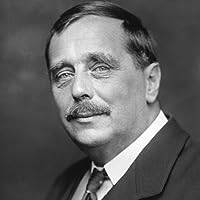
Herbert George Wells was born to a working class family in Kent, England. Young Wells received a spotty education, interrupted by several illnesses and family difficulties, and became a draper's apprentice as a teenager. The headmaster of Midhurst Grammar School, where he had spent a year, arranged for him to return as an "usher," or student teacher. Wells earned a government scholarship in 1884, to study biology under Thomas Henry Huxley at the Normal School of Science. Wells earned his bachelor of science and doctor of science degrees at the University of London. After marrying his cousin, Isabel, Wells began to supplement his teaching salary with short stories and freelance articles, then books, including The Time Machine (1895), The Island of Dr. Moreau (1896), The Invisible Man (1897), and The War of the Worlds (1898). Wells created a mild scandal when he divorced his cousin to marry one of his best students, Amy Catherine Robbins. Although his second marriage was lasting and produced two sons, Wells was an unabashed advocate of free (as opposed to "indiscriminate") love. He continued to openly have extra-marital liaisons, most famously with Margaret Sanger, and a ten-year relationship with the author Rebecca West, who had one of his two out-of-wedlock children. A one-time member of the Fabian Society, Wells sought active change. His 100 books included many novels, as well as nonfiction, such as A Modern Utopia (1905), The Outline of History (1920), A Short History of the World (1922), The Shape of Things to Come (1933), and The Work, Wealth and Happiness of Mankind (1932). One of his booklets was Crux Ansata, An Indictment of the Roman Catholic Church. Although Wells toyed briefly with the idea of a "divine will" in his book, God the Invisible King (1917), it was a temporary aberration. Wells used his international fame to promote his favorite causes, including the prevention of war, and was received by government officials around the world. He is best-remembered as an early writer of science fiction and futurism. He was also an outspoken socialist. Wells and Jules Verne are each sometimes referred to as "The Fathers of Science Fiction". D. 1946. More: http://philosopedia.org/index.php/H.\_... http://www.online-literature.com/well... http://www.hgwellsusa.50megs.com/ http://www.britannica.com/EBchecked/t... http://en.wikipedia.org/wiki/H.\_G.\_Wells

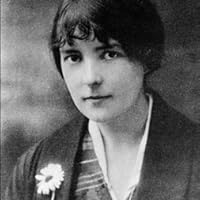
Kathleen Mansfield Murry (née Beauchamp) was a prominent New Zealand modernist writer of short fiction who wrote under the pen name of Katherine Mansfield. Katherine Mansfield is widely considered one of the best short story writers of her period. A number of her works, including "Miss Brill", "Prelude", "The Garden Party", "The Doll's House", and later works such as "The Fly", are frequently collected in short story anthologies. Mansfield also proved ahead of her time in her adoration of Russian playwright and short story writer Anton Chekhov, and incorporated some of his themes and techniques into her writing. Katherine Mansfield was part of a "new dawn" in English literature with T.S. Eliot, James Joyce and Virginia Woolf. She was associated with the brilliant group of writers who made the London of the period the centre of the literary world. Nevertheless, Mansfield was a New Zealand writer - she could not have written as she did had she not gone to live in England and France, but she could not have done her best work if she had not had firm roots in her native land. She used her memories in her writing from the beginning, people, the places, even the colloquial speech of the country form the fabric of much of her best work. Mansfield's stories were the first of significance in English to be written without a conventional plot. Supplanting the strictly structured plots of her predecessors in the genre (Edgar Allan Poe, Rudyard Kipling, H. G. Wells), Mansfield concentrated on one moment, a crisis or a turning point, rather than on a sequence of events. The plot is secondary to mood and characters. The stories are innovative in many other ways. They feature simple things - a doll's house or a charwoman. Her imagery, frequently from nature, flowers, wind and colours, set the scene with which readers can identify easily. Themes too are universal: human isolation, the questioning of traditional roles of men and women in society, the conflict between love and disillusionment, idealism and reality, beauty and ugliness, joy and suffering, and the inevitability of these paradoxes. Oblique narration (influenced by Chekhov but certainly developed by Mansfield) includes the use of symbolism - the doll's house lamp, the fly, the pear tree - hinting at the hidden layers of meaning. Suggestion and implication replace direct detail.

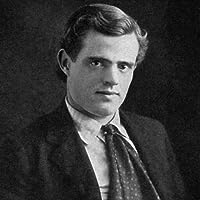
John Griffith Chaney (1876-1916), better known as Jack London, was an American novelist, journalist, and social activist. A pioneer of commercial fiction and American magazines, he was one of the first American authors to become an international celebrity and earn a large fortune from writing. He was also an innovator in the genre that would later become known as science fiction. His most famous works include The Call of the Wild and White Fang, both set in the Klondike Gold Rush, as well as the short stories, "To Build a Fire", "An Odyssey of the North", and "Love of Life". He also wrote about the South Pacific in stories such as "The Pearls of Parlay", and "The Heathen". London was part of the radical literary group, "The Crowd," in San Francisco and a passionate advocate of unionization, workers' rights, and socialism. He wrote several works dealing with these topics, such as his dystopian novel, The Iron Heel, his non-fiction exposé The People of the Abyss, War of the Classes, and Before Adam. London died November 22, 1916, in a sleeping porch in a cottage on his ranch. London's ashes were buried on his property, not far from the Wolf House. The grave is marked by a mossy boulder. The buildings and property were later preserved as Jack London State Historic Park, in Glen Ellen, California.


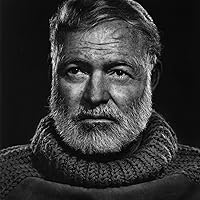
Terse literary style of Ernest Miller Hemingway, an American writer, ambulance driver of World War I, journalist, and expatriate in Paris during the 1920s, marks short stories and novels, such as The Sun Also Rises (1926) and The Old Man and the Sea (1952), which concern courageous, lonely characters, and he won the Nobel Prize of 1954 for literature. Economical and understated style of Hemingway strongly influenced 20th-century fiction, whereas his life of adventure and his public image influenced later generations. Hemingway produced most of his work between the mid-1920s and the mid-1950s. He published seven novels, six short story collections and two nonfiction works. Survivors published posthumously three novels, four collections of short stories, and three nonfiction works. People consider many of these classics. After high school, Hemingway reported for a few months for the Kansas City Star before leaving for the Italian front to enlist. In 1918, someone seriously wounded him, who returned home. His wartime experiences formed the basis for his novel A Farewell to Arms . In 1922, he married Hadley Richardson, the first of his four wives. The couple moved, and he worked as a foreign correspondent and fell under the influence of the modernist writers and artists of the expatriate community of the "lost generation" of 1920s. After his divorce of 1927 from Hadley Richardson, Hemingway married Pauline Pfeiffer. At the Spanish civil war, he acted as a journalist; afterward, they divorced, and he wrote For Whom the Bell Tolls . Hemingway maintained permanent residences in Key West, Florida, and Cuba during the 1930s and 1940s. Martha Gellhorn served as third wife of Hemingway in 1940. When he met Mary Welsh in London during World War II, they separated; he presently witnessed at the Normandy landings and liberation of Paris. Shortly after 1952, Hemingway went on safari to Africa, where two plane crashes almost killed him and left him in pain and ill health for much of the rest of his life. Nevertheless, in 1959, he moved from Cuba to Ketchum, Idaho, where he committed suicide in the summer of 1961.