


Margins
1967
First Published
4.35
Average Rating
256
Number of Pages

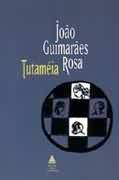
As “estórias” de Tutameia (Terceiras estórias) são as mais curtas da obra de João Guimarães Rosa e representam um exercício de síntese realizado com excepcional habilidade. Paulo Rónai observou que elas são “romances em potencial comprimidos ao máximo”. Dispondo de espaço limitado—os contos foram originalmente escritos para publicação em revista —, o autor concentra em poucas páginas uma grande intensidade de ação e de observação. Cenário, personagens e estilo são os mesmos que os leitores já se habituaram a encontrar na obra de João Guimarães Rosa. A região Centro-Oeste, o sertão mineiro, as velhas fazendas, as pequenas povoações, os lugarejos perdidos e esquecidos do interior constituem o ambiente em que se desenrolam as estórias. E mais do que ambiente, podem ser considerados também como personagens pela integração do homem com o meio onde vive e que constitui um dos traços marcantes da ficção de Guimarães Rosa, resultado de longa observação da realidade, transposta depois para o plano literário num estilo que é o reflexo dessa paisagem e de seus habitantes, tal o aproveitamento da linguagem do sertanejo. Como disse Alceu Amoroso Lima a respeito de Tutameia, “Guimarães Rosa tomou da matéria plástica Brasil em suas mãos de bruxo, tanto paisagem como gente e linguagem, e com ela está modelando uma imagem de nossa cultura absolutamente inédita (...) admirável e incomparável tapeçaria que está tecendo com a fibra mais tipicamente nacional (...) e ao mesmo tempo, com uma nota de humanismo universal tão completa”. Tutameia foi o último livro publicado em vida de Guimarães Rosa, que faleceu poucos meses depois de lançada a sua primeira edição em 1967.
Avg Rating
4.35
Number of Ratings
115
5 STARS
58%
4 STARS
24%
3 STARS
12%
2 STARS
4%
1 STARS
1%
goodreads

Author

João Guimarães Rosa
João Guimarães Rosa
Author · 18 books

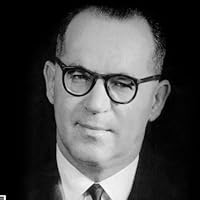
João Guimarães Rosa (27 June 1908 - 19 November 1967) was a Brazilian novelist, considered by many to be one of the greatest Brazilian novelists born in the 20th century. His best-known work is the novel Grande Sertão: Veredas (translated as The Devil to Pay in the Backlands). Some people consider this to be the Brazilian equivalent of Ulysses. Guimarães Rosa was born in Cordisburgo in the state of Minas Gerais, the first of six children of Florduardo Pinto Rosa (nicknamed "seu Fulô") and D. Francisca Guimarães Rosa ("Chiquitinha"). He was self-taught in many areas and from childhood studied many languages, starting with French before he was seven years old. Still a child, he moved to his grandparents' house in Belo Horizonte, where he finished primary school. He began his secondary schooling at the Santo Antônio College in São João del Rei, but soon returned to Belo Horizonte, where he graduated. In 1925, at only 16, he applied for what was then called the College of Medicine of Minas Gerais University. On June 27, 1930, he married Lígia Cabral Penna, a girl of only 16, with whom he had two daughters, Vilma and Agnes. In that same year he graduated and began his medical practice in Itaguara, then in the municipality of Itauna, in Minas Gerais, where he stayed about two years. It is in this town that he had his first contact with elements from the sertão (semi-arid Brazilian outback), which would serve as reference and inspiration in many of his works. Back in Itaguara, Guimarães Rosa served as a volunteer doctor of the Public Force (Força Pública) in the Constitutionalist Revolution of 1932, heading to the so-called Tunel sector in Passa-Quatro, Minas Gerais, where he came into contact with the future president Juscelino Kubitschek, at that time the chief doctor of the Blood Hospital. Later he became a civil servant through examination. In 1933, he went to Barbacena in the position of Doctor of the 9th Armed Battalion (Official Médico do 9º Batalhão de Infantaria). Most of his life was spent as a Brazilian diplomat in Europe and Latin America. In 1938 he served as assistant-Consul im Hamburg, Germany, wher he met his future second wife, the Righteous Among the Nations Aracy de Carvalho Guimarães Rosa In 1963, he was chosen by unanimous vote to enter the Academia Brasileira de Letras (Brazilian Academy of Letters) in his second candidacy. After postponing for 4 years, he finally assumed his position only in 1967: just three days before passing away in the city of Rio de Janeiro, victim of a heart attack. His masterpiece is The Devil to Pay in the Backlands. In this novel, Riobaldo, a jagunço is torn between two loves: Diadorim, supposedly another jagunço, and Otacília, an ordinary beauty from the backlands. Following his own existential quest, he contemplates making a deal with Lucifer in order to eliminate Hermogenes, his nemesis. One could say that Sertão (the backlands) represents the whole Universe and the mission of Riobaldo is to pursue its travessia, or crossing, seeking answers for the metaphysical questions faced by mankind. In this sense he is an incarnation of the classical hero in the Brazilian backlands. Guimaraes Rosa died at the summit of his diplomatic and literary career. He was 59.

548 Market St PMB 65688, San Francisco California 94104-5401 USA
© 2026 Paratext Inc. All rights reserved