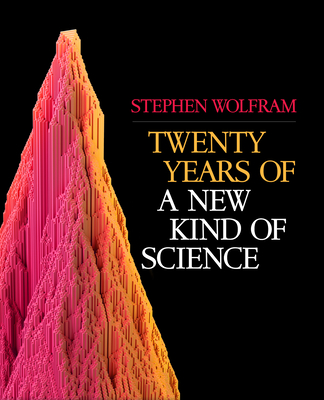
When Stephen Wolfram's groundbreaking A New Kind of Science was published in 2002, its exploration and analysis of the computational universe of simple programs launched a scientific revolution. Twenty years later, the ideas and results of the book have found countless applications across science, technology and elsewhere—including the recent Wolfram Physics Project and its breakthrough in fundamental physics—and the book has indeed spawned what can only be described as a new kind of science. Here Wolfram reflects on the first two decades of A New Kind of Science, discussing some of the major implications that have emerged so far, as well as his far-reaching new thinking building on the conceptual framework developed in A New Kind of Science. Written in Wolfram's popular and accessible style, the book provides a window into one of the most vibrant intellectual developments of our time. Recognizing A New Kind of Science's significance not only in science but also in the arts, the book includes a gallery of pieces created over the past 20 years by artists inspired by the book.
Author
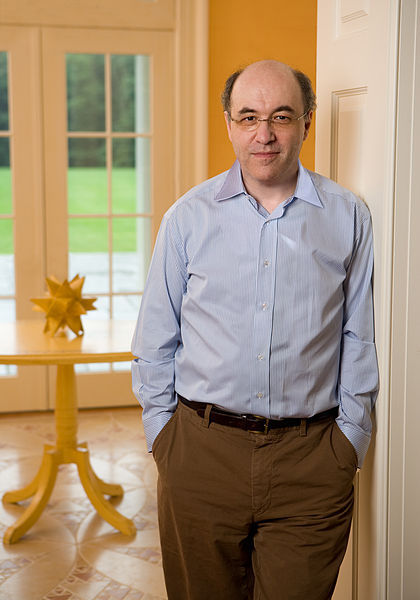
Stephen Wolfram's parents were Jewish refugees who emigrated from Germany to England in the 1930s. Wolfram's father Hugo was a textile manufacturer and novelist (Into a Neutral Country) and his mother Sybil was a professor of philosophy at the University of Oxford. He has a younger brother, Conrad. Wolfram is married to a mathematician and has four children. He was educated at Eton College, but claimed to be bored and left it prematurely in 1976. He entered St John's College, Oxford at age 17 but found lectures "awful", and left in 1978 without graduating. He received a Ph.D. in particle physics from the California Institute of Technology at age 20,[8] joined the faculty there and received one of the first MacArthur awards in 1981, at age 21. Wolfram presented a talk at the TED conference in 2010, and he was named Speaker of the Event for his 2012 talk at SXSW. In 2012 he became a fellow of the American Mathematical Society.