



Margins
Two Little Savages book cover
Two Little Savages
1903
First Published
4.36
Average Rating
496
Number of Pages

This work has been selected by scholars as being culturally important, and is part of the knowledge base of civilization as we know it. This work was reproduced from the original artifact, and remains as true to the original work as possible. Therefore, you will see the original copyright references, library stamps (as most of these works have been housed in our most important libraries around the world), and other notations in the work. This work is in the public domain in the United States of America, and possibly other nations. Within the United States, you may freely copy and distribute this work, as no entity (individual or corporate) has a copyright on the body of the work. As a reproduction of a historical artifact, this work may contain missing or blurred pages, poor pictures, errant marks, etc. Scholars believe, and we concur, that this work is important enough to be preserved, reproduced, and made generally available to the public. We appreciate your support of the preservation process, and thank you for being an important part of keeping this knowledge alive and relevant.
Avg Rating
4.36
Number of Ratings
521
5 STARS
56%
4 STARS
28%
3 STARS
12%
2 STARS
2%
1 STARS
1%
goodreads

Author

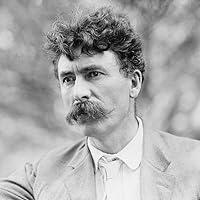
Ernest Thompson Seton
Author · 23 books

Ernest Thompson Seton was a Scots-Canadian (and naturalized U.S. citizen) who became a noted author, wildlife artist, founder of the Woodcraft Indians, and one of the founding pioneers of the Boy Scouts of America (BSA). Seton also heavily influenced Lord Baden-Powell, the founder of Scouting. His notable books related to Scouting include The Birch Bark Roll and The Boy Scout Handbook. He is responsible for the strong influence of American Indian culture in the BSA. He was born Ernest Evan Thompson in South Shields, County Durham (now part of South Tyneside, Tyne and Wear), England of Scottish parents and his family emigrated to Canada in 1866. As a youth, he retreated to the woods to draw and study animals as a way of avoiding his abusive father. He won a scholarship in art to the Royal Academy in London, England. He later rejected his father and changed his name to Ernest Thompson Seton. He believed that Seton had been an important name in his paternal line. He developed a fascination with wolves while working as a naturalist for Manitoba. He became successful as a writer, artist and naturalist, and moved to New York City to further his career. Seton later lived at Wyndygoul, an estate that he built in Cos Cob, a section of Greenwich, Connecticut. After experiencing vandalism by the local youth, Seton invited them to his estate for a weekend where he told stories of the American Indians and of nature. He formed the Woodcraft Indians in 1902 and invited the local youth to join. The stories became a series of articles written for the Ladies Home Journal and were eventually collected in the The Birch Bark Roll of the Woodcraft Indians in 1906. He was married twice. The first marriage was to Grace Gallatin in 1896. Their only daughter, Ann, was born in 1904 and died in 1990. Ann, who later changed her first name, became a best-selling author of historical and biographical novels as Anya Seton. According to her introduction to the novel Green Darkness, both of her parents were practicing Theosophists. Ernest and Grace divorced in 1935, and Ernest soon married Julia M. Buttree. Julia would write works by herself and with Ernest. They did not have any children, but did adopt an infant daughter, Beulah (Dee) Seton (later Dee Seton Barber), in 1938. Dee Seton Barber died in 2006.

548 Market St PMB 65688, San Francisco California 94104-5401 USA
© 2026 Paratext Inc. All rights reserved