


Part of Series
Nouvelle édition augmentée de nombreuses annexes biographiques. La nouvelle, Un homme d'affaires, a paru pour la première fois en 1844 aux éditions Hetzel, sous le titre "Les Roueries d'un créancier" Il est inséré dans dans les "Scènes de la vie parisienne" de la "Comédie humaine" A PROPOS DE L'ÉDITEUR : Les éditions Arvensa sont les leaders de la littérature classique numérique. Leur objectif est de vous faire connaître les oeuvres des grands auteurs de la littérature classique en langue française à un prix abordable tout en vous fournissant la meilleure expérience de lecture sur votre liseuse. Tous les titres sont produits avec le plus grand soin. Chaque édition contient un système de navigation intuitif et ergonomique: • Naviguez par simple clic de chapitre à chapitre ou de livre à livre. • Accédez instantanément à la table des matières hyperliée globale. • Une table des matières est placée également au début de chaque titre. Le service qualité s’engage à vous répondre dans les 48h. Retrouvez les actualités et tous les titres des éditions Arvensa sur leur site
Author

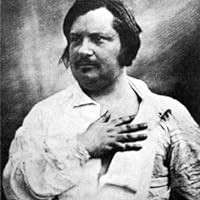
Honoré de Balzac was a nineteenth-century French novelist and playwright. His magnum opus was a sequence of almost 100 novels and plays collectively entitled La Comédie humaine, which presents a panorama of French life in the years after the fall of Napoléon Bonaparte in 1815. Due to his keen observation of fine detail and unfiltered representation of society, Balzac is regarded as one of the founders of realism in European literature. He is renowned for his multi-faceted characters; even his lesser characters are complex, morally ambiguous and fully human. Inanimate objects are imbued with character as well; the city of Paris, a backdrop for much of his writing, takes on many human qualities. His writing influenced many famous authors, including the novelists Marcel Proust, Émile Zola, Charles Dickens, Gustave Flaubert, Henry James and Jack Kerouac, as well as important philosophers such as Friedrich Engels. Many of Balzac's works have been made into films, and they continue to inspire other writers. An enthusiastic reader and independent thinker as a child, Balzac had trouble adapting himself to the teaching style of his grammar school. His willful nature caused trouble throughout his life, and frustrated his ambitions to succeed in the world of business. When he finished school, Balzac was apprenticed as a legal clerk, but he turned his back on law after wearying of its inhumanity and banal routine. Before and during his career as a writer, he attempted to be a publisher, printer, businessman, critic, and politician. He failed in all of these efforts. La Comédie Humaine reflects his real-life difficulties, and includes scenes from his own experience. Balzac suffered from health problems throughout his life, possibly due to his intense writing schedule. His relationship with his family was often strained by financial and personal drama, and he lost more than one friend over critical reviews. In 1850, he married Ewelina Hańska, his longtime paramour; he passed away five months later.