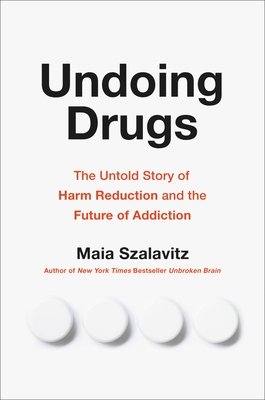
From “one of the bravest, smartest writers about addiction anywhere” (Johann Hari, New York Times bestselling author)—the untold story of harm reduction, a surprisingly simple idea with enormous power Drug overdoses now kill more Americans annually than guns, cars or breast cancer. But we have tried to solve this national crisis with policies that only made matters worse. In the name of “sending the right message,” we have maximized the spread of infectious disease, torn families apart, incarcerated millions of mostly Black and Brown people—and utterly failed to either prevent addiction or make effective treatment for it widely available. There is another way, one that is proven to work. However, it runs counter to much of the received wisdom of our criminal and medical industrial complexes. It is called harm reduction. Developed and championed by an outcast group of people who use drugs and by former users and public health geeks, harm reduction offers guidance on how to save lives and improve health. And it provides a way of understanding behavior and culture that has relevance far beyond drugs. In a spellbinding narrative rooted in an urgent call to action, Undoing Drugs tells the story of how a small group of committed people changed the world, illuminating the power of a great idea. It illustrates how hard it can be to take on widely accepted conventional wisdom—and what is necessary to overcome this resistance. It is also about how personal, direct human connection and kindness can inspire profound transformation. Ultimately, Undoing Drugs offers a path forward—revolutionizing not only the treatment of addiction, but also our treatment of behavioral and societal issues.
Author

Maia Szalavitz is an award-winning author and journalist who covers addiction and neuroscience. Her next book, Unbroken Brain (St. Martins, April, 2016), uses her own story of recovery from heroin and cocaine addiction to explore how reframing addiction as a developmental disorder could revolutionize prevention, treatment and policy. She's the author or co-author of six previous books, including the bestselling The Boy Who Was Raised as a Dog (Basic, 2007) and Born for Love: Why Empathy Is Essential—and Endangered (Morrow, 2010), both with leading child psychiatrist and trauma expert Bruce D. Perry, MD, PhD. Her book, Help at Any Cost: How the Troubled-Teen Industry Cons Parents and Hurts Kids, is the first history of systemic abuse in "tough love" programs and rehabs and helped spur Congressional hearings, GAO investigations and proposed legislation to regulate these groups. She also co-wrote the first evidence-based consumer guide to addiction treatment, Recovery Options: The Complete Guide, with Joe Volpicelli, MD, PhD. (Wiley, 2000). Currently, she writes a bi-weekly column for VICE on drugs and addiction. From 2010 to 2013, she wrote daily for TIME.com and she continues to freelance there and for other publications including the New York Times, Scientific American Mind, Nature, New York Magazine online, Pacific Standard, Matter, Nautilus, and The Verge. Szalavitz has won major awards from organizations like the American Psychological Association, the Drug Policy Alliance and the American College of Neuropsychopharmacology in recognition of her work in these areas. She lives in New York with her husband and a Siamese shelter cat.