Margins
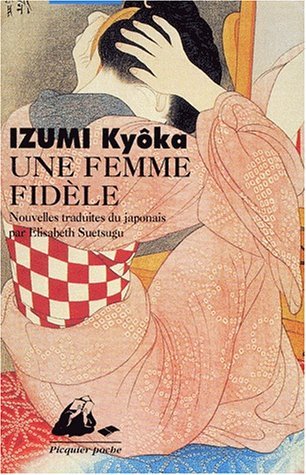
UNE FEMME FIDELE book cover
UNE FEMME FIDELE
2002
First Published
3.29
Average Rating
128
Number of Pages
L'un des écrivains les plus attachants et des plus importants de la littérature japonaise, Izumi Kyôka (1873-1939), connaît toujours au Japon de fervents admirateurs. Il est d'abord un orfèvre de la langue et ses œuvres ont toujours été inspirées par une esthétique raffinée empreinte de poésie, de fantastique et de mystère. Une femme fidèle comme l'Histoire de Biwa tracent des portraits de femmes révoltées par l'absurdité de leur mariage où l'amour n'a pas de place et qui, à force de tension et de désir contenu, sont conduites de façon irrémédiable à la folie et au meurtre. Il n'est pas étonnant que beaucoup de ses récits aient inspiré les hommes de théâtre et de grands cinéastes comme Mizoguchi.

Avg Rating
3.29
Number of Ratings
7
5 STARS
0%
4 STARS
43%
3 STARS
43%
2 STARS
14%
1 STARS
0%
goodreads

Author

Kyōka Izumi
Kyōka Izumi
Author · 12 books

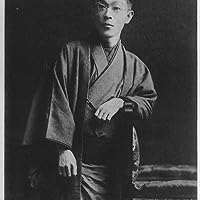
Japanese profile: 泉 鏡花 Kyōka was born Kyōtarō Izumi on November 4, 1873 in the Shitashinmachi section of Kanazawa, Ishikawa, to Seiji Izumi, a chaser and inlayer of metallic ornaments, and Suzu Nakata, daughter of a tsuzumi hand-drum player from Edo and younger sister to lead protagonist of the Noh theater, Kintarō Matsumoto. Because of his family's impovershed circumstances, he attended the tuition-free Hokuriku English-Japanese School, run by Christian missionaries. Even before he entered grade school, young Kintarō's mother introduced him to literature in picture-books interspersed with text called kusazōshi, and his works would later show the influence of this early contact with such visual forms of story-telling. In April 1883, at ten years old, Kyōka lost his mother, who was 29 at the time. It was a great blow to his young mind, and he would attempt to recreate memories of her in works throughout his literary career. At a friend's boarding house in April 1889, Kyōka was deeply impressed by Ozaki Kōyō's "Amorous Confessions of Two Nuns" and decided to pursue a career in literature. That June he took a trip to Toyama Prefecture. At this time he worked as a teacher in private preparatory schools and spent his free time running through yomihon and kusazōshi. In November of that year, however, Kyōka's aspiration to an artistic career drove him to Tokyo, where he intended to enter the tutelage of Kōyō himself. On 19 November 1891, he called on Kōyō in Ushigome(part of present-day Shinjuku) without prior introduction and requested that he be allowed into the school immediately. He was accepted, and from that time began life as a live-in apprentice. Other than a brief trip to Kanazawa in December of the following year, Kyōka spent all of his time in the Ozaki household, proving his value to Kōyō through correcting his manuscripts and household tasks. Kyōka greatly adored his teacher, thinking of him as a teacher of more than literature, a benefactor who nourished his early career before he gained a name for himself. He felt deeply a personal indebtedness to Kōyō, and continued to admire the author throughout his life.

548 Market St PMB 65688, San Francisco California 94104-5401 USA
© 2026 Paratext Inc. All rights reserved