



Margins
Une histoire du conflit politique book cover
Une histoire du conflit politique
Elections et inégalités sociales en France, 1789-2022
2023
First Published
4.15
Average Rating
834
Number of Pages

Qui vote pour qui et pourquoi ? Comment la structure sociale des élec­torats des différents courants politiques en France a-t-elle évolué de 1789 à 2022 ? En s’appuyant sur un travail inédit de numérisation des données électorales et socio-économiques des 36 000 communes de France couvrant plus de deux siècles, cet ouvrage propose une his­toire du vote et des inégalités à partir du laboratoire français. Au-delà de son intérêt historique, ce livre apporte un regard neuf sur les crises du présent et leur possible dénouement. La tripartition de la vie politique issue des élections de 2022, avec d’une part un bloc central regroupant un électorat socialement beaucoup plus favorisé que la moyenne – et réunissant d’après les sources ici rassemblées le vote le plus bourgeois de toute l’histoire de France –, et de l’autre des classes populaires urbaines et rurales divisées entre les deux autres blocs, ne peut être correctement analysée qu’en prenant le recul historique nécessaire. En particulier, ce n’est qu’en remontant à la fin du 19e siècle et au début du 20e siècle, à une époque où l’on observait des formes similaires de tripartition avant que la bipolarisation ne l’emporte pendant la majeure partie du siècle dernier, que l’on peut comprendre les tensions à l’oeuvre aujourd’hui. La tripartition a toujours été instable alors que c’est la bipartition qui a permis le progrès économique et social. Comparer de façon minutieuse les différentes configurations permet de mieux envisager plusieurs trajectoires d’évolutions possibles pour les décennies à venir. Une entreprise d’une ambition unique qui ouvre des perspectives nouvelles pour sortir de la crise actuelle. Toutes les données collectées au niveau des quelques 36 000 com­munes de France sont disponibles en ligne en accès libre sur le site unehistoireduconflitpolitique.fr, qui comprend des centaines de cartes, graphiques et tableaux interactifs auxquels le lecteur pourra se reporter afin d’approfondir ses propres analyses et hypothèses. Julia Cagé est professeure à Sciences Po Paris et lauréate du Prix du meilleur jeune économiste (2023). Thomas Piketty est directeur d’études à l’École des hautes études en sciences sociales et professeur à l’École d’économie de Paris. Ils signent ici leur premier livre en commun.
Avg Rating
4.15
Number of Ratings
27
5 STARS
37%
4 STARS
44%
3 STARS
15%
2 STARS
4%
1 STARS
0%
goodreads

Authors

Thomas Piketty
Thomas Piketty
Author · 15 books

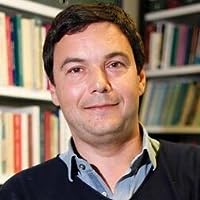
Thomas Piketty (French: [tɔma pikɛti]; born May 7, 1971) is a French economist who works on wealth and income inequality. He is the director of studies at the École des hautes études en sciences sociales (EHESS) and professor at the Paris School of Economics. He is the author of the best selling book Capital in the Twenty-First Century (2013), which emphasizes the themes of his work on wealth concentrations and distribution over the past 250 years. The book argues that the rate of capital return in developed countries is persistently greater than the rate of economic growth, and that this will cause wealth inequality to increase in the future. To address this problem, he proposes redistribution through a global tax on wealth. Piketty was born on May 7, 1971, in the Parisian suburb of Clichy. He gained a C-stream (scientific) Baccalauréat, and after taking scientific preparatory classes, he entered the École Normale Supérieure (ENS) at the age of 18, where he studied mathematics and economics. At the age of 22, Piketty was awarded his Ph.D. for a thesis on wealth redistribution, which he wrote at the EHESS and the London School of Economics under Roger Guesnerie. After earning his PhD, Piketty taught from 1993 to 1995 as an assistant professor in the Department of Economics at the Massachusetts Institute of Technology. In 1995, he joined the French National Centre for Scientific Research (CNRS) as a researcher, and in 2000 he became director of studies at EHESS. Piketty won the 2002 prize for the best young economist in France, and according to a list dated November 11, 2003, he is a member of the scientific orientation board of the association "À gauche, en Europe", founded by Michel Rocard and Dominique Strauss-Kahn. In 2006 Piketty became the first head of the Paris School of Economics, which he helped set up. He left after a few months to serve as an economic advisor to Socialist Party candidate Ségolène Royal during the French presidential campaign. Piketty resumed teaching at the Paris School of Economics in 2007. He is a columnist for the French newspaper Libération, and occasionally writes op-eds for Le Monde. In April 2012, Piketty co-authored along with 42 colleagues an open letter in support of then-PS candidate for the French presidency François Hollande. Hollande won the contest against the incumbent Nicolas Sarkozy in May of that year. In 2013, Piketty won the biennial Yrjö Jahnsson Award, for the economist under age 45 who has "made a contribution in theoretical and applied research that is significant to the study of economics in Europe." Piketty specializes in economic inequality, taking a historic and statistical approach. His work looks at the rate of capital accumulation in relation to economic growth over a two hundred year spread from the nineteenth century to the present. His novel use of tax records enabled him to gather data on the very top economic elite, who had previously been understudied, and to ascertain their rate of accumulation of wealth and how this compared to the rest of society and economy. His most recent book, Capital in the Twenty-First Century, relies on economic data going back 250 years to show that an ever-rising concentration of wealth is not self-correcting. To address this problem, he proposes redistribution through a global tax on wealth.

548 Market St PMB 65688, San Francisco California 94104-5401 USA
© 2026 Paratext Inc. All rights reserved