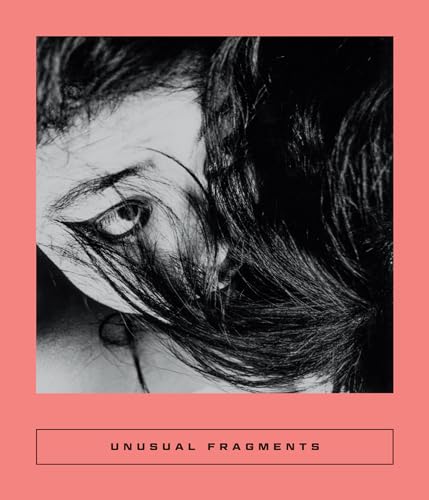



Composing a fuller picture of the literary era that brought us Osamu Dazai and Kōbō Abe, Unusual Fragments foregrounds stories of alienation with surprising humor and imagination. A young storm-chaser welcomes a jaded woman into the eye of a storm. The last man of a peculiar family, implausibly tiny in stature, attends a Mozart opera with his dedicated wife. A medical student coolly observes an adolescent boy as he contorts his body into violent positions. With tension and wit, the writers of Unusual Fragments, among them Nobuko Takagi, Yoshida Tomoko, and Inagaki Taruho, trace their taboo, feminist, bizarre themes to complicate what we think of as 20th century Japanese literature. What’s hiding just beneath the fiction of our perfectly ordered, happy lives? Something unusual. Something far more interesting.
Authors
Takako Takahashi (高橋 たか子 Takahashi Takako?, March 2, 1932 – July 12, 2013) was a Japanese author. Her maiden name was Takako Okamoto (岡本和子 Okamoto Takako?) Takahashi was born in Kyoto, as the only child of well-to-do parents, with the maiden name of Okamoto. In 1954 she received her undergraduate degree from Kyoto University in French literature, with a senior thesis on Charles Baudelaire. Six months later she married fellow student Kazumi Takahashi, subsequently a well-known writer and ideological leader of the student protest movement. She supported him in the first two years of their marriage by a series of odd jobs, then returned to Kyoto University in 1956 to receive a master's degree in French literature in 1958 for a thesis on François Mauriac. From 1958-1965, Takahashi and her husband lived in Osaka, where she began a first novel in 1961 (“A Ruined Landscape”). Her husband won a major literary award in 1962, making his name and providing sufficient funds so that Takahashi could quit her job, work on her novel, and publish a translation of Mauriac's Thérèse Desqueyroux. In 1965 they moved to Kamakura, Kanagawa, when her husband obtained a teaching position at Meiji University; in 1967, when he became a professor at Kyoto University, she remained in Kamakura. When her husband fell ill with colon cancer in 1969, he returned to Kamakura where she took care of him. After her husband's early death in 1971, Takahashi began writing short stories and novels, as well as a memoir of her husband, and translations of French literature. In the 1970s she was both prolific and successful as an author, publishing four novels and eight collections of short stories. In 1972, she received the Tamura Yoshiko Literary Award for Sora no hate made (“To the end of the Sky”). She subsequently won the Women’s Literature Award in 1977 for a set of linked short stories titled Ronri Uman (“Lonely Woman”) and the Yomiuri Prize for Ikari no ko (“Child of Rage”) in 1985, and the Mainichi Art Award for Kirei na hito (“Pretty person”) in 2003. In 1975 Takahashi converted to Roman Catholicism and, in 1980, moved to France, where in 1985 she became a nun. After returning to Japan, she entered a Carmelite convent but left after one year, returning to Kyoto to take care of her mother. She continued to publish prolifically. (from Wikipedia)

Taeko KŌNO (河野 多惠子) is a Japanese author. Taeko Kōno was born April 30, 1926 in Osaka, Japan to Tameji and Yone Kōno; her father was a wholesale merchant. She was ill as a child and as a teenager, she was conscripted to work in a factory during World War II. After the war, she finished her economics degree at Women’s University (currently Osaka Prefecture University), graduating in 1947. She has said that at this time "she felt a new sense of freedom and had an urge to do something, but was not sure what". She joined literary groups, eventually moving to Tokyo, Japan. She worked full-time and wrote in the evening. In 1962 "Toddler Hunting" (幼児狩り) was published and awarded the Shinchosha Prize. In the early 1960s, just before she was awarded the prestigious Akutagawa Prize for "Kani" (Crabs) (蟹) in 1963, she quit her job to focus on her writing. In 1965 she married the painter Yasushi Ichikawa. In 1967 she received the Women's Literary Prize for Saigo no toki and subsequently the Yomiuri Prize for "A Sudden Voice" (不意の声) in 1968, as well as the Tanizaki prize in 1980 for "A Year-long Pastoral" (一年の牧歌). She also received a literary prize from the Japanese Art Academy in 1984 and the Noma Literary Prize in 1991 for her novel Miiratori ryōkitan (Mummy-Hunting for the Bizarre, 1990). Kōno became popular and received critical attention after the publication of an English translation of Toddler-Hunting and Other Stories in 1996. (from Wikipedia)