


Margins
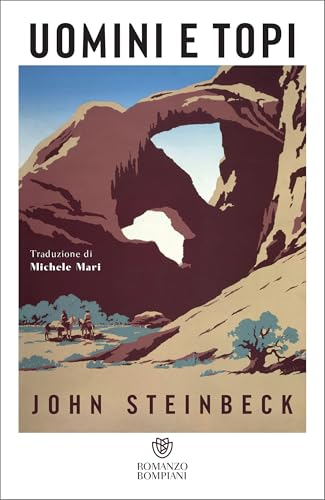
Uomini e topi book cover
Uomini e topi
2025
First Published
4.46
Average Rating
300
Number of Pages

La storia di un'amicizia profonda tra due uomini, due braccianti stagionali in California che condividono un sogno. George Milton si occupa da sempre con ferma dolcezza di Lennie Small, un gigante con il cuore e la mente di un bambino. Il loro progetto, mentre vagano di ranch in ranch, è trovare un posto tutto per loro a Hill Country, dove la terra costa un posto piccolo, giusto qualche acro da coltivare, e poi qualche pollo, maiali, conigli. Ma le loro speranze, come "i migliori progetti predisposti da uomini e topi" (è un verso di Robert Burns), sono destinate a sbriciolarsi. Il ritratto di un'America soffocata dalla crisi e di un'umanità gretta e gelosa nella drammatica rappresentazione di un maestro della letteratura. Scritto nel 1937 e destinato a un pubblico di uomini semplici come George e Lennie, Uomini e topi è una breve storia ricca di dialoghi, un piccolo gioiello di scrittura, pensato da Steinbeck per essere messo in scena in teatro e al e così è successo, sul grande schermo e a Broadway. Ma Uomini e topi resta prima di tutto un romanzo indimenticabile. Questa edizione propone nella traduzione di Michele Mari un racconto di impegno, solitudine, speranza e perdita che resta uno dei libri più letti e più amati della letteratura mondiale.
Avg Rating
4.46
Number of Ratings
35
5 STARS
54%
4 STARS
37%
3 STARS
9%
2 STARS
0%
1 STARS
0%
goodreads

Author

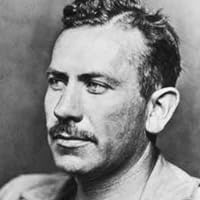
John Steinbeck
John Steinbeck
Author · 94 books

John Ernst Steinbeck Jr. (1902-1968) was an American writer. He wrote the Pulitzer Prize-winning novel, The Grapes of Wrath, published in 1939, and the novella, Of Mice and Men, published in 1937. In all, he wrote twenty-five books, including sixteen novels, six non-fiction books and several collections of short stories. In 1962, Steinbeck received the Nobel Prize for Literature. Steinbeck grew up in the Salinas Valley region of California, a culturally diverse place of rich migratory and immigrant history. This upbringing imparted a regionalistic flavor to his writing, giving many of his works a distinct sense of place. Steinbeck moved briefly to New York City, but soon returned home to California to begin his career as a writer. Most of his earlier work dealt with subjects familiar to him from his formative years. An exception was his first novel Cup of Gold which concerns the pirate Henry Morgan, whose adventures had captured Steinbeck's imagination as a child. In his subsequent novels, Steinbeck found a more authentic voice by drawing upon direct memories of his life in California. Later, he used real historical conditions and events in the first half of 20th century America, which he had experienced first-hand as a reporter. Steinbeck often populated his stories with struggling characters; his works examined the lives of the working class and migrant workers during the Dust Bowl and the Great Depression. His later body of work reflected his wide range of interests, including marine biology, politics, religion, history, and mythology. One of his last published works was Travels with Charley, a travelogue of a road trip he took in 1960 to rediscover America. He died in 1968 in New York of a heart attack, and his ashes are interred in Salinas. Seventeen of his works, including The Grapes of Wrath (1940), Cannery Row (1945), The Pearl (1947), and East of Eden (1952), went on to become Hollywood films, and Steinbeck also achieved success as a Hollywood writer, receiving an Academy Award nomination for Best Story in 1944 for Alfred Hitchcock's Lifeboat.

548 Market St PMB 65688, San Francisco California 94104-5401 USA
© 2026 Paratext Inc. All rights reserved