


Margins
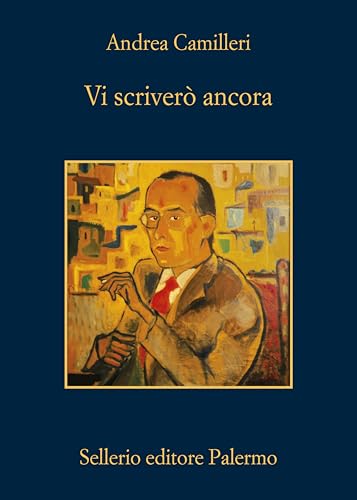
Vi scriverò ancora book cover
Vi scriverò ancora
Lettere alla famiglia 1949-1960
2024
First Published
3.45
Average Rating
417
Number of Pages

«Dopodomani compirò ventisei anni. Dicono che noi, nati sotto il segno della vergine, abbiamo la fortuna un poco ritardata, attorno ai 30 anni. Speriamo che ci siano delle eccezioni alla regola». Andrea Camilleri, 4 settembre 1951 Sono tanti i modi in cui possono essere accolte le giovanili lettere familiari di Andrea Camilleri. Uno però trascende tutti gli altri. È il modo di lettura di un di una osservabile configurazione astrale disegnata dai segni zodiacali e dai pianeti, metaforicamente trasposti nelle lettere che fanno sistema e determinano i pronostici sul maturo inventore del commissario Montalbano, sapiente lettore degli stessi libri preferiti dall'ancora inconsapevole scrittore di lettere; e di quell'irresistibile folletto chiamato Catarella, incarnazione di una plateale gestualità e teatrale comicità già portate in scena negli sketches improvvisati da Camilleri nelle sue carte messaggere. Il Camilleri dell'epistolario è un infervorato studente fuorisede. Vive a Roma. È un borsista dell'Accademia Nazionale d'Arte Drammatica. Ha due insigni maestri, Silvio d'Amico e Orazio Costa. Fa subito amicizia con Vittorio Gassman, giovane attore del teatro di posa. Lui studia regia teatrale. È un moderno Robinson Crusoe, che di continuo deve inventarsi un alloggio sempre provvisorio, le suppellettili necessarie, tutti i gesti della giornata tra il lavaggio della biancheria e la ricerca di un ristorantino alla portata delle sue tasche semivuote, nonostante le sollecite sovvenzioni di una famiglia tutt'altro che ricca. In casi estremi può sempre contare su qualche generoso buffet da assaltare, magari in compagnia di una attricetta dell'Accademia e intonando «inni di guerra» condivisi dagli invitati più fra i più insospettabili, scrittori come Moravia o attori già affermati come Massimo Girotti. C'è qualcosa di picaresco nella narrazione epistolare, spesso autoironica e anche nel caso di quel convulso correre, qua e là, senza sosta, alla ricerca di un lavoretto. E intanto Camilleri studia, studia, studia. Pubblica poesie, racconti, articoli. Scrive soggetti per il cinema e per la radio. Si propone come regista. Riesce a collaborare con l'Enciclopedia dello spettacolo. E fa incontri strabilianti, come una volta accadeva ai cavalieri erranti. Conosce, insieme a Jean-Paul Sartre, il grandioso e canagliesco Jean scrittore e drammaturgo, ladro, cinico, generoso e argutamente spiritoso. Camilleri chiede il recapito all'ospite. Si sente rispondere che l'indirizzo più sicuro è, ovviamente, il carcere. Camilleri è giovane, giovanissimo. Ama il teatro. E come regista ha capacità anche rabdomantiche. Fa sgorgare l'acqua, dove tutti vedono solo cespugli secchi e pietrame. Annusa nell'aria, pure. Capta il vento che arriva. Anticipa i tempi, mettendo in scena autori ancora non sperimentati in Italia. Si chiamano Ionesco e Beckett. Sono gli anni 1957-1958. Gli capita di cercare un attore all'altezza della parte. Non riesce a trovarlo. Gli piace azzardare. E decide di sostituire l'attore con un manichino. Il successo è strepitoso. Salvatore Silvano Nigro
Avg Rating
3.45
Number of Ratings
11
5 STARS
0%
4 STARS
55%
3 STARS
36%
2 STARS
9%
1 STARS
0%
goodreads

Author

Andrea Camilleri
Andrea Camilleri
Author · 127 books

Andrea Camilleri (born september 6, 1925 in Porto Empedocle) was an Italian writer. He is considered one of the greatest Italian writers of both 20th and 21st centuries. Originally from Porto Empedocle, Sicily, Camilleri began studies at the Faculty of Literature in 1944, without concluding them, meanwhile publishing poems and short stories. Around this time he joined the Italian Communist Party. From 1948 to 1950 Camilleri studied stage and film direction at the Silvio D'Amico Academy of Dramatic Arts, and began to take on work as a director and screenwriter, directing especially plays by Pirandello and Beckett. As a matter of fact, his parents knew Pirandello and were even distant friends, as he tells in his essay on Pirandello "Biography of the changed son". His most famous works, the Montalbano series show many pirandellian elements: for example, the wild olive tree that helps Montalbano think, is on stage in his late work "The giants of the mountain" With RAI, Camilleri worked on several TV productions, such as Inspector Maigret with Gino Cervi. In 1977 he returned to the Academy of Dramatic Arts, holding the chair of Movie Direction, and occupying it for 20 years. In 1978 Camilleri wrote his first novel Il Corso Delle Cose ("The Way Things Go"). This was followed by Un Filo di Fumo ("A Thread of Smoke") in 1980. Neither of these works enjoyed any significant amount of popularity. In 1992, after a long pause of 12 years, Camilleri once more took up novel-writing. A new book, La Stagione della Caccia ("The Hunting Season") turned out to be a best-seller. In 1994 Camilleri published the first in a long series of novels: La forma dell'Acqua (The Shape of Water) featured the character of Inspector Montalbano, a fractious Sicilian detective in the police force of Vigàta, an imaginary Sicilian town. The series is written in Italian but with a substantial sprinkling of Sicilian phrases and grammar. The name Montalbano is an homage to the Spanish writer Manuel Vázquez Montalbán; the similarities between Montalban's Pepe Carvalho and Camilleri's fictional detective are remarkable. Both writers make great play of their protagonists' gastronomic preferences. This feature provides an interesting quirk which has become something of a fad among his readership even in mainland Italy. The TV adaptation of Montalbano's adventures, starring the perfectly-cast Luca Zingaretti, further increased Camilleri's popularity to such a point that in 2003 Camilleri's home town, Porto Empedocle - on which Vigàta is modelled - took the extraordinary step of changing its official denomination to that of Porto Empedocle Vigàta, no doubt with an eye to capitalising on the tourism possibilities thrown up by the author's work. In 1998 Camilleri won the Nino Martoglio International Book Award. Camilleri lived in Rome where he worked as a TV and theatre director. About 10 million copies of his novels have been sold to date, and are becoming increasingly popular in the UK and North America. In addition to the degree of popularity brought him by the novels, in recent months Andrea Camilleri has become even more of a media icon thanks to the parodies aired on an RAI radio show, where popular comedian, TV-host and impression artist Fiorello presents him as a raspy voiced, caustic character, madly in love with cigarettes and smoking (Camilleri is well-known for his love of tobacco). He received an honorary degree from University of Pisa in 2005.

548 Market St PMB 65688, San Francisco California 94104-5401 USA
© 2026 Paratext Inc. All rights reserved