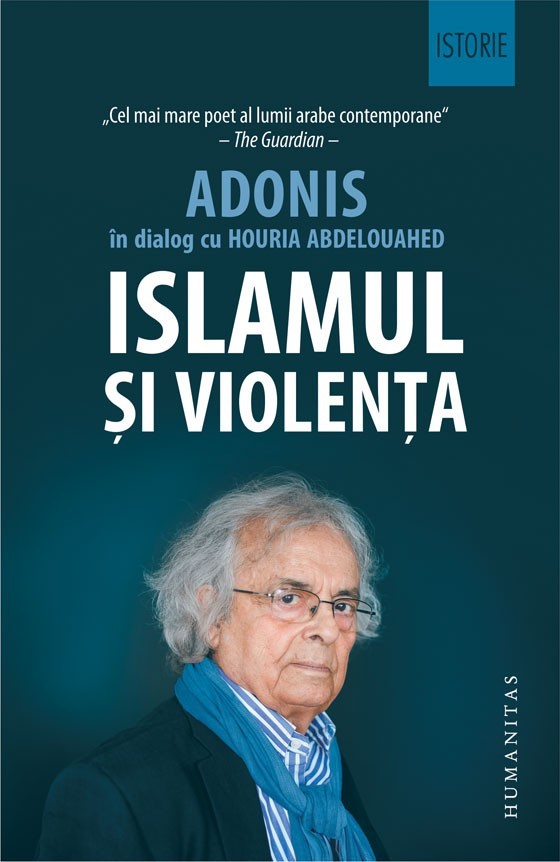
Adonis' influence on Arabic literature has been likened to that of T. S. Eliot in the English-speaking world. Yet alongside this spearheading of a modernist literary revolution, the secular Syrian-born poet is also renowned for his persistent and staunch attacks on despotism across the Arab world. In these conversations with the psychoanalyst Houria Abdelouahed, Adonis brings into sharp relief the latest wave of violence and war to engulf Arabic countries, tracing the cause of ongoing tensions back to the beginnings of Islam itself. Since the death of the prophet Muhammad, Islam has been used as a political and economic weapon, exploiting and reinforcing tribal divisions to aid the pursuit of power. Adonis argues that recent events in the Middle East – from the failures of the Arab Spring to the rise of ISIS and the bloody war in his native Syria – attest to the destructive effects of an Islamic worldview that prohibits any notion of plurality and breeds violence. If there is to be any hope of peace or progress in the Arab world, it is therefore imperative that these mentalities are overcome. In their place, Adonis urges a new spirit of enquiry, embodied in the freedoms to interrogate the past and to question cultural norms. Adonis' penetrating analysis comes at a critical time, offering an alternative path to the cycle of violence that plagues the Arab world today.
Author
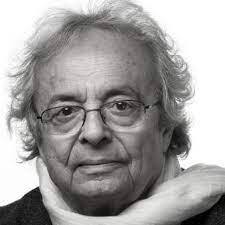
Adonis was born Ali Ahmed Said in the village of Al Qassabin in Syria, in 1930, to a family of farmers, the oldest of six children. At the age of nineteen, he adopted the name Adonis (also spelled Adunis), after the Greek god of fertility, with the hopes that the new name would result in newspaper publication of his poems. Although his family could not afford to send Adonis to school, his father taught him to read poetry and the Qu'ran, and memorize poems while he worked in the fields. When he was fourteen, Adonis read a poem to the president of Syria who was visiting a nearby town. The impressed president offered to grant a request, to which the young Adonis responded that he wanted to attend school. The president quickly made arrangements for Adonis to attend a French-run high school, after which he studied philosophy at Damascus University. In 1956, after a year-long imprisonment for political activities, Adonis fled Syria for Beirut, Lebanon. He joined a vibrant community of artists, writers, and exiles in Beirut, and co-founded and edited Sh'ir, and later Muwaqaf, both progressive journals of poetry and politics. He studied at St. Joseph University in Beirut and obtained his Doctorat d'Etat in 1973. Considered one of the Arab world's greatest living poets, Adonis is the author of numerous collections, including Mihyar of Damascus (BOA Editions, 2008), A Time Between Ashes and Roses (Syracuse University Press, 2004); If Only the Sea Could Sleep (2003); The Pages of Day and Night (2001); Transformations of the Lover (1982); The Book of the Five Poems (1980); The Blood of Adonis (1971), winner of the Syria-Lebanon Award of the International Poetry Forum; Songs of Mihyar the Damascene (1961), Leaves in the Wind (1958), and First Poems (1957). He is also an essayist, an editor of anthologies, a theoretician of poetics, and the translator of several works from French into Arabic. Over the course of his career, Adonis has fearlessly experimented with form and content, pioneering the prose poem in Arabic, and taking a influential, and sometimes controversial role in Arab modernism. In a 2002 interview in the New York Times, Adonis declared: '"There is no more culture in the Arab world. It's finished. Culturally speaking, we are a part of Western culture, but only as consumers, not as creators." Adonis' awards and honors include the first ever International Nâzim Hikmet Poetry Award, the Syria-Lebanon Best Poet Award, and the Highest Award of the International Poem Biennial in Brussels. He was elected as Stephen Mallarme Academy Member in Paris in 1983. He has taught at the Lebanese University as a professor of Arabic literature, at Damascus University, and at the Sorbonne. He has been a Lebanese citizen since 1961 and currently lives in Paris.
- See more at: http://www.poets.org/poet.php/prmPID/...