Margins
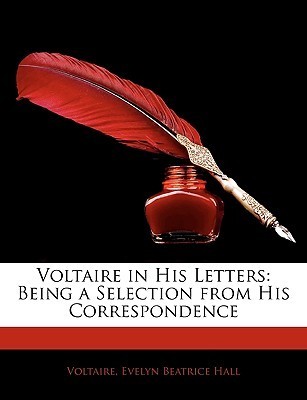
Voltaire in His Letters book cover
Voltaire in His Letters
Being a Selection from His Correspondence
1971
First Published
4.00
Average Rating
320
Number of Pages
This is a reproduction of a book published before 1923. This book may have occasional imperfections such as missing or blurred pages, poor pictures, errant marks, etc. that were either part of the original artifact, or were introduced by the scanning process. We believe this work is culturally important, and despite the imperfections, have elected to bring it back into print as part of our continuing commitment to the preservation of printed works worldwide. We appreciate your understanding of the imperfections in the preservation process, and hope you enjoy this valuable book.

Avg Rating
4.00
Number of Ratings
6
5 STARS
50%
4 STARS
17%
3 STARS
17%
2 STARS
17%
1 STARS
0%
goodreads

Authors

S.G. Tallentyre
Author · 1 book

Evelyn Beatrice Hall, who wrote under the pseudonym S.G. Tallentyre, was an English writer best known for her biography of Voltaire, The Life of Voltaire and a second volume The Friends of Voltaire, which she completed in 1906. Hall created the phrase: "I disapprove of what you say, but I will defend to the death your right to say it," (which is often misattributed to Voltaire himself), as an illustration of Voltaire's beliefs in The Friends of Voltaire. Hall's quote is often cited to describe the principle of freedom of speech.

Voltaire
Voltaire
Author · 83 books

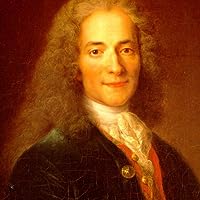
Complete works (1880) : https://archive.org/details/oeuvresco... In 1694, Age of Enlightenment leader Francois-Marie Arouet, known as Voltaire, was born in Paris. Jesuit-educated, he began writing clever verses by the age of 12. He launched a lifelong, successful playwriting career in 1718, interrupted by imprisonment in the Bastille. Upon a second imprisonment, in which Francois adopted the pen name Voltaire, he was released after agreeing to move to London. There he wrote Lettres philosophiques (1733), which galvanized French reform. The book also satirized the religious teachings of Rene Descartes and Blaise Pascal, including Pascal's famed "wager" on God. Voltaire wrote: "The interest I have in believing a thing is not a proof of the existence of that thing." Voltaire's French publisher was sent to the Bastille and Voltaire had to escape from Paris again, as judges sentenced the book to be "torn and burned in the Palace." Voltaire spent a calm 16 years with his deistic mistress, Madame du Chatelet, in Lorraine. He met the 27 year old married mother when he was 39. In his memoirs, he wrote: "I found, in 1733, a young woman who thought as I did, and decided to spend several years in the country, cultivating her mind." He dedicated Traite de metaphysique to her. In it the Deist candidly rejected immortality and questioned belief in God. It was not published until the 1780s. Voltaire continued writing amusing but meaty philosophical plays and histories. After the earthquake that leveled Lisbon in 1755, in which 15,000 people perished and another 15,000 were wounded, Voltaire wrote Poème sur le désastre de Lisbonne (Poem on the Lisbon Disaster): "But how conceive a God supremely good/ Who heaps his favours on the sons he loves,/ Yet scatters evil with as large a hand?" Voltaire purchased a chateau in Geneva, where, among other works, he wrote Candide (1759). To avoid Calvinist persecution, Voltaire moved across the border to Ferney, where the wealthy writer lived for 18 years until his death. Voltaire began to openly challenge Christianity, calling it "the infamous thing." He wrote Frederick the Great: "Christianity is the most ridiculous, the most absurd, and bloody religion that has ever infected the world." Voltaire ended every letter to friends with "Ecrasez l'infame" (crush the infamy—the Christian religion). His pamphlet, The Sermon on the Fifty (1762) went after transubstantiation, miracles, biblical contradictions, the Jewish religion, and the Christian God. Voltaire wrote that a true god "surely cannot have been born of a girl, nor died on the gibbet, nor be eaten in a piece of dough," or inspired "books, filled with contradictions, madness, and horror." He also published excerpts of Testament of the Abbe Meslier, by an atheist priest, in Holland, which advanced the Enlightenment. Voltaire's Philosophical Dictionary was published in 1764 without his name. Although the first edition immediately sold out, Geneva officials, followed by Dutch and Parisian, had the books burned. It was published in 1769 as two large volumes. Voltaire campaigned fiercely against civil atrocities in the name of religion, writing pamphlets and commentaries about the barbaric execution of a Huguenot trader, who was first broken at the wheel, then burned at the stake, in 1762. Voltaire's campaign for justice and restitution ended with a posthumous retrial in 1765, during which 40 Parisian judges declared the defendant innocent. Voltaire urgently tried to save the life of Chevalier de la Barre, a 19 year old sentenced to death for blasphemy for failing to remove his hat during a religious procession. In 1766, Chevalier was beheaded after being tortured, then his body was burned, along with a copy of Voltaire's Philosophical Dictionary. Voltaire's statue at the Pantheon was melted down during Nazi occupation. D. 1778. Voltaire (1694-1778), pseudónimo de François-

548 Market St PMB 65688, San Francisco California 94104-5401 USA
© 2026 Paratext Inc. All rights reserved