Margins




548 Market St PMB 65688, San Francisco California 94104-5401 USA
© 2026 Paratext Inc. All rights reserved
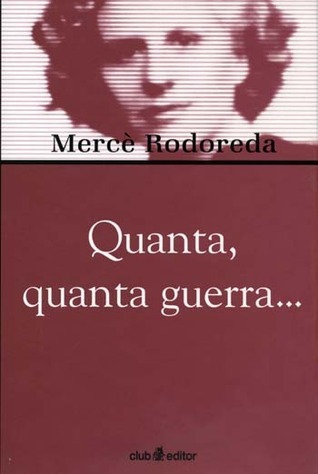
Despite its title, there is little of war and much of the fantastic in this coming-of-age story, which was the last novel Mercè Rodoreda published during her lifetime. We first meet its young protagonist, Adrià Guinart, as he is leaving Barcelona out of boredom and a thirst for freedom, embarking on a long journey through the backwaters of a rural land that one can only suppose is Catalonia, accompanied by the interminable, distant rumblings of an indefinable war. In vignette-like chapters and with a narrative style imbued with the fantastic, Guinart meets with numerous adventures and peculiar characters who offer him a composite, if surrealistic, view of an impoverished, war-ravaged society and shape his perception of his place in the world. As in Rodoreda's Death in Spring, nature and death play an fundamental role in a narrative that often takes on a phantasmagoric quality and seems to be a meditation on the consequences of moral degradation and the inescapable presence of evil. Mercè Rodoreda (1908–1983) is widely regarded as the most important Catalan writer of the twentieth century. Exiled in France and Switzerland following the Spanish Civil War, Rodoreda began writing the novels and short stories—Twenty-Two Short Stories, The Time of the Doves, Camellia Street, Garden by the Sea—that would eventually make her internationally famous.