


Margins
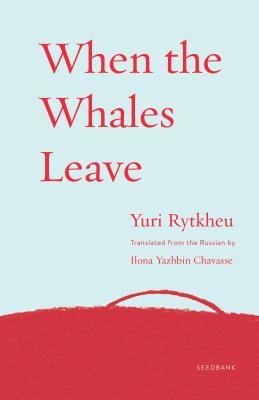
When the Whales Leave book cover
When the Whales Leave
1977
First Published
4.27
Average Rating
144
Number of Pages

Nau cannot remember a time when she was not one with the world around her: with the fast breeze, the green grass, the high clouds, and the endless blue sky above the Shingled Spit. But her greatest joy is to visit the sea, where whales gather every morning to gaily spout rainbows. Then, one day, she finds a man in the mist where a whale should be: Reu, who has taken human form out of his Great Love for her. Together these first humans become parents to two whales, and then to mankind. Even after Reu dies, Nau continues on, sharing her story of brotherhood between the two species. But as these origins grow more distant, the old woman's tales are subsumed into myth—and her descendants turn increasingly bent on parading their dominance over the natural world. Buoyantly translated into English for the first time by Ilona Yazhbin Chavasse, this new entry in the Seedbank series is at once a vibrant retelling of the origin story of the Chukchi, a timely parable about the destructive power of human ego—and another unforgettable work of fiction from Yuri Rytkheu, "arguably the foremost writer to emerge from the minority peoples of Russia's far north" (New York Review of Books).
Avg Rating
4.27
Number of Ratings
422
5 STARS
44%
4 STARS
41%
3 STARS
13%
2 STARS
2%
1 STARS
0%
goodreads

Author

Yuri Rytkheu
Yuri Rytkheu
Author · 4 books

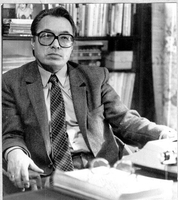
In Cyrillic: Юрий Рытхэу Yuri Sergeyevich Rytkheu. He was a Chukchi writer, who wrote in both his native Chukchi and in Russian. He is considered to be the father of Chukchi literature. Yuri Rytkheu was born on March 8, 1930 in the village of Uelen in the Far Eastern Territory (now the Chukotka Autonomous Okrug) in the family of a hunter-St. John's wort. His grandfather was a shaman. At birth, the boy was given the name Rytkheu, which means "unknown" in Chukchi. Since the Soviet institutions did not recognize the Chukchi names, in the future, in order to obtain a passport, the future writer took a Russian name and patronymic, and the name "Rytkheu" became his last name. Rytkheu graduated from a seven-year school in Uelen and wanted to continue his studies at the Institute of the Peoples of the North, but due to his age he was not among those who were seconded to this university. Therefore, he decided to independently go to Leningrad for training. This path stretched over several years. In order to earn money for travel and life, the future writer was hired for various jobs: he was a sailor, worked on a geological expedition, participated in the hunting game, was a loader at a hydro base. Rytkheu studied at the literary faculty of Leningrad State University from 1949 to 1954. The writer was a little over 20 years old when his stories appeared in the almanac "Young Leningrad", and a little later in the magazines "Ogonyok", "Young World", "Far East", the youth newspaper "Smena" and other periodicals. In 1953, the publishing house "Young Guard" published his first collection of short stories in Russian "People of Our Coast" (translated from Chukotka by A. Smolyan). During his student days, Yuri Rytkheu was actively involved in translation activities, translated into Chukchi the tales of Alexander Pushkin, the stories of Leo Tolstoy, the works of Maxim Gorky and Tikhon Syomushkin. In 1954 Rytkheu was admitted to the Writers' Union of the USSR. Two years later, in Magadan, his collection of stories "The Chukotka Saga" was published, which brought the writer recognition not only of Soviet, but also foreign readers.

548 Market St PMB 65688, San Francisco California 94104-5401 USA
© 2026 Paratext Inc. All rights reserved