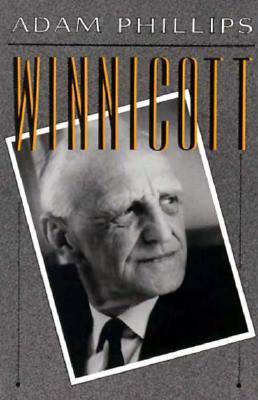



Although he founded no school of his own, D. W. Winnicott (1896–1971) is now regarded as one of the most influential contributors to psychoanalysis since Freud. In over forty years of clinical practice, he brought unprecedented skill and intuition to the psychoanalysis of children. This critical new work by Adam Phillips presents the best short introduction to the thought and practice of Winnicott that is currently available. Winnicott’s work was devoted to the recognition and description of the good mother and the use of the mother–infant relationship as the model of psychoanalytic treatment. His belief in natural development became a covert critique of overinterpretative methods of psychoanalysis. He combined his idiosyncratic approach to psychoanalysis with a willingness to make his work available to nonspecialist audiences. In this book Winnicott takes his place with Melanie Klein and Jacques Lacan as one of the great innovators within the psychoanalytic tradition.
Author

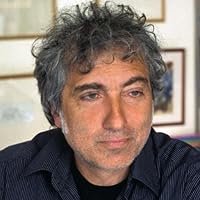
Adam Phillips is a British psychotherapist and essayist. Since 2003 he has been the general editor of the new Penguin Modern Classics translations of Sigmund Freud. He is also a regular contributor to the London Review of Books. Phillips was born in Cardiff, Wales in 1954, the child of second-generation Polish Jews. He grew up as part of an extended family of aunts, uncles and cousins and describes his parents as "very consciously Jewish but not believing". As a child, his first interest was the study of tropical birds and it was not until adolescence that he developed an interest in literature. He went on to study English at St John's College, Oxford, graduating with a third class degree. His defining influences are literary – he was inspired to become a psychoanalyst after reading Carl Jung's autobiography and he has always believed psychoanalysis to be closer to poetry than medicine. Adapted from Wikipedia. Phillips is a regular contributor to the London Review of Books. He has been described by The Times as "the Martin Amis of British psychoanalysis" for his "brilliantly amusing and often profoundly unsettling" work; and by John Banville as "one of the finest prose stylists in the language, an Emerson of our time."