Margins
Margins
Sign in
Margins
Subscribe to our newsletter
548 Market St PMB 65688, San Francisco California 94104-5401 USA
hello@margins.app
·
+1 (650) 223-5283
Privacy Policy
·
Terms of Use
© 2026 Paratext Inc. All rights reserved
📚 Winter
📚
Winter
Białe noce
1848
Fjodor Dostojevskij
White Nights is a short story by Fyodor Dostoevsky that was published in 1848. Set in St. Petersburg, it is the story of a young man fighting his inner restlessness. A light and tender narrative, it delves into the torment and guilt of unrequited love. Both protagonists suffer from a deep sense of alienation that initially brings them together. A blend of romanticism and realism, the story appeals gently to the senses and feelings.
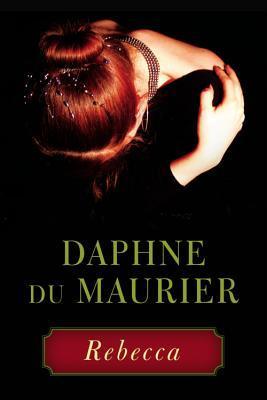
Rebeka
1938
Дафна Дюморье
"Last night I dreamt I went to Manderley again..." Ancient, beautiful Manderley, between the rose garden and the sea, is the county's showpiece. Rebecca made it so - even a year after her death, Rebecca's influence still rules there. How can Maxim de Winter's shy new bride ever fill her place or escape her vital shadow? A shadow that grows longer and darker as the brief summer fades, until, in a moment of climatic revelations, it threatens to eclipse Manderley and its inhabitants completely...
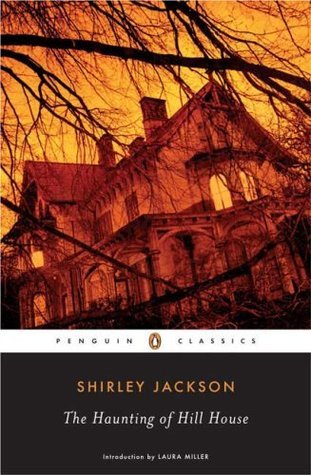
The Haunting of Hill House
1959
Shirley Jackson
It is the story of four seekers who arrive at a notoriously unfriendly pile called Hill House: Dr. Montague, an occult scholar looking for solid evidence of a "haunting"; Theodora, the lighthearted assistant; Eleanor, a friendless, fragile young woman well acquainted with poltergeists; and Luke, the future heir of Hill House. At first, their stay seems destined to be merely a spooky encounter with inexplicable phenomena. But Hill House is gathering its powers—and soon it will choose one of them to make its own.
Ethan Frome
1911
Edith Wharton
The classic novel of despair, forbidden emotions, and sexual undercurrents set against the austere New England countryside Ethan Frome works his unproductive farm and struggles to maintain a bearable existence with his difficult, suspicious and hypochondriac wife, Zeena. But when Zeena's vivacious cousin enters their household as a hired girl, Ethan finds himself obsessed with her and with the possibilities for happiness she comes to represent. In one of American fiction's finest and most intense narratives, Edith Wharton moves this ill-starred trio toward their tragic destinies. Different in both tone and theme from Wharton's other works, Ethan Frome has become perhaps her most enduring and most widely read book.
The Ghost Stories of Edith Wharton
1934
Edith Wharton
These 11 spine-tingling tales of the supernatural bring to light the author's interest in the traditional New England ghost story and her fascination with spirits, hauntings, and other phenomena. Fine line-drawings by Laszlo Kubinyi enhance the mysterious and sometimes chilling mood. The lady's maid's bell (1904) The eyes (1910) Afterward (1910) Kerfol (1916) The triumph of night (1914) Miss Mary Pask (1925) Bewitched (1925) Mr Jones (1928) Pomegranate seed (1931) The looking glass (1935) All souls' (1937)
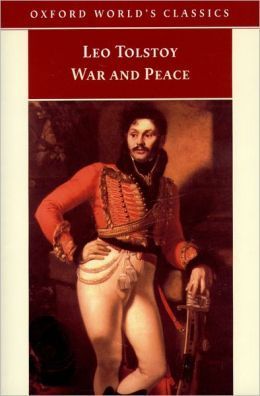
Guerra y paz
1867
León Tolstói
In Russia's struggle with Napoleon, Tolstoy saw a tragedy that involved all mankind. War and Peace broadly focuses on Napoleon’s invasion of Russia in 1812 and follows three of the most well-known characters in literature: Pierre Bezukhov, the illegitimate son of a count who is fighting for his inheritance and yearning for spiritual fulfillment; Prince Andrei Bolkonsky, who leaves his family behind to fight in the war against Napoleon; and Natasha Rostov, the beautiful young daughter of a nobleman who intrigues both men. As Napoleon’s army invades, Tolstoy brilliantly follows characters from diverse backgrounds—peasants and nobility, civilians and soldiers—as they struggle with the problems unique to their era, their history, and their culture. And as the novel progresses, these characters transcend their specificity, becoming some of the most moving—and human—figures in world literature. Tolstoy gave his personal approval to this translation, published here in a new single volume edition, which includes an introduction by Henry Gifford, and Tolstoy's important essay `Some Words about War and Peace'.
Anna Karenina
1878
León Tolstói
Von vielen als der größte Roman der Welt gefeiert, bietet Anna Karenina ein weites Panorama des zeitgenössischen Lebens in Russland und der Menschheit im Allgemeinen. Darin nutzt Tolstoi seine intensive Vorstellungskraft, um einige der unvergesslichsten Figuren der gesamten Literatur zu schaffen. Anna ist eine kultivierte Frau, die ihre leere Existenz als Frau Karenins aufgibt und sich Graf Wronski zuwendet, um ihre leidenschaftliche Natur zu erfüllen – mit tragischen Folgen. Lewin spiegelt Tolstoi selbst wider und bringt oft die eigenen Ansichten und Überzeugungen des Autors zum Ausdruck. Durchgehend zieht Tolstoi keine moralische Lehre, sondern lädt uns lediglich ein, nicht zu urteilen, sondern zuzusehen. Wie Rosemary Edmonds bemerkt: „Er überlässt die wechselnden Muster des Kaleidoskops, um die Bedeutung der düsteren Worte nach dem Titel zur Geltung zu bringen: ‚Mein ist die Rache, ich will vergelten.‘“
Signet Classic - Crime and Punishment Translated by Sidney Monas Unabridged - first time in Paperback
1968
Fjodor Dostojevskij
Book
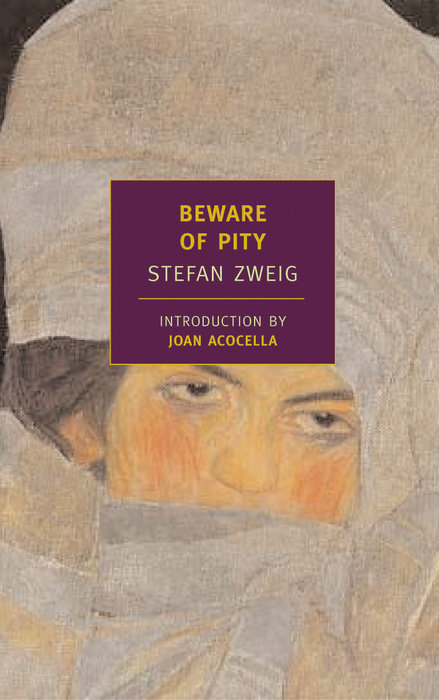
Beware of Pity
1939
Stefan Zweig
The great Austrian writer Stefan Zweig was a master anatomist of the deceitful heart, and Beware of Pity, the only novel he published during his lifetime, uncovers the seed of selfishness within even the finest of feelings. Hofmiller, an Austro-Hungarian cavalry officer stationed at the edge of the empire, is invited to a party at the home of a rich local landowner, a world away from the dreary routine of his barracks. The surroundings are glamorous, wine flows freely, and the exhilarated young Hofmiller asks his host's lovely daughter for a dance, only to discover that sickness has left her painfully crippled. It is a minor blunder, yet one that will go on to destroy his life, as pity and guilt gradually implicate him in a well-meaning but tragically wrongheaded plot to restore the unhappy invalid to health. "Stefan Zweig was a dark and unorthodox artist; it's good to have him back." —Salman Rushdie
Sobre los huesos de los muertos
2009
אולגה טוקרצ'וק
WINNER OF THE NOBEL PRIZE IN LITERATURE In a remote Polish village, Janina devotes the dark winter days to studying astrology, translating the poetry of William Blake, and taking care of the summer homes of wealthy Warsaw residents. Her reputation as a crank and a recluse is amplified by her not-so-secret preference for the company of animals over humans. Then a neighbor, Big Foot, turns up dead. Soon other bodies are discovered, in increasingly strange circumstances. As suspicions mount, Janina inserts herself into the investigation, certain that she knows whodunit. If only anyone would pay her mind . . . A deeply satisfying thriller cum fairy tale, Drive Your Plow over the Bones of the Dead is a provocative exploration of the murky borderland between sanity and madness, justice and tradition, autonomy and fate. Whom do we deem sane? it asks. Who is worthy of a voice?