Throughout history and throughout cultures, witches have always enthralled us. Be they good witches or bad witches, ancient sorcerers or modern-day Wiccans, their aura of magic, nature, and power is irresistible. Here, the greatest authors of all time are gathered together to stir up a little trouble. From Shakespeare’s Wyrd Sisters in Macbeth to Dean Koontz’s doddering old crone in “Snatcher” to Erica Jong’s Mother Goddess in “Smoke,” these works of prose and poetry capture the witch in all her guises: wicked, empowering, romantic, and pagan. No longer relegated to fairy tale villains, witches have become potent personifications of feminine power—and have found a place in every genre of writing. So, leave your preconceived notions at the door and dive headfirst into Witches’ Brew, the ultimate collection of witch literature. Let the world’s greatest writers put you under a spell… Erica Jong • Dean Koontz • Louise Erdrich • William Shakespeare • Ursula K. Le Guin • Harlan Ellison • Sir Arthur Conan Doyle • Shirley Jackson • W.B. Yeats • Brothers Grimm • Ben Franklin • Emily Brontë • Louisa May Alcott • Ray Bradbury • Anton Chekhov • Emily Dickinson • H.P. Lovecraft • Nathaniel Hawthorne • Ambrose Bierce • H.P. Blavatsky • Mary Coleridge • Rosemary Edghill • P.N. Elrod • Anita Endrezze • Mary Wilkins Freeman • David Gerrold • M.V. Ingram • Mercedes Lackey • Cotton Mather • Charles Perrault • Kathryn Ptacek • Doreen Valiente • Evelyn Vaughn • Lady Wilde
Authors

Anton Pavlovich Chekhov (Russian: Антон Павлович Чехов ) was born in the small seaport of Taganrog, southern Russia, the son of a grocer. Chekhov's grandfather was a serf, who had bought his own freedom and that of his three sons in 1841. He also taught himself to read and write. Yevgenia Morozova, Chekhov's mother, was the daughter of a cloth merchant. "When I think back on my childhood," Chekhov recalled, "it all seems quite gloomy to me." His early years were shadowed by his father's tyranny, religious fanaticism, and long nights in the store, which was open from five in the morning till midnight. He attended a school for Greek boys in Taganrog (1867-68) and Taganrog grammar school (1868-79). The family was forced to move to Moscow following his father's bankruptcy. At the age of 16, Chekhov became independent and remained for some time alone in his native town, supporting himself through private tutoring. In 1879 Chekhov entered the Moscow University Medical School. While in the school, he began to publish hundreds of comic short stories to support himself and his mother, sisters and brothers. His publisher at this period was Nicholas Leikin, owner of the St. Petersburg journal Oskolki (splinters). His subjects were silly social situations, marital problems, farcical encounters between husbands, wives, mistresses, and lovers, whims of young women, of whom Chekhov had not much knowledge – the author was shy with women even after his marriage. His works appeared in St. Petersburg daily papers, Peterburskaia gazeta from 1885, and Novoe vremia from 1886. Chekhov's first novel, Nenunzhaya pobeda (1882), set in Hungary, parodied the novels of the popular Hungarian writer Mór Jókai. As a politician Jókai was also mocked for his ideological optimism. By 1886 Chekhov had gained a wide fame as a writer. His second full-length novel, The Shooting Party, was translated into English in 1926. Agatha Christie used its characters and atmosphere in her mystery novel The Murder of Roger Ackroyd (1926). Chekhov graduated in 1884, and practiced medicine until 1892. In 1886 Chekhov met H.S. Suvorin, who invited him to become a regular contributor for the St. Petersburg daily Novoe vremya. His friendship with Suvorin ended in 1898 because of his objections to the anti-Dreyfus campaign conducted by paper. But during these years Chechov developed his concept of the dispassionate, non-judgmental author. He outlined his program in a letter to his brother Aleksandr: "1. Absence of lengthy verbiage of political-social-economic nature; 2. total objectivity; 3. truthful descriptions of persons and objects; 4. extreme brevity; 5. audacity and originality; flee the stereotype; 6. compassion." Chekhov's first book of stories (1886) was a success, and gradually he became a full-time writer. The author's refusal to join the ranks of social critics arose the wrath of liberal and radical intelligentsia and he was criticized for dealing with serious social and moral questions, but avoiding giving answers. However, he was defended by such leading writers as Leo Tolstoy and Nikolai Leskov. "I'm not a liberal, or a conservative, or a gradualist, or a monk, or an indifferentist. I should like to be a free artist and that's all..." Chekhov said in 1888. The failure of his play The Wood Demon (1889) and problems with his novel made Chekhov to withdraw from literature for a period. In 1890 he travelled across Siberia to remote prison island, Sakhalin. There he conducted a detailed census of some 10,000 convicts and settlers condemned to live their lives on that harsh island. Chekhov hoped to use the results of his research for his doctoral dissertation. It is probable that hard conditions on the island also weakened his own physical condition. From this journey was born his famous travel book T

Emily Jane Brontë was an English novelist and poet, now best remembered for her only novel Wuthering Heights, a classic of English literature. Emily was the second eldest of the three surviving Brontë sisters, being younger than Charlotte Brontë and older than Anne Brontë. She published under the masculine pen name Ellis Bell. Emily was born in Thornton, near Bradford in Yorkshire to Patrick Brontë and Maria Branwell. She was the younger sister of Charlotte Brontë and the fifth of six children. In 1824, the family moved to Haworth, where Emily's father was perpetual curate, and it was in these surroundings that their literary oddities flourished. In childhood, after the death of their mother, the three sisters and their brother Patrick Branwell Brontë created imaginary lands (Angria, Gondal, Gaaldine, Oceania), which were featured in stories they wrote. Little of Emily's work from this period survived, except for poems spoken by characters (The Brontës' Web of Childhood, Fannie Ratchford, 1941). In 1842, Emily commenced work as a governess at Miss Patchett's Ladies Academy at Law Hill School, near Halifax, leaving after about six months due to homesickness. Later, with her sister Charlotte, she attended a private school in Brussels. They later tried to open up a school at their home, but had no pupils. It was the discovery of Emily's poetic talent by Charlotte that led her and her sisters, Charlotte and Anne, to publish a joint collection of their poetry in 1846, Poems by Currer, Ellis, and Acton Bell. To evade contemporary prejudice against female writers, the Brontë sisters adopted androgynous first names. All three retained the first letter of their first names: Charlotte became Currer Bell, Anne became Acton Bell, and Emily became Ellis Bell. In 1847, she published her only novel, Wuthering Heights, as two volumes of a three volume set (the last volume being Agnes Grey by her sister Anne). Its innovative structure somewhat puzzled critics. Although it received mixed reviews when it first came out, the book subsequently became an English literary classic. In 1850, Charlotte edited and published Wuthering Heights as a stand-alone novel and under Emily's real name. Like her sisters, Emily's health had been weakened by the harsh local climate at home and at school. She caught a chill during the funeral of her brother in September, and, having refused all medical help, died on December 19, 1848 of tuberculosis, possibly caught from nursing her brother. She was interred in the Church of St. Michael and All Angels family capsule, Haworth, West Yorkshire, England.

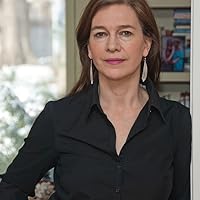
Karen Louise Erdrich is a American author of novels, poetry, and children's books. Her father is German American and mother is half Ojibwe and half French American. She is an enrolled member of the Anishinaabe nation (also known as Chippewa). She is widely acclaimed as one of the most significant Native writers of the second wave of what critic Kenneth Lincoln has called the Native American Renaissance. For more information, please see http://www.answers.com/topic/louise-e... From a book description: Author Biography: Louise Erdrich is one of the most gifted, prolific, and challenging of contemporary Native American novelists. Born in 1954 in Little Falls, Minnesota, she grew up mostly in Wahpeton, North Dakota, where her parents taught at Bureau of Indian Affairs schools. Her fiction reflects aspects of her mixed heritage: German through her father, and French and Ojibwa through her mother. She worked at various jobs, such as hoeing sugar beets, farm work, waitressing, short order cooking, lifeguarding, and construction work, before becoming a writer. She attended the Johns Hopkins creative writing program and received fellowships at the McDowell Colony and the Yaddo Colony. After she was named writer-in-residence at Dartmouth, she married professor Michael Dorris and raised several children, some of them adopted. She and Michael became a picture-book husband-and-wife writing team, though they wrote only one truly collaborative novel, The Crown of Columbus (1991). The Antelope Wife was published in 1998, not long after her separation from Michael and his subsequent suicide. Some reviewers believed they saw in The Antelope Wife the anguish Erdrich must have felt as her marriage crumbled, but she has stated that she is unconscious of having mirrored any real-life events. She is the author of four previous bestselling andaward-winning novels, including Love Medicine; The Beet Queen; Tracks; and The Bingo Palace. She also has written two collections of poetry, Jacklight, and Baptism of Desire. Her fiction has been honored by the National Book Critics Circle (1984) and The Los Angeles Times (1985), and has been translated into fourteen languages. Several of her short stories have been selected for O. Henry awards and for inclusion in the annual Best American Short Story anthologies. The Blue Jay's Dance, a memoir of motherhood, was her first nonfiction work, and her children's book, Grandmother's Pigeon, has been published by Hyperion Press. She lives in Minnesota with her children, who help her run a small independent bookstore called The Birchbark.

Ray Douglas Bradbury, American novelist, short story writer, essayist, playwright, screenwriter and poet, was born August 22, 1920 in Waukegan, Illinois. He graduated from a Los Angeles high school in 1938. Although his formal education ended there, he became a "student of life," selling newspapers on L.A. street corners from 1938 to 1942, spending his nights in the public library and his days at the typewriter. He became a full-time writer in 1943, and contributed numerous short stories to periodicals before publishing a collection of them, Dark Carnival, in 1947. His reputation as a writer of courage and vision was established with the publication of The Martian Chronicles in 1950, which describes the first attempts of Earth people to conquer and colonize Mars, and the unintended consequences. Next came The Illustrated Man and then, in 1953, Fahrenheit 451, which many consider to be Bradbury's masterpiece, a scathing indictment of censorship set in a future world where the written word is forbidden. In an attempt to salvage their history and culture, a group of rebels memorize entire works of literature and philosophy as their books are burned by the totalitarian state. Other works include The October Country, Dandelion Wine, A Medicine for Melancholy, Something Wicked This Way Comes, I Sing the Body Electric!, Quicker Than the Eye, and Driving Blind. In all, Bradbury has published more than thirty books, close to 600 short stories, and numerous poems, essays, and plays. His short stories have appeared in more than 1,000 school curriculum "recommended reading" anthologies. Ray Bradbury's work has been included in four Best American Short Story collections. He has been awarded the O. Henry Memorial Award, the Benjamin Franklin Award, the World Fantasy Award for Lifetime Achievement, the Grand Master Award from the Science Fiction Writers of America, the PEN Center USA West Lifetime Achievement Award, among others. In November 2000, the National Book Foundation Medal for Distinguished Contribution to American Letters was conferred upon Mr. Bradbury at the 2000 National Book Awards Ceremony in New York City. Ray Bradbury has never confined his vision to the purely literary. He has been nominated for an Academy Award (for his animated film Icarus Montgolfier Wright), and has won an Emmy Award (for his teleplay of The Halloween Tree). He adapted sixty-five of his stories for television's Ray Bradbury Theater. He was the creative consultant on the United States Pavilion at the 1964 New York World's Fair. In 1982 he created the interior metaphors for the Spaceship Earth display at Epcot Center, Disney World, and later contributed to the conception of the Orbitron space ride at Euro-Disney, France. Married since 1947, Mr. Bradbury and his wife Maggie lived in Los Angeles with their numerous cats. Together, they raised four daughters and had eight grandchildren. Sadly, Maggie passed away in November of 2003. On the occasion of his 80th birthday in August 2000, Bradbury said, "The great fun in my life has been getting up every morning and rushing to the typewriter because some new idea has hit me. The feeling I have every day is very much the same as it was when I was twelve. In any event, here I am, eighty years old, feeling no different, full of a great sense of joy, and glad for the long life that has been allowed me. I have good plans for the next ten or twenty years, and I hope you'll come along."

Helena Petrovna Blavatsky (Russian: Еле́на Петро́вна Блава́тская, Yelena Petrovna Blavatskaya, often known as Madame Blavatsky; 12 August [O.S. 31 July] 1831 – 8 May 1891) was a Russian occultist, philosopher, and author who co-founded the Theosophical Society in 1875. She gained an international following as the leading theoretician of Theosophy, the esoteric religion that the society promoted. Source: Wikipedia

Emily Dickinson was an American poet who, despite the fact that less than a dozen of her nearly eighteen hundred poems were published during her lifetime, is widely considered one of the most original and influential poets of the 19th century. Dickinson was born to a successful family with strong community ties, she lived a mostly introverted and reclusive life. After she studied at the Amherst Academy for seven years in her youth, she spent a short time at Mount Holyoke Female Seminary before returning to her family's house in Amherst. Thought of as an eccentric by the locals, she became known for her penchant for white clothing and her reluctance to greet guests or, later in life, even leave her room. Most of her friendships were therefore carried out by correspondence. Although Dickinson was a prolific private poet, fewer than a dozen of her nearly eighteen hundred poems were published during her lifetime.The work that was published during her lifetime was usually altered significantly by the publishers to fit the conventional poetic rules of the time. Dickinson's poems are unique for the era in which she wrote; they contain short lines, typically lack titles, and often use slant rhyme as well as unconventional capitalization and punctuation.Many of her poems deal with themes of death and immortality, two recurring topics in letters to her friends. Although most of her acquaintances were probably aware of Dickinson's writing, it was not until after her death in 1886—when Lavinia, Emily's younger sister, discovered her cache of poems—that the breadth of Dickinson's work became apparent. Her first collection of poetry was published in 1890 by personal acquaintances Thomas Wentworth Higginson and Mabel Loomis Todd, both of whom heavily edited the content. A complete and mostly unaltered collection of her poetry became available for the first time in 1955 when The Poems of Emily Dickinson was published by scholar Thomas H. Johnson. Despite unfavorable reviews and skepticism of her literary prowess during the late 19th and early 20th century, critics now consider Dickinson to be a major American poet. For more information, please see http://www.answers.com/topic/emily-di...

Erica Jong—novelist, poet, and essayist—has consistently used her craft to help provide women with a powerful and rational voice in forging a feminist consciousness. She has published 21 books, including eight novels, six volumes of poetry, six books of non-fiction and numerous articles in magazines and newspapers such as the New York Times, the Sunday Times of London, Elle, Vogue, and the New York Times Book Review. In her groundbreaking first novel, Fear of Flying (which has sold twenty-six million copies in more than forty languages), she introduced Isadora Wing, who also plays a central part in three subsequent novels—How to Save Your Own Life, Parachutes and Kisses, and Any Woman's Blues. In her three historical novels—Fanny, Shylock's Daughter, and Sappho's Leap—she demonstrates her mastery of eighteenth-century British literature, the verses of Shakespeare, and ancient Greek lyric, respectively. A memoir of her life as a writer, Seducing the Demon: Writing for My Life, came out in March 2006. It was a national bestseller in the US and many other countries. Erica’s latest book, Sugar in My Bowl, is an anthology of women writing about sex, has been recently released in paperback. Erica Jong was honored with the United Nations Award for Excellence in Literature. She has also received Poetry magazine's Bess Hokin Prize, also won by W.S. Merwin and Sylvia Plath. In France, she received the Deauville Award for Literary Excellence and in Italy, she received the Sigmund Freud Award for Literature. The City University of New York awarded Ms. Jong an honorary PhD at the College of Staten Island. Her works have appeared all over the world and are as popular in Eastern Europe, Japan, China, and other Asian countries as they have been in the United States and Western Europe. She has lectured, taught and read her work all over the world. A graduate of Barnard College and Columbia University's Graduate Faculties where she received her M.A. in 18th Century English Literature, Erica Jong also attended Columbia's graduate writing program where she studied poetry with Stanley Kunitz and Mark Strand. In 2007, continuing her long-standing relationship with the university, a large collection of Erica’s archival material was acquired by Columbia University’s Rare Book & Manuscript Library, where it will be available to graduate and undergraduate students. Ms. Jong plans to teach master classes at Columbia and also advise the Rare Book Library on the acquisition of other women writers’ archives. Calling herself “a defrocked academic,” Ms. Jong has partly returned to her roots as a scholar. She has taught at Ben Gurion University in Israel, Bennington College in the US, Breadloaf Writers’ Conference in Vermont and many other distinguished writing programs and universities. She loves to teach and lecture, though her skill in these areas has sometimes crowded her writing projects. “As long as I am communicating the gift of literature, I’m happy,” Jong says. A poet at heart, Ms. Jong believes that words can save the world.

Acknowledged as "America's most popular suspense novelist" (Rolling Stone) and as one of today's most celebrated and successful writers, Dean Ray Koontz has earned the devotion of millions of readers around the world and the praise of critics everywhere for tales of character, mystery, and adventure that strike to the core of what it means to be human. Dean, the author of many #1 New York Times bestsellers, lives in Southern California with his wife, Gerda, their golden retriever, Elsa, and the enduring spirit of their goldens, Trixie and Anna. Facebook: Facebook.com/DeanKoontzOfficial Twitter: @DeanKoontz Website: DeanKoontz.com
aka Les Simons, Kathryn Atwood, Anne Mayfield, Kathleen Maxwell, Kathryn Grant Kathryn Anne Ptacek was born on 12 September 1952 in Omaha, Nebraska, USA, but was raised in Albuquerque, New Mexico. She received her B. A. in Journalism, with a minor in history, from the University of New Mexico, Albuquerque, where she was graduated with distinction in 1974. While attending the university, she was a student of award-winning mystery writer Tony Hillerman and well-known YA writer Lois Duncan. Afterward, she worked briefly for a political party best left unnamed, was a telephone solicitor for the New Mexico Assn. of Retarded People, and spent two years as an advertising lay-out artist for a regional grocery warehouse co-op, and then worked for the University of New Mexico first as a secretary in the Dept. of Speech and Hearing, then for the University's Computing Center as their only technical writer and editor. After the sale of her first novel, an historical romance, in July 1979, she quit to become a full-time novelist. As Les Simons, Kathryn Atwood, Anne Mayfield, Kathleen Maxwell, Kathryn Ptacek, and Kathryn Grant, she has written an historical fantasy series, numerous historical romances, and five horror novels. Her dark fantasy have won the Silver Medal and Gold Medal awards given by the West Coast Review of Books. She has also edited three anthologies, the critically acclaimed Women of Darkness and its companion Women of Darkness II (both Tor), and Women of the West (Doubleday). Editions of her books have appeared in England, Japan, Norway, Sweden and Germany. Her short stories have appeared in Greystone Bay, Doom City (Greystone Bay II), Fantasy Tales, the Post Mortem anthology, Pulphouse 5, The Horror Show, Freak Show (HWA anthology), A Confederacy of Horrors, Into The Fog, The Ultimate Witch, and Phobias. She is a member of Horror Writers Association, Mystery Writers of America, the International Women Writers Guild, and the Police Writers Club. She also prepares a market report for Hellnotes, is the editor of the Horror Writers Association's monthly newsletter, and publishes a market newsletter, The Gila Queen's Guide to Markets, which goes to writers and artists around the world. On 1982, she married to dark fantasy novelist Charles L. Grant, who died in 2006. She shares a 116-year-old Victorian clapboard house with five cats in Newton, New Jersey. Her hobbies include gardening, jewelry making, and various needlework. She also has a large collection of gila monster memorabilia, and collects unusual teapots and cat whiskers.

Shirley Jackson was an influential American author. A popular writer in her time, her work has received increasing attention from literary critics in recent years. She has influenced such writers as Stephen King, Nigel Kneale, and Richard Matheson. She is best known for her dystopian short story, "The Lottery" (1948), which suggests there is a deeply unsettling underside to bucolic, smalltown America. In her critical biography of Shirley Jackson, Lenemaja Friedman notes that when Shirley Jackson's story "The Lottery" was published in the June 28, 1948, issue of The New Yorker, it received a response that "no New Yorker story had ever received." Hundreds of letters poured in that were characterized by, as Jackson put it, "bewilderment, speculation and old-fashioned abuse." Jackson's husband, the literary critic Stanley Edgar Hyman, wrote in his preface to a posthumous anthology of her work that "she consistently refused to be interviewed, to explain or promote her work in any fashion, or to take public stands and be the pundit of the Sunday supplements. She believed that her books would speak for her clearly enough over the years." Hyman insisted the darker aspects of Jackson's works were not, as some critics claimed, the product of "personal, even neurotic, fantasies", but that Jackson intended, as "a sensitive and faithful anatomy of our times, fitting symbols for our distressing world of the concentration camp and the Bomb", to mirror humanity's Cold War-era fears. Jackson may even have taken pleasure in the subversive impact of her work, as revealed by Hyman's statement that she "was always proud that the Union of South Africa banned The Lottery', and she felt that they at least understood the story". In 1965, Jackson died of heart failure in her sleep, at her home in North Bennington Vermont, at the age of 48.

Mary Elizabeth Coleridge was a British novelist and poet, who also wrote essays and reviews. She taught at the London Working Women's College for twelve years from 1895 to 1907. She wrote poetry under the pseudonym Anodos, taken from George MacDonald. Coleridge published five novels, the best known of those being The King with Two Faces, which earned her £900 in royalties in 1897. She travelled widely throughout her life, although her home was in London, where she lived with her family. Her father was Arthur Duke Coleridge who, along with the singer Jenny Lind, was responsible for the formation of the London Bach Choir in 1875. Other family friends included Robert Browning, Alfred, Lord Tennyson, John Millais and Fanny Kemble. Mary Coleridge was the great-grandniece of Samuel Taylor Coleridge and the great niece of Sara Coleridge, the author of Phantasmion. She died from complications arising from appendicitis while on holiday in Harrogate in 1907, leaving an unfinished manuscript for her next novel, and hundreds of unpublished poems. One of her poems, "The Blue Bird," was set to music by Charles Villiers Stanford. A family friend, the composer, Hubert Parry also set several of her poems to music.

Doreen Edith Dominy Valiente was an influential English Wiccan who was involved in a number of different early traditions, including Gardnerian Wicca, Cochrane's Craft and the Coven of Atho. Responsible for writing much of the early Gardnerian religious liturgy, in later years she also helped to play a big part in bringing the Neopagan religion of Wicca to wider public attention through the publication of a string of books on the subject. Having been born in south London, she first became involved in the Craft after being initiated into the Gardnerian tradition in 1953 in a ceremony performed by Gerald Gardner. Subsequently becoming the High Priestess of his Bricket Wood coven, she helped him to produce many important scriptural texts for Wicca, such as “The Witches Rune” and the “Charge of the Goddess”, which were incorporated into the early Gardnerian Book of Shadows. Splitting off to form her own coven in 1957, she went on to work with Robert Cochrane in his coven, the Clan of Tubal Cain, till the mid 1960s when she began working as a solitary practitioner. Throughout the 1970s and 1980s she penned a number of books on the subject of Wicca - which she always called "witchcraft" – including “An ABC of Witchcraft” (1973) and “Witchcraft for Tomorrow” (1978), as well as being an early proponent of self-initiation into the Craft. Having had a significant influence in the history of Wicca, she has been referred to as "the mother of modern Witchcraft" and is today is widely revered in the Wiccan and wider Neopagan community.

Charles Perrault was a French author who laid foundations for a new literary genre, the fairy tale, and whose best known tales, offered as if they were pre-existing folk tales, include: Little Red Riding Hood, Sleeping Beauty, Puss in Boots, Cinderella, Bluebeard, Hop o' My Thumb), Diamonds and Toads, Patient Griselda, The Ridiculous Wishes... Perrault's most famous stories are still in print today and have been made into operas, ballets (e.g., Tchaikovsky's Sleeping Beauty), plays, musicals, and films, both live-action and animation. The Brothers Grimm retold their own versions of some of Perrault's fairy tales.

Sir Arthur Ignatius Conan Doyle was born the third of ten siblings on 22 May 1859 in Edinburgh, Scotland. His father, Charles Altamont Doyle, a talented illustrator, was born in England of Irish descent, and his mother, born Mary Foley, was Irish. They were married in 1855. Although he is now referred to as "Conan Doyle", the origin of this compound surname (if that is how he meant it to be understood) is uncertain. His baptism record in the registry of St Mary's Cathedral in Edinburgh gives 'Arthur Ignatius Conan' as his Christian name, and simply 'Doyle' as his surname. It also names Michael Conan as his godfather. At the age of nine Conan Doyle was sent to the Roman Catholic Jesuit preparatory school, Hodder Place, Stonyhurst. He then went on to Stonyhurst College, leaving in 1875. From 1876 to 1881 he studied medicine at the University of Edinburgh. This required that he provide periodic medical assistance in the towns of Aston (now a district of Birmingham) and Sheffield. While studying, Conan Doyle began writing short stories. His first published story appeared in "Chambers' Edinburgh Journal" before he was 20. Following his graduation, he was employed as a ship's doctor on the SS Mayumba during a voyage to the West African coast. He completed his doctorate on the subject of tabes dorsalis in 1885. In 1885 Conan Doyle married Louisa (or Louise) Hawkins, known as "Touie". She suffered from tuberculosis and died on 4 July 1906. The following year he married Jean Elizabeth Leckie, whom he had first met and fallen in love with in 1897. Due to his sense of loyalty he had maintained a purely platonic relationship with Jean while his first wife was alive. Jean died in London on 27 June 1940. Conan Doyle fathered five children. Two with his first wife—Mary Louise (28 January 1889 – 12 June 1976), and Arthur Alleyne Kingsley, known as Kingsley (15 November 1892 – 28 October 1918). With his second wife he had three children—Denis Percy Stewart (17 March 1909 – 9 March 1955), second husband in 1936 of Georgian Princess Nina Mdivani (circa 1910 – 19 February 1987; former sister-in-law of Barbara Hutton); Adrian Malcolm (19 November 1910–3 June 1970) and Jean Lena Annette (21 December 1912–18 November 1997). Conan Doyle was found clutching his chest in the hall of Windlesham, his house in Crowborough, East Sussex, on 7 July 1930. He had died of a heart attack at age 71. His last words were directed toward his wife: "You are wonderful." The epitaph on his gravestone in the churchyard at Minstead in the New Forest, Hampshire, reads: STEEL TRUE BLADE STRAIGHT ARTHUR CONAN DOYLE KNIGHT PATRIOT, PHYSICIAN & MAN OF LETTERS Conan Doyle's house, Undershaw, located in Hindhead, south of London, where he had lived for a decade, had been a hotel and restaurant between 1924 and 2004. It now stands empty while conservationists and Conan Doyle fans fight to preserve it. A statue honours Conan Doyle at Crowborough Cross in Crowborough, where Conan Doyle lived for 23 years. There is also a statue of Sherlock Holmes in Picardy Place, Edinburgh, close to the house where Conan Doyle was born. Series: * Sherlock Holmes

Ursula K. Le Guin published twenty-two novels, eleven volumes of short stories, four collections of essays, twelve books for children, six volumes of poetry and four of translation, and has received many awards: Hugo, Nebula, National Book Award, PEN-Malamud, etc. Her recent publications include the novel Lavinia, an essay collection, Cheek by Jowl, and The Wild Girls. She lived in Portland, Oregon. She was known for her treatment of gender (The Left Hand of Darkness, The Matter of Seggri), political systems (The Telling, The Dispossessed) and difference/otherness in any other form. Her interest in non-Western philosophies was reflected in works such as "Solitude" and The Telling but even more interesting are her imagined societies, often mixing traits extracted from her profound knowledge of anthropology acquired from growing up with her father, the famous anthropologist, Alfred Kroeber. The Hainish Cycle reflects the anthropologist's experience of immersing themselves in new strange cultures since most of their main characters and narrators (Le Guin favoured the first-person narration) are envoys from a humanitarian organization, the Ekumen, sent to investigate or ally themselves with the people of a different world and learn their ways.

Harlan Jay Ellison was a prolific American writer of short stories, novellas, teleplays, essays, and criticism. His literary and television work has received many awards. He wrote for the original series of both The Outer Limits and Star Trek as well as The Alfred Hitchcock Hour; edited the multiple-award-winning short story anthology series Dangerous Visions; and served as creative consultant/writer to the science fiction TV series The New Twilight Zone and Babylon 5. Several of his short fiction pieces have been made into movies, such as the classic "The Boy and His Dog". webmaster@harlanellison.com

Nathaniel Hawthorne was a 19th century American novelist and short story writer. He is seen as a key figure in the development of American literature for his tales of the nation's colonial history. Shortly after graduating from Bowdoin College, Hathorne changed his name to Hawthorne. Hawthorne anonymously published his first work, a novel titled Fanshawe, in 1828. In 1837, he published Twice-Told Tales and became engaged to painter and illustrator Sophia Peabody the next year. He worked at a Custom House and joined a Transcendentalist Utopian community, before marrying Peabody in 1842. The couple moved to The Old Manse in Concord, Massachusetts, later moving to Salem, the Berkshires, then to The Wayside in Concord. The Scarlet Letter was published in 1850, followed by a succession of other novels. A political appointment took Hawthorne and family to Europe before returning to The Wayside in 1860. Hawthorne died on May 19, 1864, leaving behind his wife and their three children. Much of Hawthorne's writing centers around New England and many feature moral allegories with a Puritan inspiration. His work is considered part of the Romantic movement and includes novels, short stories, and a biography of his friend, the United States President Franklin Pierce.

Mary Eleanor Wilkins Freeman was born in Randolph, Massachusetts, and attended Mount Holyoke College (then, Mount Holyoke Female Seminary) in South Hadley, Massachusetts, for one year, from 1870–71. Freeman's parents were orthodox Congregationalists, causing her to have a very strict childhood. Religious constraints play a key role in some of her works. She later finished her education at West Brattleboro Seminary. She passed the greater part of her life in Massachusetts and Vermont. Freeman began writing stories and verse for children while still a teenager to help support her family and was quickly successful. Her best known work was written in the 1880s and 1890s while she lived in Randolph. She produced more than two dozen volumes of published short stories and novels. She is best known for two collections of stories, A Humble Romance and Other Stories (1887) and A New England Nun and Other Stories (1891). Her stories deal mostly with New England life and are among the best of their kind. Freeman is also remembered for her novel Pembroke (1894), and she contributed a notable chapter to the collaborative novel The Whole Family (1908). In 1902 she married Doctor Charles M. Freeman of Metuchen, New Jersey. In April 1926, Freeman became the first recipient of the William Dean Howells Medal for Distinction in Fiction from the American Academy of Arts and Letters. She died in Metuchen and was interred in Hillside Cemetery in Scotch Plains, New Jersey.

Ambrose Gwinnett Bierce (1842-1914) was an American editorialist, journalist, short story writer, fabulist and satirist. Today, he is best known for his short story, An Occurrence at Owl Creek Bridge and his satirical lexicon, The Devil's Dictionary. The sardonic view of human nature that informed his work – along with his vehemence as a critic, with his motto "nothing matters" – earned him the nickname "Bitter Bierce." Despite his reputation as a searing critic, however, Bierce was known to encourage younger writers, including poet George Sterling and fiction writer W. C. Morrow. Bierce employed a distinctive style of writing, especially in his stories. This style often embraces an abrupt beginning, dark imagery, vague references to time, limited descriptions, the theme of war, and impossible events. Bierce disappeared in December 1913 at the age of 71. He is believed to have traveled to Mexico to gain a firsthand perspective on that country's ongoing revolution. Despite an abundance of theories, Bierce's ultimate fate remains a mystery. He wrote in one of his final letters: "Good-bye. If you hear of my being stood up against a Mexican stone wall and shot to rags, please know that I think it is a pretty good way to depart this life. It beats old age, disease, or falling down the cellar stairs. To be a Gringo in Mexico—ah, that is euthanasia!"

Mercedes entered this world on June 24, 1950, in Chicago, had a normal childhood and graduated from Purdue University in 1972. During the late 70's she worked as an artist's model and then went into the computer programming field, ending up with American Airlines in Tulsa, Oklahoma. In addition to her fantasy writing, she has written lyrics for and recorded nearly fifty songs for Firebird Arts & Music, a small recording company specializing in science fiction folk music. "I'm a storyteller; that's what I see as 'my job'. My stories come out of my characters; how those characters would react to the given situation. Maybe that's why I get letters from readers as young as thirteen and as old as sixty-odd. One of the reasons I write song lyrics is because I see songs as a kind of 'story pill' — they reduce a story to the barest essentials or encapsulate a particular crucial moment in time. I frequently will write a lyric when I am attempting to get to the heart of a crucial scene; I find that when I have done so, the scene has become absolutely clear in my mind, and I can write exactly what I wanted to say. Another reason is because of the kind of novels I am writing: that is, fantasy, set in an other-world semi-medieval atmosphere. Music is very important to medieval peoples; bards are the chief newsbringers. When I write the 'folk music' of these peoples, I am enriching my whole world, whether I actually use the song in the text or not. "I began writing out of boredom; I continue out of addiction. I can't 'not' write, and as a result I have no social life! I began writing fantasy because I love it, but I try to construct my fantasy worlds with all the care of a 'high-tech' science fiction writer. I apply the principle of TANSTAAFL ['There ain't no such thing as free lunch', credited to Robert Heinlein) to magic, for instance; in my worlds, magic is paid for, and the cost to the magician is frequently a high one. I try to keep my world as solid and real as possible; people deal with stubborn pumps, bugs in the porridge, and love-lives that refuse to become untangled, right along with invading armies and evil magicians. And I try to make all of my characters, even the 'evil magicians,' something more than flat stereotypes. Even evil magicians get up in the night and look for cookies, sometimes. "I suppose that in everything I write I try to expound the creed I gave my character Diana Tregarde in Burning Water: "There's no such thing as 'one, true way'; the only answers worth having are the ones you find for yourself; leave the world better than you found it. Love, freedom, and the chance to do some good—they're the things worth living and dying for, and if you aren't willing to die for the things worth living for, you might as well turn in your membership in the human race." Also writes as Misty Lackey Author's website

William Butler Yeats was an Irish poet and dramatist, and one of the foremost figures of 20th century literature. A pillar of both the Irish and British literary establishments, in his later years Yeats served as an Irish Senator for two terms. He was a driving force behind the Irish Literary Revival, and along with Lady Gregory and Edward Martyn founded the Abbey Theatre, serving as its chief during its early years. In 1923 he was awarded the Nobel Prize in Literature for what the Nobel Committee described as "inspired poetry, which in a highly artistic form gives expression to the spirit of a whole nation." He was the first Irishman so honored. Yeats is generally considered one of the few writers who completed their greatest works after being awarded the Nobel Prize; such works include The Tower (1928) and The Winding Stair and Other Poems (1929). Yeats was born and educated in Dublin but spent his childhood in County Sligo. He studied poetry in his youth, and from an early age was fascinated by both Irish legends and the occult. Those topics feature in the first phase of his work, which lasted roughly until the turn of the century. His earliest volume of verse was published in 1889, and those slow paced and lyrical poems display debts to Edmund Spenser and Percy Bysshe Shelley, as well as to the Pre-Raphaelite poets. From 1900, Yeats' poetry grew more physical and realistic. He largely renounced the transcendental beliefs of his youth, though he remained preoccupied with physical and spiritual masks, as well as with cyclical theories of life. —from Wikipedia

Howard Phillips Lovecraft, of Providence, Rhode Island, was an American author of horror, fantasy and science fiction. Lovecraft's major inspiration and invention was cosmic horror: life is incomprehensible to human minds and the universe is fundamentally alien. Those who genuinely reason, like his protagonists, gamble with sanity. Lovecraft has developed a cult following for his Cthulhu Mythos, a series of loosely interconnected fictions featuring a pantheon of human-nullifying entities, as well as the Necronomicon, a fictional grimoire of magical rites and forbidden lore. His works were deeply pessimistic and cynical, challenging the values of the Enlightenment, Romanticism and Christianity. Lovecraft's protagonists usually achieve the mirror-opposite of traditional gnosis and mysticism by momentarily glimpsing the horror of ultimate reality. Although Lovecraft's readership was limited during his life, his reputation has grown over the decades. He is now commonly regarded as one of the most influential horror writers of the 20th Century, exerting widespread and indirect influence, and frequently compared to Edgar Allan Poe. — Wikipedia

Cotton Mather A.B. 1678 (Harvard College), A.M. 1681; honorary doctorate 1710 (University of Glasgow), was a socially and politically influential New England Puritan minister, prolific author, and pamphleteer. Cotton Mather was the son of influential minister Increase Mather. He is often remembered for his connection to the Salem witch trials. Mather was named after his grandfathers, both paternal (Richard Mather) and maternal (John Cotton). He attended Boston Latin School, and graduated from Harvard in 1678, at only 16 years of age. After completing his post-graduate work, he joined his father as assistant Pastor of Boston's original North Church (not to be confused with the Anglican/Episcopal Old North Church). It was not until his father's death, in 1723, that Mather assumed full responsibilities as Pastor at the Church. Author of more than 450 books and pamphlets, Cotton Mather's ubiquitous literary works made him one of the most influential religious leaders in America. Mather set the nation's "moral tone," and sounded the call for second and third generation Puritans, whose parents had left England for the New England colonies of North America to return to the theological roots of Puritanism.

People best know American writer Louisa May Alcott for Little Women (1868), her largely autobiographical novel. As A.M. Barnard: Behind a Mask, or a Woman's Power (1866) The Abbot's Ghost, or Maurice Treherne's Temptation (1867) A Long Fatal Love Chase (1866 – first published 1995) First published anonymously: A Modern Mephistopheles (1877) Philosopher-teacher Amos Bronson Alcott, educated his four daughters, Anna, Louisa, Elizabeth and May and Abigail May, wife of Amos, reared them on her practical Christianity. Louisa spent her childhood in Boston and Concord, Massachusetts, where visits to library of Ralph Waldo Emerson, excursions into nature with Henry David Thoreau, and theatricals in the barn at Hillside (now "Wayside") of Nathaniel Hawthorne enlightened her days. Like Jo March, her character in Little Women, young Louisa, a tomboy, claimed: "No boy could be my friend till I had beaten him in a race, ... and no girl if she refused to climb trees, leap fences...." Louisa wrote early with a passion. She and her sisters often acted out her melodramatic stories of her rich imagination for friends. Louisa preferred to play the "lurid" parts in these plays, "the villains, ghosts, bandits, and disdainful queens." At 15 years of age in 1847, the poverty that plagued her family troubled her, who vowed: "I will do something by and by. Don’t care what, teach, sew, act, write, anything to help the family; and I’ll be rich and famous and happy before I die, see if I won’t!" Confronting a society that offered little opportunity to women, seeking employment, Louisa determined "...I will make a battering-ram of my head and make my way through this rough and tumble world." Whether as a teacher, seamstress, governess, or household servant, Louisa ably found work for many years. Career of Louisa as an author began with poetry and short stories in popular magazines. In 1854, people published Flower Fables, her first book, at 22 years of age. From her post as a nurse in Washington, District of Columbia, during the Civil War, she wrote home letters that based Hospital Sketches (1863), a milestone along her literary path. Thomas Niles, a publisher in Boston, asked 35-year-old Louisa in 1867 to write "a book for girls." She wrote Little Women at Orchard House from May to July 1868. Louisa and her sisters came of age in the novel, set in New England during Civil War. From her own individuality, Jo March, the first such American juvenile heroine, acted as a living, breathing person rather than the idealized stereotype that then prevailed in fiction of children. Louisa published more than thirty books and collections of stories. Only two days after her father predeceased her, she died, and survivors buried her body in Sleepy Hollow cemetery in Concord.