Authors

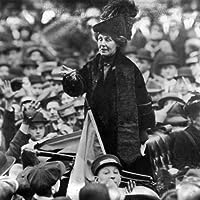
Emmeline Pankhurst was a British political activist and leader of the British suffragette movement who helped women win the right to vote. In 1999 Time named Pankhurst as one of the 100 Most Important People of the 20th Century, stating: "she shaped an idea of women for our time; she shook society into a new pattern from which there could be no going back." By Topical Press Agency, photographer unknown - Hulton Archive - Getty Images, Public Domain, https://commons.wikimedia.org/w/index...


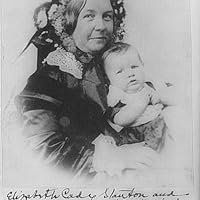
Elizabeth Cady Stanton was an American social activist and leading figure of the early woman's movement. Her Declaration of Sentiments, presented at the first women's rights convention held in 1848 in Seneca Falls, New York, is often credited with initiating the first organized woman's rights and woman's suffrage movements in the United States. Before Stanton narrowed her political focus almost exclusively to women's rights, she was an active abolitionist together with her husband, Henry Brewster Stanton and cousin, Gerrit Smith. Unlike many of those involved in the women's rights movement, Stanton addressed a number of issues pertaining to women beyond voting rights. Her concerns included women's parental and custody rights, property rights, employment and income rights, divorce laws, the economic health of the family, and birth control. She was also an outspoken supporter of the 19th-century temperance movement. After the American Civil War, Stanton's commitment to female suffrage caused a schism in the women's rights movement when she, along with Susan B. Anthony, declined to support passage of the Fourteenth and Fifteenth Amendments to the United States Constitution. She opposed giving added legal protection and voting rights to African American men while continuing to deny women, black and white, the same rights. Her position on this issue, together with her thoughts on organized Christianity and women's issues beyond voting rights, led to the formation of two separate women's rights organizations that were finally rejoined, with Stanton as president of the joint organization, approximately twenty years later.

From Wikipedia: "Alice Stone Blackwell (September 14, 1857 – March 15, 1950) was an American feminist, journalist and human rights advocate. The daughter of Henry Brown Blackwell and Lucy Stone, she was born in East Orange, New Jersey." Detailed biography available at http://armenianhouse.org/blackwell/bi...

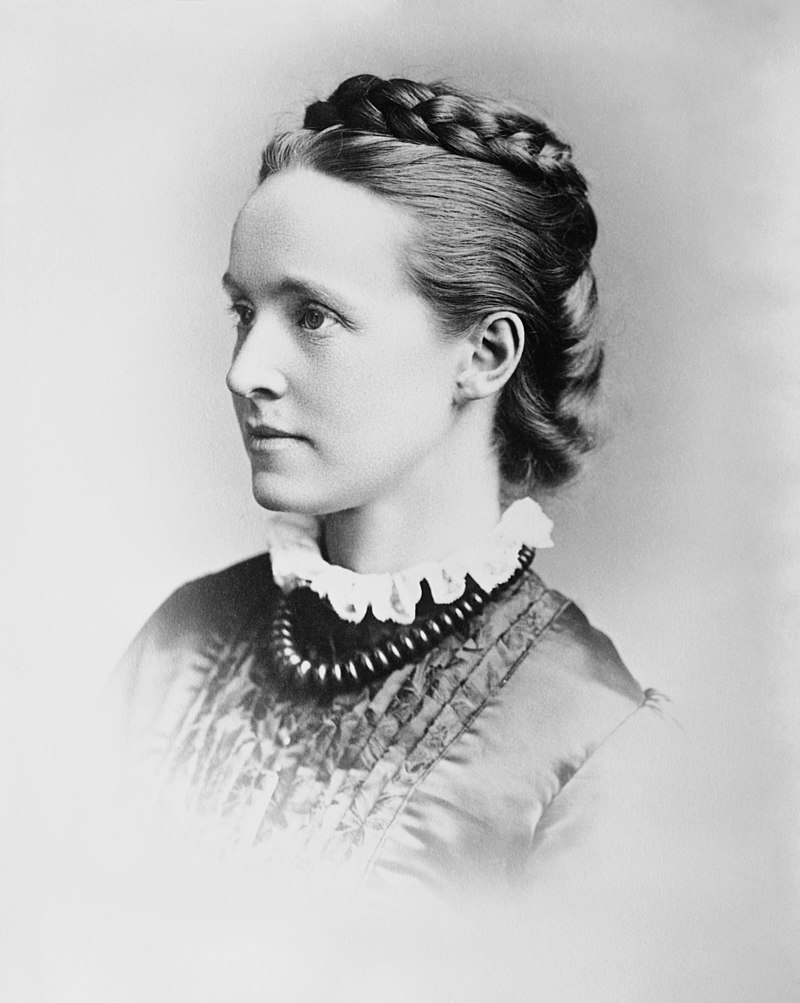
Dame Millicent Garrett Fawcett was an English political leader, activist and writer, known primarily as a campaigner for women's suffrage. Fawcett was born on 11 June 1847 in Aldeburgh, to Newson Garrett, an entrepreneur, and his wife Louisa (née Dunnell). She was the eighth of their ten children. As a child, Fawcett's elder sister Elizabeth Garrett Anderson, who became Britain's first female doctor, introduced her to Emily Davies, an English suffragist. In the biography, Elizabeth Garrett Anderson, Davies is quoted as saying to Elizabeth, "It is quite clear what has to be done. I must devote myself to securing higher education, while you open the medical profession to women. After these things are done, we must see about getting the vote." She then turned to Millicent: "You are younger than we are, Millie, so you must attend to that." Aged 19, although unable to sign as a minor, Fawcett collected signatures for the first petition for women's suffrage and became secretary of the London Society for Women's Suffrage. In 1897 Fawcett became President of the National Union of Women's Suffrage Societies, and remained so until 1919. She focused on improving women's chances of higher education, serving as a governor of Bedford College, London (now Royal Holloway) and a co-founder of Newnham College, Cambridge. Fawcett lived to see British women win the right to vote. She died in 1929, aged 82.


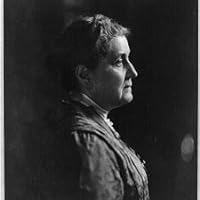
American social reformer and pacifist Jane Addams in 1889 founded Hull house, a care and education center for the poor of Chicago, and in 1931 shared the Nobel Prize for peace. Her mother died when she was two years old in 1862, and her father and later a stepmother reared her. She graduated from Rockford female seminary in 1881, among the first students to take a course of study equivalent to that of men at other institutions. Her father, whom she admired tremendously, died in that same year, 1881. Jane Addams attended medical college of woman in Pennsylvania but, probably due to her ill health and chronic back pain, left. She toured Europe from 1883 to 1885 and then lived in Baltimore until 1887 but figure out not what she wanted with her education and skills. In 1888, on a visit to England with her Rockford classmate Ellen Gates Starr, Jane Addams visited Toynbee Settlement Hall and London's East End. Jane Addams and Ellen Starr planned to start an American equivalent of that settlement house. After their return they chose Hull mansion, a building which had, though originally built at the edge of the city, become surrounded by an immigrant neighborhood and had been used as a warehouse. Using an experimental model of reform—trying solutions to see what would work—and committed to full- and part-time residents to keep in touch with the neighborhood's real needs, Jane Addams built Hull-House into an institution known worldwide. Addams wrote articles, lectured widely and did most of the fund-raising personally and served on many social work, social welfare and settlement house boards and commissions. Jane Addams also became involved in wider efforts for social reform, including housing and sanitation issues, factory inspection, rights of immigrants, women and children, pacifism and the 8-hour day. She served as a Vice President of the National Woman Suffrage Association from 1911-1914. In 1912, Jane Addams campaigned for the Progressive Party and its presidential candidate, Teddy Roosevelt. She worked with the Peace Party, helped found and served as president (1919-1935) of the Women's International League for Peace and Freedom and was a founding member of the American Civil Liberties Union (ACLU). In 1931 Jane Addams was awarded the Nobel Peace Prize, shared with Nicholas Murray Butler, but her health was too fragile to attend the European ceremonies to accept the prize. She was the second woman to be awarded that honor. By Jone Johnson Lewis, About.com