Authors


Sol Yurick was an American novelist. He was born to a working class family of politically active Jewish immigrants. At the age of 14, Yurick became disillusioned with politics after the Hitler-Stalin pact. He enlisted during World War II, where he trained as a surgical technician. He studied at New York University after the war, majoring in literature. After graduation, he took a job with the welfare department as a social investigator, a job he held until the early 1960s, when he took up writing full time. He was involved in Students for a Democratic Society and the anti-war movement at this time. His first novel, The Warriors, appeared in 1965. It combined a classical Greek story, Anabasis (Xenophon), with a fictional account of gang wars in New York City. It inspired the 1979 film of the same name. His other works include: Fertig (1966), The Bag (1968), Someone Just Like You/i> (1972), An Island Death (1976), Richard A (1981), Behold Metatron, the Recording Angel (1985), and Confession (1999). Yurick passed away of complications from lung cancer, at age 87.

Barthelme's works are known for their focus on the landscape of the New South. Along with his reputation as a minimalist, together with writers Raymond Carver, Ann Beattie, Amy Hempel, and Mary Robison, Barthelme's work has also been described by terms such as "dirty realism" and "K-mart realism."He published his first short story in The New Yorker,and has claimed that a rotisserie chicken helped him understand that he needed to write about ordinary people.He has moved away from the postmodern stylings of his older brother, Donald Barthelme, though his brother's influence can be seen in his earliest works, Rangoon and War and War. Barthelme was thirty-three year editor and visionary of Mississippi Review, known for recognizing and publishing once new talents such as Larry Brown, Curtis Sittenfeld, and Amy Hempel early in their careers.

James Patrick Donleavy was an Irish American author, born to Irish immigrants. He served in the U.S. Navy during World War II after which he moved to Ireland. In 1946 he began studies at Trinity College, Dublin, but left before taking a degree. He was first published in the Dublin literary periodical, Envoy. See also http://en.wikipedia.org/wiki/J.P.\_Don...

He was a theater critic and translator. Taught freshman English at UCLA for a year. And that is where he met the "German playwright Bertolt Brecht, who had recently immigrated to the United States after fleeing Nazi Germany and was unknown in this country. The two of them became close, and it was Bentley who translated a lot of Brecht's work into English and helped establish his career in America." source - American Public Media

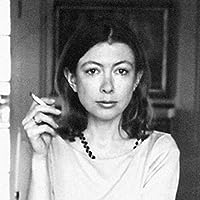
Joan Didion was born in California and lived in New York City. She was best known for her novels and her literary journalism. Her novels and essays explore the disintegration of American morals and cultural chaos, where the overriding theme is individual and social fragmentation. A sense of anxiety or dread permeates much of her work.
Ursule Molinaro (1916, Paris -10 July 2000, New York City) was a prolific novelist, playwright, translator and visual artist, the author of 12 novels, two collections of short prose works, innumerable short stories for literary magazines and dozens of translations from the French and German. She lived and wrote in French in Paris until shortly after World War II, when she came to New York in 1949 to work as a multilingual proofreader for the newly formed United Nations. Just a few years later, having realized that she would stay in the United States, she made the decision to systematically retrain herself not only to write, but to dream, think, and speak, in the language of her new soil. In the latter part of her life, she developed a method for teaching creative writing that relied wholly upon the oral and taught creative writing at several universities and in her home until her death in 2000. (from Wikipedia)

Author Herbert Burkholz is best known for his "Sensitives" trilogy—about a mind-reading troupe of intelligence operatives trained by the CIA—and his literary novels Sister Bear, Spanish Soldier, and Writer-in-Residence. A native New Yorker, Burkholz has lived in Spain, Italy, Greece, and Mexico. He has been a visiting lecturer at Yale University and Writer-in-Residence at the College of William and Mary in Virginia.


John Gregory Dunne was an American novelist, screenwriter and literary critic. He was born in Hartford, Connecticut, and was a younger brother of author Dominick Dunne. He suffered from a severe stutter and took up writing to express himself. Eventually he learned to speak normally by observing others. He graduated from Princeton University in 1954 and worked as a journalist for Time magazine. He married novelist Joan Didion on 30 January 1964, and they became collaborators on a series of screenplays, including Panic in Needle Park (1971), A Star Is Born (1976) and True Confessions (1981), an adaptation of his own novel. He is the author of two non-fiction books about Hollywood, The Studio and Monster. As a literary critic and essayist, he was a frequent contributor to The New York Review of Books. His essays were collected in two books, Quintana & Friends and Crooning. He wrote several novels, among them True Confessions, based loosely on the Black Dahlia murder, and Dutch Shea, Jr. He was the writer and narrator of the 1990 PBS documentary L.A. is It with John Gregory Dunne, in which he guided viewers through the cultural landscape of Los Angeles. He died in Manhattan of a heart attack, in December 2003. His final novel, Nothing Lost, which was in galleys at the time of his death, was published in 2004. He was father to Quintana Roo Dunne, who died in 2005 after a series of illnesses, and uncle to actors Griffin Dunne (who co-starred in An American Werewolf in London) and Dominique Dunne (who co-starred in Poltergeist). His wife, Joan Didion, published The Year of Magical Thinking in October 2005 to great critical acclaim, a memoir of the year following his death, during which their daughter, Quintana Roo Dunne, was seriously ill. It won the National Book Award.
Philip Stratford was a Canadian translator, professor and poet. Winner of the 1988 Governor General’s Award, Stratford was also well recognized for his translations of works by Antonine Maillet, René Lévesque and Robert Melançon and published articles on English and French-Canadian literature and translation. He has been collected by libraries. Born in Chatham, Ontario, he completed an Honours Bachelor in English at the University of Western Ontario in 1950 and later completed a doctorate at Sorbonne in Paris. Stratford’s career as an educator began in France where he taught English between 1950 and 1952. After his return to Canada, he lectured at the Assumption University of Windsor, and afterwards worked for the English Department of the University of Western Ontario. Finally, in 1969, he became Department chair for the English Department at the Université of Montréal and held that role until 1975. As Department chair, he founded the comparative literature program. Stratford retired in 1992.

Marge Piercy is an American poet, novelist, and social activist. She is the author of the New York Times bestseller Gone to Soldiers, a sweeping historical novel set during World War II. Piercy was born in Detroit, Michigan, to a family deeply affected by the Great Depression. She was the first in her family to attend college, studying at the University of Michigan. Winning a Hopwood Award for Poetry and Fiction (1957) enabled her to finish college and spend some time in France, and her formal schooling ended with an M.A. from Northwestern University. Her first book of poems, Breaking Camp, was published in 1968. An indifferent student in her early years, Piercy developed a love of books when she came down with rheumatic fever in her mid-childhood and could do little but read. "It taught me that there's a different world there, that there were all these horizons that were quite different from what I could see," she said in a 1984 interview. As of 2013, she is author of seventeen volumes of poems, among them The Moon is Always Female (1980, considered a feminist classic) and The Art of Blessing the Day (1999), as well as fifteen novels, one play (The Last White Class, co-authored with her third and current husband Ira Wood), one collection of essays (Parti-colored Blocks for a Quilt), one non-fiction book, and one memoir. Her novels and poetry often focus on feminist or social concerns, although her settings vary. While Body of Glass (published in the US as He, She and It) is a science fiction novel that won the Arthur C. Clarke Award, City of Darkness, City of Light is set during the French Revolution. Other of her novels, such as Summer People and The Longings of Women are set during the modern day. All of her books share a focus on women's lives. Woman on the Edge of Time (1976) mixes a time travel story with issues of social justice, feminism, and the treatment of the mentally ill. This novel is considered a classic of utopian "speculative" science fiction as well as a feminist classic. William Gibson has credited Woman on the Edge of Time as the birthplace of Cyberpunk. Piercy tells this in an introduction to Body of Glass. Body of Glass (He, She and It) (1991) postulates an environmentally ruined world dominated by sprawling mega-cities and a futuristic version of the Internet, through which Piercy weaves elements of Jewish mysticism and the legend of the Golem, although a key story element is the main character's attempts to regain custody of her young son. Many of Piercy's novels tell their stories from the viewpoints of multiple characters, often including a first-person voice among numerous third-person narratives. Her World War II historical novel, Gone To Soldiers (1987) follows the lives of nine major characters in the United States, Europe and Asia. The first-person account in Gone To Soldiers is the diary of French teenager Jacqueline Levy-Monot, who is also followed in a third-person account after her capture by the Nazis. Piercy's poetry tends to be highly personal free verse and often addresses the same concern with feminist and social issues. Her work shows commitment to the dream of social change (what she might call, in Judaic terms, tikkun olam, or the repair of the world), rooted in story, the wheel of the Jewish year, and a range of landscapes and settings. She lives in Wellfleet on Cape Cod, Massachusetts with her husband, Ira Wood. (from Wikipedia)