Books in series

#1
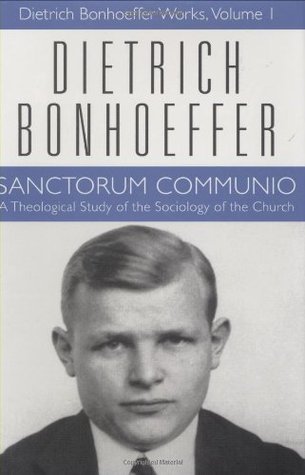
Sanctorum Communio
A Theological Study of the Sociology of the Church
1930
Sanctorum Communio was Bonhoeffer's dissertation, completed in 1927 and first published in 1930. In it he attempts to work out a theology of the person in society, and then, particularly, in the church. Along with enlightening us about his early positions on sin, evil, solidarity, collective spirit, and collective guilt, the volume unfolds a systematic theology of the Spirit at work in the church and what this implies for questions of authority, freedom, ritual, and eschatology. Here is offered the complete text in translation, annotated by the German and American editors. The historical context is explained and textual commentary is provided in a Foreword and Afterword.

#2
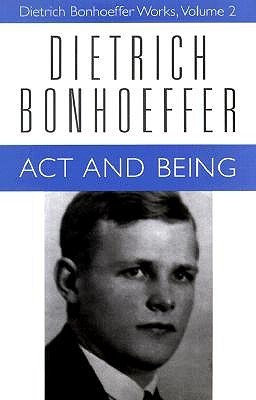
Act and Being
1930
Act and Being, written in 1929—1930 as Bonhoeffer's second dissertation, deals with the questions of consciousness and conscience in theology from the perspective of the Reformation insight about the origin of human sinfulness in the "heart turned in upon itself and thus open neither to the revelation of God nor to the encounter with the neighbor." Here, therefore, we find Bonhoeffer's thoughts about power, revelation, Otherness, theological method, and theological anthropology.

#6
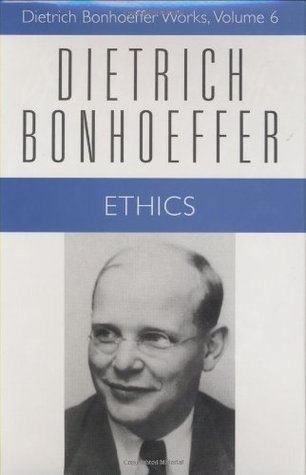
Ethics
1955
The crown jewel of Bonhoeffer's body of work, Ethics is the culmination of his theological and personal odyssey. Based on careful reconstruction of the manuscripts, freshly and expertly translated and annotated, this new critical edition features an insightful Introduction by Clifford Green and an Afterword from the German edition's editors. Though caught up in the vortex of momentous forces in the Nazi period, Bonhoeffer systematically envisioned a radically Christocentric, incarnational ethic for a post-war world, purposefully recasting Christians' relation to history, politics, and public life. This edition allows scholars, theologians, ethicists, and serious Christians to appreciate the cogency and relevance of Bonhoeffer's vision.

#7
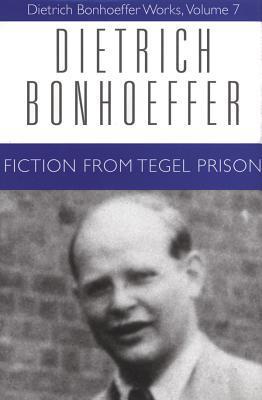
Fiction from Tegel Prison
1981
Writing fiction, letters to his family, fiancé, and friends and contending with his interrogator occupied Bonhoeffer during his first year in Tegel Prison. Of the incomplete drama, the novel fragment, and the short story, Bonhoeffer admitted to his friend and later biographer, Eberhard Bethge, "There is a good deal of autobiography mixed with it." This book discloses a great deal of Bonhoeffer's family context, social world, and cultural milieu. Events from his life are recounted in a way that embodies and illuminates his theology. Characters and situations that represent Nazi types and attitudes are a form of social criticism and help to explain Bonhoeffer's participation in the resistance movement and the plot to kill Adolf Hitler, for which he was hanged. This important volume, now in paperback, is complete and authoritative and contains much material not found in the previous edition. The German edition of this volume was edited by Bonhoeffer's niece, Renate Bethgewho brings personal knowledge of the Bonhoeffer family to her observationsand Ilse Tdt, who contributed much of the commentary. The English edition is edited by Clifford Green, who also edited the earlier version of the book, titled Fiction from Prison .


#10
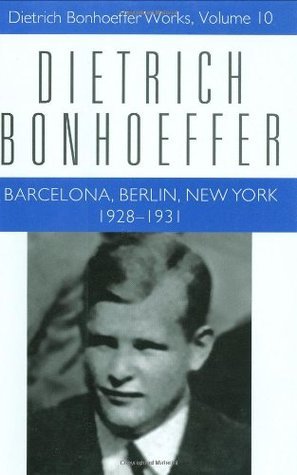
Barcelona, Berlin, New York
1928-31
2003
The period 1928 to 1931, which followed completion of his dissertation, was formative for Bonhoeffer's personal and pastoral and theological direction. Almost all of these nine hundred pages of writings appear in English here for the first time. They document the intense four-year period that included preparation of his postdoctoral thesis; a vicarage in Barcelona; occasional lectures; his postdoctoral academic year at Union Theological Seminary; travel around the United States, Cuba, and Mexico; and his re-entry into the German academic and ecclesial scene.

#11
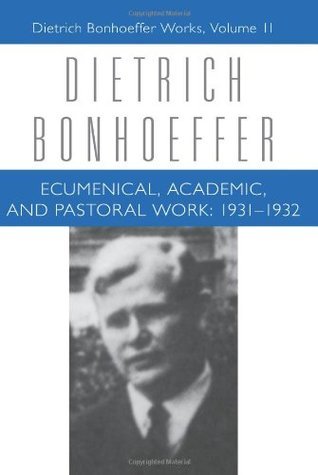
Ecumenical Academic Pastoral Work
1931-32
2012
Volume 11 in the sixteen-volume Dietrich Bonhoeffer Works English Edition, Ecumenical, Academic, and Pastoral Work: 19311932, provides a comprehensive translation of Bonhoeffers important writings from 1931 to 1932, with extensive commentary about their historical context and theological significance. This volume covers the significant period of Bonhoeffer's entry into the international ecumenical world and the final months before the beginning of the National Socialist dictatorship.

#12
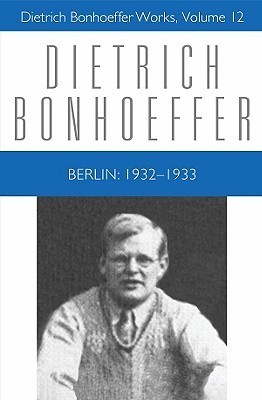
Berlin
1932-1933
1997
"Then came the crisis of 1933." This is Bonhoeffer's own phrase in a letter that documents a turning point in his own life as well as that of the nation. Of Bonhoeffer's own life at this time, his biographer writes, "The period of learning and roaming" from 1928 until 1931 "had come to an end" as the young lecturer, age 26, began to teach "on a faculty whose theology he did not share" and to preach "in a church whose self-confidence he regarded as unfounded." Bonhoeffer was becoming part of a society "that was moving toward political, social, and economic chaos." Events moved quickly at the onset of 1933 in Berlin. In only one hundred days the path was cleared by the German Parliament and the Nazi Party for the establishment of the fascist dictatorship. These one hundred days, as well as the preceding and succeeding months, are reflected in the materials in this in letters, in sermons, in Bonhoeffer's university teaching, in manifestos and a church confession, and in his proactive engagement in the developing church struggle. The vast majority of these are translated here for the first time.

#14
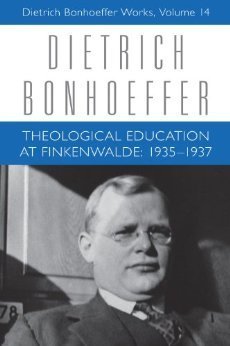
Theological Education at Finkenwalde
1996
In the spring of 1935 Dietrich Bonhoeffer returned from England to direct a small illegal seminary for the Confessing Church. The seminary existed for two years before the Gestapo ordered it closed in August 1937. The two years of Finkenwalde's existence produced some of Bonhoeffer's most significant theological work as he prepared these young seminarians for the turbulence and risk of parish ministry in the Confessing Church. Bonhoeffer and his seminarians were under Gestapo surveillance; some of them were arrested and imprisoned. Throughout, he remained dedicated to training them for the ministry and its challenges in a difficult time. This volume includes bible studies, sermons, and lectures on homiletics, pastoral care, and catechesis, giving a moving and up-close portrait of the Confessing Church in these crucial yearsthe same period during which Bonhoeffer wrote his classics, Discipleship and Life Together.

#15
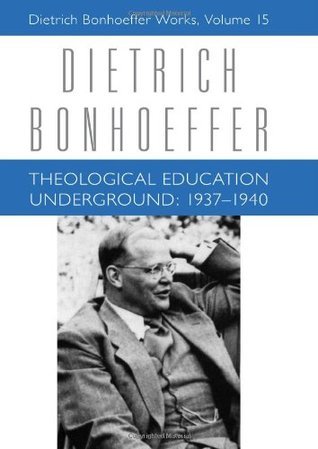
Theological Education Underground
1998
With extensive commentary about their historical context and theological significance, this volume of writings covers a crucial time and an understudied period of Bonhoeffer's life. It begins during the final period of his illegal work in training Confessing Church seminarians and concludes as he begins his activities in the German resistance. Bridging these two periods is his brief journey to the United States in summer 1939, when he pondered and ultimately rejected a move to the safety of exile. Bonhoeffer's writings from this transitional period, particularly his New York diary, offer a rare and more deeply personal picture of Bonhoeffer in a time of great inner turmoil.

#16
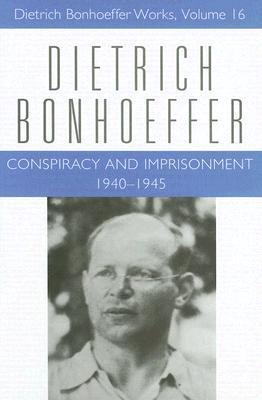
Conspiracy and Imprisonment, 1940-1945
2006
This volume, published in the year of the one hundredth anniversary of Bonhoeffer's birth, documents Bonhoeffer's life under the increasing restraints and fateful events of World War II Germany. In hundreds of letters, including ten never-before-published letters to his fiancé, Maria von Wedemeyer, as well as official documents, short original pieces, and a few final sermons, the volume sheds light on Bonhoeffer's active resistance to and increasing involvement in the conspiracy against the Hitler regime, his arrest, and his long imprisonment. Finally, Bonhoeffer's many exchanges with his family, fiancé, and closest friends, demonstrate the affection and solidarity that accompanied Bonhoeffer to his prison cell, concentration camp, and eventual death.