Authors

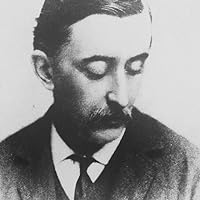
Greek-born American writer Lafcadio Hearn spent 15 years in Japan; people note his collections of stories and essays, including Kokoro (1896), under pen name Koizumi Yakumo. Rosa Cassimati (Ρόζα Αντωνίου Κασιμάτη in Greek), a Greek woman, bore Patrick Lafcadio Hearn (Πατρίκιος Λευκάδιος Χερν in Greek or 小泉八雲 in Japanese), a son, to Charles Hearn, an army doctor from Ireland. After making remarkable works in America as a journalist, he went to Japan in 1890 as a journey report writer of a magazine. He arrived in Yokohama, but because of a dissatisfaction with the contract, he quickly quit the job. He afterward moved to Matsué as an English teacher of Shimané prefectural middle school. In Matsué, he got acquainted with Nishida Sentarô, a colleague teacher and his lifelong friend, and married Koizumi Setsu, a daughter of a samurai. In 1891, he moved to Kumamoto and taught at the fifth high school for three years. Kanô Jigorô, the president of the school of that time, spread judo to the world. Hearn worked as a journalist in Kôbé and afterward in 1896 got Japanese citizenship and a new name, Koizumi Yakumo. He took this name from "Kojiki," a Japanese ancient myth, which roughly translates as "the place where the clouds are born". On that year, he moved to Tôkyô and began to teach at the Imperial University of Tôkyô. He got respect of students, many of whom made a remarkable literary career. In addition, he wrote much reports of Japan and published in America. So many people read his works as an introduction of Japan. He quit the Imperial University in 1903 and began to teach at Waseda University on the year next. Nevertheless, after only a half year, he died of angina pectoris.
This profile is the default profile for imported books. For the British novelist and writer, see John Burke. Christian Witer = John Burke Trek President = John Burke Burke's Peerage = John Burke Educational Editor = John Burke Boat Builder = John Burke Theologian = John Burke


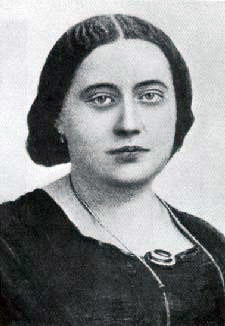
Helena Petrovna Blavatsky (Russian: Еле́на Петро́вна Блава́тская, Yelena Petrovna Blavatskaya, often known as Madame Blavatsky; 12 August [O.S. 31 July] 1831 – 8 May 1891) was a Russian occultist, philosopher, and author who co-founded the Theosophical Society in 1875. She gained an international following as the leading theoretician of Theosophy, the esoteric religion that the society promoted. Source: Wikipedia

Alpheus Hyatt Verrill, known as Hyatt Verrill, was an American zoologist, explorer, inventor, illustrator and author. He was the son of Addison Emery Verrill (1839–1926), the first professor of zoology at Yale University. Hyatt Verrill wrote on a wide variety of topics, including natural history, travel, radio and whaling. He participated in a number of archaeological expeditions to the West Indies, South, and Central America. He travelled extensively throughout the West Indies, and all of the Americas, North, Central and South. Theodore Roosevelt stated: "It was my friend Verrill here, who really put the West Indies on the map.” During 1896 he served as natural history editor of Webster's International Dictionary., and he illustrated many of his own writings as well. In 1902 Verrill invented the autochrome process of natural-color photography. Among his writings are many science fiction works including twenty six published in Amazing Stories pulp magazines. Upon his death, P. Schuyler Miller noted that Verrill "was one of the most prolific and successful writers of our time," with 115 books to his credit as well as "articles in innumerable newspapers." Everett F. Bleiler described Verrill's "lost race" stories as "more literate than most of their competition, but stodgy." When the Moon Ran Wild (1962) was published posthumously using the name Ray Ainsbury.

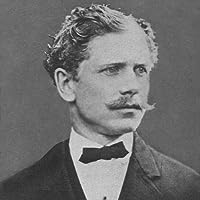
Ambrose Gwinnett Bierce (1842-1914) was an American editorialist, journalist, short story writer, fabulist and satirist. Today, he is best known for his short story, An Occurrence at Owl Creek Bridge and his satirical lexicon, The Devil's Dictionary. The sardonic view of human nature that informed his work – along with his vehemence as a critic, with his motto "nothing matters" – earned him the nickname "Bitter Bierce." Despite his reputation as a searing critic, however, Bierce was known to encourage younger writers, including poet George Sterling and fiction writer W. C. Morrow. Bierce employed a distinctive style of writing, especially in his stories. This style often embraces an abrupt beginning, dark imagery, vague references to time, limited descriptions, the theme of war, and impossible events. Bierce disappeared in December 1913 at the age of 71. He is believed to have traveled to Mexico to gain a firsthand perspective on that country's ongoing revolution. Despite an abundance of theories, Bierce's ultimate fate remains a mystery. He wrote in one of his final letters: "Good-bye. If you hear of my being stood up against a Mexican stone wall and shot to rags, please know that I think it is a pretty good way to depart this life. It beats old age, disease, or falling down the cellar stairs. To be a Gringo in Mexico—ah, that is euthanasia!"