



Margins
Повість про санаторійну зону book cover
Повість про санаторійну зону
1924
First Published
4.01
Average Rating
132
Number of Pages

«Санаторійна зона» Миколи Хвильового – соціально-психологічний твір, герої якого живуть лише примарними надіями на майбутнє і на відродження нації, однак, ці надії з кожним днем віддаляються. Хвильовий у повісті показав, що розгул жорстокості, жахи громадянської війни не минули безслідно для духовного здоров'я народу, нації. Колишні революціонери, будівничі нового життя стають «зайвими людьми», відчуваючи прірву між своїми ідеалами й реальною дійсністю, їх шлях невизначений, їхні долі понівечені.
Avg Rating
4.01
Number of Ratings
358
5 STARS
34%
4 STARS
41%
3 STARS
21%
2 STARS
3%
1 STARS
2%
goodreads

Authors

Mykola Khvylovy
Mykola Khvylovy
Author · 13 books

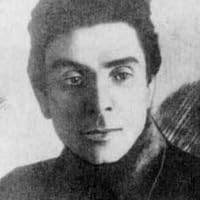
Mykola Khvylovy (Ukrainian: Микола Хвильовий, Khvyl’ovyy) (December 13 [O.S. December 1] 1893 – May 13, 1933) was a Ukrainian writer and poet of the early Communist era Ukrainian Renaissance (1920–1930). Born as Mykola Fitilyov in Trostyanets, Kharkov Governorate to a Russian laborer father and Ukrainian schoolteacher mother, Khvylovy joined the Communist Party in 1919. In the same year he became the chief of local Cheka in Bohodukhiv povit. He moved to Kharkiv in 1921 and involved himself with writers connected to Vasyl Blakytny and the paper Visti VUTsVK (news from All-Ukrainian Central Executive Committee). In 1921, he also published his first poetry collection. In 1922, he began to focus more on prose writing. His initial collections Syni etiudy (Blue Etudes, 1923) and Osin’ (Autumn, 1924) generated approval from critics like Serhiy Yefremov, Oleksander Biletsky, Volodymyr Koriak, Yevhen Malaniuk and Dmytro Dontsov. His impressions of the work as a CheKa officer are reflected in his 1924 novel "I (Romance)", the hero of which - the head of the local Cheka - sentenced his mother to death in the name of the ideals of the revolution. A brief member of the literary organization Hart, Khvylovy later became critical of it and the organization Pluh and became a key leader of the VAPLITE organization of Ukrainian "proleteriat" writers. Because of Stalin's repressions against his friends in the pro-Ukrainian Communist movement, Khvylovy committed suicide on 13 May 1933 in front of his friends in his apartment in Kharkiv. His suicide note said: "Arrest of Yalovy - this is the murder of an entire generation ... For what? Because we were the most sincere Communists? I don't understand. The responsibility for the actions of Yalovy's generation lies with me, Khvylovy. Today is a beautiful sunny day. I love life - you can't even imagine how much. Today is the 13th. Remember I was in love with this number? Terribly painful. Long live communism. Long live the socialist construction. Long live the Communist Party."[1] After his death, his works were banned in the Soviet Union and because of his symbolic potency were mostly not permitted until near the end or after the collapse of the Soviet Union.

548 Market St PMB 65688, San Francisco California 94104-5401 USA
© 2026 Paratext Inc. All rights reserved