


Margins
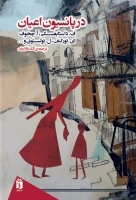
در پانسیون اعیان book cover
در پانسیون اعیان
2018
First Published
3.67
Average Rating
227
Number of Pages

ادبیات داستانی قرن نوزده روسیه، آینه‌ی نمام نمای جامعه بود که تمام جنبه‌های زندگی روسی – روستائیان، نجیب زادگان، کودکان، بینوایان و ... را منعکس می‌کرد. نویسندگان داستان‌های این کتاب از خلال فقر و، احتیاج، ناحقی، درد و رنج و بی‌عدالتی، جنبه‌های روشن زندگی مانند": محبت و حقیقت را نشان می‌دهند. داستان در پانسیون اعیان داستایفسکی، حکایت مهربانی و نامهربانی است؛ داستان آنتون چخوف، کاشتانکا، روایتی است از وفاداری؛ یملیای شکارچی سیبیریاک داستان عشق و محبت است؛ در اسیر قفقاز تولستوی عشق و همدردی و غمخواری می‌جوشد و ... نویسندگان این داستا‌ن‌ها مدت‌هاست که دیگر حضور ندارند، اما هنگام نوشتن داستان‌هایشان نه تنها بدی‌ها و جنبه‌های منفی زندگی خود را کتمان نکردند، خوبی‌ها و جنبه‌های مثبت زندگی را نیز به فراموشی نسپردند، زیرا در غیر این صورت ممکن نبود زندگی کرد و نفس کشید و فکر کرد.
Avg Rating
3.67
Number of Ratings
9
5 STARS
11%
4 STARS
56%
3 STARS
22%
2 STARS
11%
1 STARS
0%
goodreads

Authors

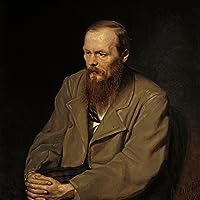
Fyodor Dostoevsky
Fyodor Dostoevsky
Author · 228 books

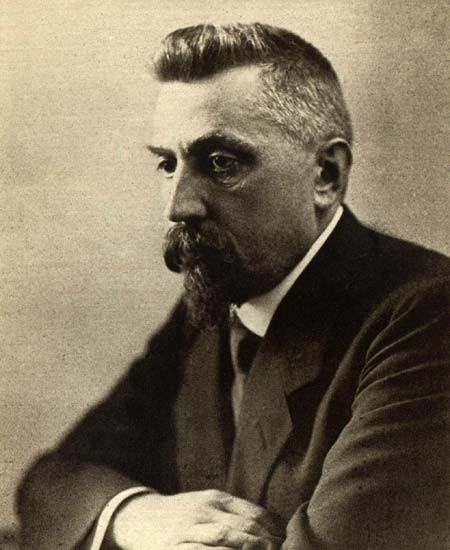
Fyodor Mikhailovich Dostoevsky was a Russian novelist, short story writer, essayist, and journalist. His literary works explore human psychology in the troubled political, social, and spiritual atmospheres of 19th-century Russia, and engage with a variety of philosophical and religious themes. His most acclaimed novels include Crime and Punishment (1866), The Idiot (1869), Demons (1872), and The Brothers Karamazov (1880). Many literary critics rate him as one of the greatest novelists in all of world literature, as multiple of his works are considered highly influential masterpieces. His 1864 novella Notes from Underground is considered to be one of the first works of existentialist literature. As such, he is also looked upon as a philosopher and theologian as well. (Russian: Фёдор Михайлович Достоевский) (see also Fiodor Dostoïevski)

Leonid Andreyev
Leonid Andreyev
Author · 45 books
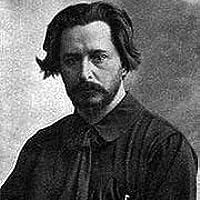
Leonid Nikolayevich Andreyev (Russian: Леонид Николаевич Андреев; 1871-1919) was a Russian playwright and short-story writer who led the Expressionist movement in the national literature. He was active between the revolution of 1905 and the Communist revolution which finally overthrew the Tsarist government. His first story published was About a Poor Student, a narrative based upon his own experiences. It was not, however, until Gorky discovered him by stories appearing in the Moscow Courier and elsewhere that Andreyevs literary career really began. His first collection of stories appeared in 1901, and sold a quarter-million copies in short time. He was hailed as a new star in Russia, where his name soon became a byword. He published his short story, In the Fog in 1902. Although he started out in the Russian vein he soon startled his readers by his eccentricities, which grew even faster than his fame. His two best known stories may be The Red Laugh (1904) and The Seven Who Were Hanged (1908). His dramas include the Symbolist plays The Life of Man (1906), Tsar Hunger (1907), Black Masks (1908), Anathema (1909) and He Who Gets Slapped (1915).
Nikolay Teleshov
Nikolay Teleshov
Author · 1 book

Nikolai Dmitrievich Teleshov - Russian writer, poet, organizer of the famous circle of Moscow writers "Wednesday" (1899-1916), hereditary honorary citizen of Moscow, honored art worker of the RSFSR (1938). Russian writer Nikolai Dmitrievich Teleshov was born into a Moscow merchant family in 1867. His ancestors were serfs of the Vladimir province, who were independently redeemed at will. Nicholas started reading and literature early. As a twelve-year-old teenager in 1880, he witnessed the grandiose Pushkin celebrations in Moscow: the grand opening of the monument to the poet, speeches by Dostoevsky, Turgenev, and others. A little earlier, at the age of ten, Nikolai got acquainted with the process of the creation of the book in the printing house of ID Sytin. Over time, the need arose to join the literary process myself. Business ties and friendship with Sytin will accompany Nikolai all his life. He later received a good education at the Moscow Practical Commercial Academy, from which he graduated in 1884.

Aleksandr Kuprin
Aleksandr Kuprin
Author · 28 books

Aleksandr Kuprin (Russian: Александр Иванович Куприн; 7 September 1870 in the village of Narovchat in the Penza Oblast - August 25, 1938 in Leningrad) was a Russian writer, pilot, explorer and adventurer who is perhaps best known for his story The Duel (1905). Other well-known works include Moloch (1896), Olesya (1898), Junior Captain Rybnikov (1906), Emerald (1907), and The Garnet Bracelet (1911) (which was made into a 1965 movie). Vladimir Nabokov styled him the Russian Kipling for his stories about pathetic adventure-seekers, who are often "neurotic and vulnerable." Kuprin was a son of Ivan Ivanovich Kuprin, a minor government official who died of cholera during 1871 at the age of thirty-seven years. His mother, Liubov' Alekseevna Kuprina, Tatar princess (of the Kulunchakovs), like many other nobles in Russia, had lost most of her wealth during the 19th century. Kuprin attended the Razumovsky boarding school during 1876, and during 1880 finished his education in the Second Moscow Military High School (Cadet Corps) and Alexander Military School, spending a total of ten years in these elite military institutions. His first short story, The Last Debut, was published during 1889 in a satirical periodical. "In February 1902, Kuprin and Maria Karlovna Davydova were married, their daughter Lidia born in 1903." Kuprin's mother died during 1910. Kuprin ended military service during 1894, after which he tried many types of job, including provincial journalism, dental care, land surveying, acting, circus performer, church singer, doctor, hunter, fisher, etc. Reportedly, "all of these were subsequently reflected in his fiction." His first essays were published in Kiev in two collections. Reportedly, "although he lived in an age when writers were carried away by literary experiments, Kuprin did not seek innovation and wrote only about the things he himself had experienced and his heroes are the next generation after Chekhov's pessimists." Although the 1896 short story Moloch first made his name known as a writer, it was his novel The Duel (1905) which made him famous. "Kuprin was highly praised by fellow writers including Anton Chekhov, Maxim Gorky, Leonid Andreyev, Nobel Prize-winning Ivan Bunin" and Leo Tolstoy who acclaimed him a true successor to Chekhov. After publication of The Duel he paid less and less interest to fancy literature and began to spend time in pubs and brothels. His sensationalist novel about the lurid life of prostitutes, The Pit (1915), was accused by Russian critics of excessive Naturalism. Although not a conservative, he did not agree with Bolshevism. While working for a brief time with Maxim Gorky at the World Literature publishing company, he criticized the Soviet regime. During spring 1919, from Gatchina near Petrograd, Kuprin left the country for France. He lived in Paris for most of the next 17 years, succumbing to alcoholism. He wrote about this in much of his work. He eventually returned to Moscow on May 31, 1937, just a year before his death, at the height of the Great Purge. His return earned publication of his works within the Soviet Union. Kuprin died during the spring of 1938 in Leningrad and is interred near his fellow writers at the Literaturskiye Mostki in the Volkovo Cemetery (Volkovskoye Memorial Cemetery) in Leningrad. A minor planet 3618 Kuprin, discovered by Soviet astronomer Nikolai Stepanovich Chernykh in 1979 is named after him. Reportedly, "even today, Alexander Kuprin remains one of the widest read classics in Russian literature", with many films based on his works, "which are also read over the radio", partly due to "his vivid stories of the lives of ordinary people and unhappy love, his descriptions of the military and brothels, making him a writer for all times and places."

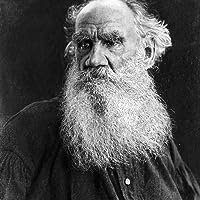
Leo Tolstoy
Leo Tolstoy
Author · 318 books

Lev Nikolayevich Tolstoy (Russian: Лев Николаевич Толстой; most appropriately used Liev Tolstoy; commonly Leo Tolstoy in Anglophone countries) was a Russian writer who primarily wrote novels and short stories. Later in life, he also wrote plays and essays. His two most famous works, the novels War and Peace and Anna Karenina, are acknowledged as two of the greatest novels of all time and a pinnacle of realist fiction. Many consider Tolstoy to have been one of the world's greatest novelists. Tolstoy is equally known for his complicated and paradoxical persona and for his extreme moralistic and ascetic views, which he adopted after a moral crisis and spiritual awakening in the 1870s, after which he also became noted as a moral thinker and social reformer. His literal interpretation of the ethical teachings of Jesus, centering on the Sermon on the Mount, caused him in later life to become a fervent Christian anarchist and anarcho-pacifist. His ideas on nonviolent resistance, expressed in such works as The Kingdom of God Is Within You, were to have a profound impact on such pivotal twentieth-century figures as Mohandas Gandhi and Martin Luther King, Jr.

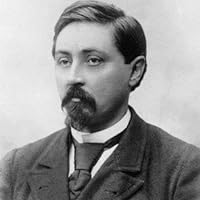
Dmitry Mamin-Sibiryak
Author · 4 books

Dmitry Narkisovich Mamin-Sibiryak - Дмитрий Наркисович Мамин-Сибиряк

  • (October 25, 1852 – November 2, 1912) was a Russian author most famous for his novels and short stories about life in the Ural Mountains.
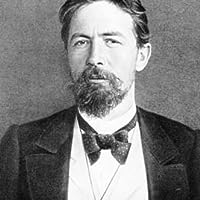
Anton Chekhov
Anton Chekhov
Author · 507 books

Anton Pavlovich Chekhov (Russian: Антон Павлович Чехов ) was born in the small seaport of Taganrog, southern Russia, the son of a grocer. Chekhov's grandfather was a serf, who had bought his own freedom and that of his three sons in 1841. He also taught himself to read and write. Yevgenia Morozova, Chekhov's mother, was the daughter of a cloth merchant. "When I think back on my childhood," Chekhov recalled, "it all seems quite gloomy to me." His early years were shadowed by his father's tyranny, religious fanaticism, and long nights in the store, which was open from five in the morning till midnight. He attended a school for Greek boys in Taganrog (1867-68) and Taganrog grammar school (1868-79). The family was forced to move to Moscow following his father's bankruptcy. At the age of 16, Chekhov became independent and remained for some time alone in his native town, supporting himself through private tutoring. In 1879 Chekhov entered the Moscow University Medical School. While in the school, he began to publish hundreds of comic short stories to support himself and his mother, sisters and brothers. His publisher at this period was Nicholas Leikin, owner of the St. Petersburg journal Oskolki (splinters). His subjects were silly social situations, marital problems, farcical encounters between husbands, wives, mistresses, and lovers, whims of young women, of whom Chekhov had not much knowledge – the author was shy with women even after his marriage. His works appeared in St. Petersburg daily papers, Peterburskaia gazeta from 1885, and Novoe vremia from 1886. Chekhov's first novel, Nenunzhaya pobeda (1882), set in Hungary, parodied the novels of the popular Hungarian writer Mór Jókai. As a politician Jókai was also mocked for his ideological optimism. By 1886 Chekhov had gained a wide fame as a writer. His second full-length novel, The Shooting Party, was translated into English in 1926. Agatha Christie used its characters and atmosphere in her mystery novel The Murder of Roger Ackroyd (1926). Chekhov graduated in 1884, and practiced medicine until 1892. In 1886 Chekhov met H.S. Suvorin, who invited him to become a regular contributor for the St. Petersburg daily Novoe vremya. His friendship with Suvorin ended in 1898 because of his objections to the anti-Dreyfus campaign conducted by paper. But during these years Chechov developed his concept of the dispassionate, non-judgmental author. He outlined his program in a letter to his brother Aleksandr: "1. Absence of lengthy verbiage of political-social-economic nature; 2. total objectivity; 3. truthful descriptions of persons and objects; 4. extreme brevity; 5. audacity and originality; flee the stereotype; 6. compassion." Chekhov's first book of stories (1886) was a success, and gradually he became a full-time writer. The author's refusal to join the ranks of social critics arose the wrath of liberal and radical intelligentsia and he was criticized for dealing with serious social and moral questions, but avoiding giving answers. However, he was defended by such leading writers as Leo Tolstoy and Nikolai Leskov. "I'm not a liberal, or a conservative, or a gradualist, or a monk, or an indifferentist. I should like to be a free artist and that's all..." Chekhov said in 1888. The failure of his play The Wood Demon (1889) and problems with his novel made Chekhov to withdraw from literature for a period. In 1890 he travelled across Siberia to remote prison island, Sakhalin. There he conducted a detailed census of some 10,000 convicts and settlers condemned to live their lives on that harsh island. Chekhov hoped to use the results of his research for his doctoral dissertation. It is probable that hard conditions on the island also weakened his own physical condition. From this journey was born his famous travel book T

548 Market St PMB 65688, San Francisco California 94104-5401 USA
© 2025 Paratext Inc. All rights reserved