Authors

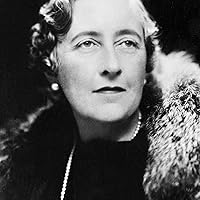
Agatha Christie is the top-selling author of all time, with a legacy spanning 66 crime novels, 14 plays, and six romance novels under a pseudonym. Her works have sold over two billion copies globally, translated into at least 103 languages, making her the most translated author. She introduced the world to iconic characters Hercule Poirot and Miss Jane Marple, and wrote *The Mousetrap*, the record-holding longest-running play in modern theater. The youngest in the Miller family, her experience as a nurse during WWI and later roles in pharmacies during both World Wars deeply influenced her mystery novels, often featuring poisons. Christie’s writing career launched in 1920 with *The Mysterious Affair at Styles*. Her life was as captivating as her fiction, notably her 1926 disappearance after her first husband’s affair became public, sparking a nationwide search. Christie's second marriage to archaeologist Max Mallowan enriched her life and work, with travels and homes like the Greenway Estate and Abney Hall providing settings for several novels. Her marriage to Mallowan lasted until her death in 1976. Christie's contributions to literature earned her the title Commander of the Order of the British Empire, solidifying her place in literary history.

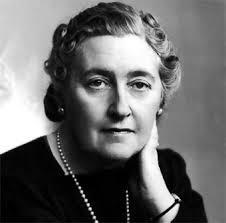
Cyrillic profile for Agatha Christie Агата Кристи — английская писательница. Относится к числу самых известных в мире авторов детективной прозы и является одним из самых публикуемых писателей за всю историю человечества (после Библии и Шекспира). Кристи опубликовала более 60 детективных романов, 6 психологических романов (под псевдонимом Мэри Уэстмакотт или Вестмакотт) и 19 сборников рассказов. 16 её пьес были поставлены в Лондоне. Книги Агаты Кристи изданы тиражом свыше 4 миллиардов экземпляров и переведены более чем на 100 языков мира.

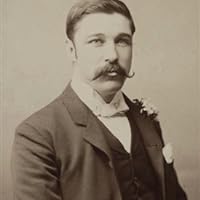
Fergusson Wright Hume (1859–1932), New Zealand lawyer and prolific author particularly renowned for his debut novel, the international best-seller The Mystery of a Hansom Cab (1886). Hume was born at Powick, Worcestershire, England, son of Glaswegian Dr. James Collin Hume, a steward at the Worcestershire Pauper Lunatic Asylum and his wife Mary Ferguson. While Fergus was a very young child, in 1863 the Humes emigrated to New Zealand where James founded the first private mental hospital and Dunedin College. Young Fergus attended the Otago Boys' High School then went on to study law at Otago University. He followed up with articling in the attorney-general's office, called to the New Zealand bar in 1885. In 1885 Hume moved to Melbourne. While he worked as a solicitors clerk he was bent on becoming a dramatist; but having only written a few short stories he was a virtual unknown. So as to gain the attentions of the theatre directors he asked a local bookseller what style of book he sold most. Emile Gaboriau's detective works were very popular and so Hume bought them all and studied them intently, thus turning his pen to writing his own style of crime novel and mystery. Hume spent much time in Little Bourke Street to gather material and his first effort was The Mystery of a Hansom Cab (1886), a worthy contibution to the genre. It is full of literary references and quotations; finely crafted complex characters and their sometimes ambiguous seeming interrelationships with the other suspects, deepening the whodunit angle. It is somewhat of an exposé of the then extremes in Melbourne society, which caused some controversy for a time. Hume had it published privately after it had been downright rudely rejected by a number of publishers. "Having completed the book, I tried to get it published, but everyone to whom I offered it refused even to look at the manuscript on the grounds that no Colonial could write anything worth reading." He had sold the publishing rights for £50, but still retained the dramatic rights which he soon profited from by the long Australian and London theatre runs. Except for short trips to France, Switzerland and Italy, in 1888 Hume settled and stayed in Essex, England where he would remain for the rest of his life. Although he was born and lived the latter part of this life in England, he thought of himself as 'a colonial' and identified as a New Zealander, having spent all of his formative years from preschool through to adulthood there. Hume died of cardiac failure at his home on 11 July 1932.