Margins
Очерки по психологии сексуальности book cover
Очерки по психологии сексуальности
2014
First Published
3.08
Average Rating
224
Number of Pages
Зигмунд Фрейд - знаменитый австрийский психолог и психиатр, основоположник психоанализа, ученый, чьи открытия обогатили многие области современных знаний. Его работы "Толкование сновидений", "Введение в психоанализ", "По ту сторону принципа наслаждения", "Тотем и табу", "Я и Оно" вызывают интерес не только у специалистов-психологов, но и у самого широкого круга читателей. Настоящее издание включает "Очерки по психологии сексуальности" Фрейда: "К теории полового влечения", "О нарциссизме", "Об унижении любовной жизни" - и созданные в дополнение к ним очерки "Табу девственности", "Инфантильная генитальная организация". В очерках, значение которых для научной и интеллектуальной жизни нашей эпохи трудно переоценить, Фрейд разрабатывает психологию сексуальности, формулируя революционные и вскоре ставшие классическими положения. Очерки отражают представления Фрейда о природе сексуальных отклонений и извращений, о явлениях бисексуальности, фетишизма, нарциссизма, детской сексуальности и культурно-социального табу девственности.

Avg Rating
3.08
Number of Ratings
39
5 STARS
15%
4 STARS
23%
3 STARS
31%
2 STARS
15%
1 STARS
15%
goodreads

Author

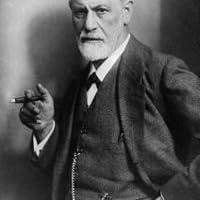
Sigmund Freud
Sigmund Freud
Author · 217 books

Dr. Sigismund Freud (later changed to Sigmund) was a neurologist and the founder of psychoanalysis, who created an entirely new approach to the understanding of the human personality. He is regarded as one of the most influential—and controversial—minds of the 20th century. In 1873, Freud began to study medicine at the University of Vienna. After graduating, he worked at the Vienna General Hospital. He collaborated with Josef Breuer in treating hysteria by the recall of painful experiences under hypnosis. In 1885, Freud went to Paris as a student of the neurologist Jean Charcot. On his return to Vienna the following year, Freud set up in private practice, specialising in nervous and brain disorders. The same year he married Martha Bernays, with whom he had six children. Freud developed the theory that humans have an unconscious in which sexual and aggressive impulses are in perpetual conflict for supremacy with the defences against them. In 1897, he began an intensive analysis of himself. In 1900, his major work 'The Interpretation of Dreams' was published in which Freud analysed dreams in terms of unconscious desires and experiences. In 1902, Freud was appointed Professor of Neuropathology at the University of Vienna, a post he held until 1938. Although the medical establishment disagreed with many of his theories, a group of pupils and followers began to gather around Freud. In 1910, the International Psychoanalytic Association was founded with Carl Jung, a close associate of Freud's, as the president. Jung later broke with Freud and developed his own theories. After World War One, Freud spent less time in clinical observation and concentrated on the application of his theories to history, art, literature and anthropology. In 1923, he published 'The Ego and the Id', which suggested a new structural model of the mind, divided into the 'id, the 'ego' and the 'superego'. In 1933, the Nazis publicly burnt a number of Freud's books. In 1938, shortly after the Nazis annexed Austria, Freud left Vienna for London with his wife and daughter Anna. Freud had been diagnosed with cancer of the jaw in 1923, and underwent more than 30 operations. He died of cancer on 23 September 1939.

548 Market St PMB 65688, San Francisco California 94104-5401 USA
© 2026 Paratext Inc. All rights reserved