


Margins
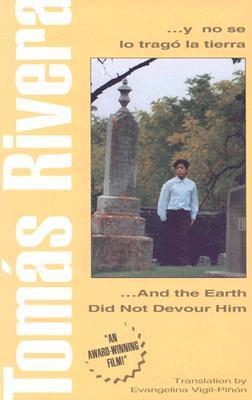
… y no se lo tragó la tierra … and the Earth Did Not Devour Him book cover
… y no se lo tragó la tierra … and the Earth Did Not Devour Him
1971
First Published
3.94
Average Rating
152
Number of Pages

“I tell you, God could care less about the poor. Tell me, why must we live here like this? What have we done to deserve this? You’re so good and yet you suffer so much,” a young boy tells his mother in Tomás Rivera’s classic novel about the migrant worker experience. Outside the chicken coop that is their home, his father wails in pain from the unbearable cramps brought on by sunstroke after working in the hot fields. The young boy can’t understand his parents’ faith in a god that would impose such horrible suffering, poverty and injustice on innocent people. Adapted into the award-winning film …and the earth did not swallow him and recipient of the first award for Chicano literature, the Premio Quinto Sol, in 1970, Rivera’s masterpiece recounts the experiences of a Mexican-American community through the eyes of a young boy. Forced to leave their home in search of work, the migrants are exploited by farmers, shopkeepers, even other Mexican Americans, and the boy must forge his identity in the face of exploitation, death and disease, constant moving and conflicts with school officials. In this new edition of a powerful novel comprised of short vignettes, Rivera writes hauntingly about alienation, love and betrayal, man and nature, death and resurrection and the search for community.
Avg Rating
3.94
Number of Ratings
2,804
5 STARS
32%
4 STARS
37%
3 STARS
24%
2 STARS
5%
1 STARS
1%
goodreads

Author

Tomás Rivera
Tomás Rivera
Author · 2 books

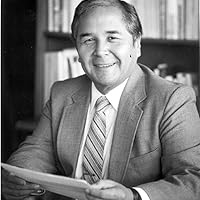
Tomás Rivera (December 22, 1935 – May 16, 1984) was a Chicano author, poet, and educator. He was born in Texas to migrant farm workers, and had to work in the fields as a young boy. However, he achieved social mobility through education—gaining a degree at Southwest Texas State University (now known as Texas State University), and later a PhD at the University of Oklahoma—and came to believe strongly in the virtues of education for Mexican Americans. As an author, Rivera is best remembered for his 1971 Faulknerian stream-of-consciousness novella ...y no se lo tragó la tierra, translated into English variously as This Migrant Earth and as ...and the Earth Did Not Devour Him. This book won the first Premio Quinto Sol award.[1] Rivera taught in high schools throughout the Southwest USA, and later at Sam Houston State University and the University of Texas at El Paso. From 1979 until his death in 1984, he was the chancellor of the University of California, Riverside, the first Mexican American to hold such a position at the University of California. Contents Biography Early years Rivera was born on December 22, 1935, in Crystal City, Texas, to Spanish-speaking, migrant farmworkers, Florencio and Josefa Rivera. At eleven years old, Rivera was in a car accident in Bay City, Michigan. After the accident, Rivera decided to write his first story about the wreck and called it "The Accident".[2] In an interview with Juan D. Bruce-Novoa, Rivera explains: "I felt a sensation I still get when I write. I wanted to capture something I would never forget and it happened to be the sensation of having a wreck".[3] Rivera continued writing throughout high school, creative pieces as well as essays. He dreamed of being a sportswriter as an adult, inspired by what he read most, sports articles and adventure stories.[4] In the same article, Rivera explains the reality of growing up with ambitions to be a writer in a migrant worker family. He explains that "When people asked what I wanted to be, I'd tell them a writer. They were surprised or indifferent. If people don't read, what is a writer?". His grandfather was his main supporter though and provided him with supplies and encouragement. Rivera worked in the fields alongside his family during summer vacations and often missed school because of the overlapping work-season. At the beginning of every school term, he had to catch up on missed material from the preceding year. The family labored with many other migrant workers in various parts of the Midwest: they lived and worked in Minnesota, Wisconsin, Michigan and North Dakota.[5] Rivera worked as a field labourer until 1956; at this point he was enrolled in junior college and the school would not permit him to miss class.[2] This signified the end of his migrant working days and the beginning of a new life. The first-hand experience Rivera had from growing up as a migrant worker provided him with writing material for his literary works. His novel ...y no se lo tragó la tierra is semi-autobiographical and is based around the migratory life of a young boy. As Rivera grew up in the late 20th century, he discovered some of the difficulties Chicanos faced as lower-class Mexican descendants. While trying to get published, Rivera encountered some racism; this was mainly because his writings were in Spanish, thus restricting his audience.[6] The unjust and frustrating situation faced by many Chicanos motivated Rivera. He understood that the only way to get ahead in life was through education. Rivera graduated with a degree in English from the Southwest Texas State University in 1958 and taught English and Spanish at secondary schools from 1957-65.[7] He strongly believed that post-secondary education was the only way Chicanos could evolve from migrant work. He worked in public schools until he could further his education at the University of Oklahoma, where he graduated with a PhD in Romance Languages and Literature in 1969.[7]

548 Market St PMB 65688, San Francisco California 94104-5401 USA
© 2025 Paratext Inc. All rights reserved