This 2nd volume of contains the following 50 works, arranged alphabetically by authors’ last Jerome, Jerome Three Men in a Boat Joyce, A Portrait of the Artist as a Young Man Joyce, Ulysses Kingsley, The Water-Babies Kipling, Kim La Fayette, Madame The Princess of Clèves Laclos, Pierre Choderlos Dangerous Liaisons Lawrence, D. Sons and Lovers Lawrence, D. The Rainbow Le Fanu, In a Glass Darkly Lewis, Matthew The Monk Lewis, Main Street London, The Call of the Wild Lovecraft, At the Mountains of Madness Mann, Royal Highness Maugham, William Of Human Bondage Maupassant, Guy Bel-Ami Melville, Moby-Dick Poe, Edgar The Fall of the House of Usher Proust, Swann's Way Radcliffe, The Mysteries of Udolpho Richardson, Clarissa Sand, The Devil’s Pool Scott, Ivanhoe Shelley, Frankenstein Sienkiewicz, Quo Vadis Sinclair, Life and Death of Harriett Frean Sinclair, The Jungle The Red and the Black The Chartreuse of Parma Sterne, Tristram Shandy Stevenson, Robert Treasure Island Stoker, Dracula Stowe, Harriet Uncle Tom’s Cabin Swift, Gulliver's Travels Tagore, The Home and the World Thackeray, William Vanity Fair Tolstoy, War and Peace Tolstoy, Anna Karenina Trollope, The Way We Live Now Turgenev, Fathers and Sons Twain, The Adventures of Huckleberry Finn Verne, Journey to the Center of the Earth Wallace, Ben-Hur Wells, H. The Time Machine West, The Return of the Soldier Wharton, The Age of Innocence Wilde, The Picture of Dorian Gray Xueqin, The Dream of the Red Chamber Zola, É Germinal
Authors

Charles John Huffam Dickens (1812-1870) was a writer and social critic who created some of the world's best-known fictional characters and is regarded as the greatest novelist of the Victorian era. His works enjoyed unprecedented popularity during his lifetime, and by the twentieth century critics and scholars had recognised him as a literary genius. His novels and short stories enjoy lasting popularity. Dickens left school to work in a factory when his father was incarcerated in a debtors' prison. Despite his lack of formal education, he edited a weekly journal for 20 years, wrote 15 novels, five novellas, hundreds of short stories and non-fiction articles, lectured and performed extensively, was an indefatigable letter writer, and campaigned vigorously for children's rights, education, and other social reforms. Dickens was regarded as the literary colossus of his age. His 1843 novella, A Christmas Carol, remains popular and continues to inspire adaptations in every artistic genre. Oliver Twist and Great Expectations are also frequently adapted, and, like many of his novels, evoke images of early Victorian London. His 1859 novel, A Tale of Two Cities, set in London and Paris, is his best-known work of historical fiction. Dickens' creative genius has been praised by fellow writers—from Leo Tolstoy to George Orwell and G. K. Chesterton—for its realism, comedy, prose style, unique characterisations, and social criticism. On the other hand, Oscar Wilde, Henry James, and Virginia Woolf complained of a lack of psychological depth, loose writing, and a vein of saccharine sentimentalism. The term Dickensian is used to describe something that is reminiscent of Dickens and his writings, such as poor social conditions or comically repulsive characters. On 8 June 1870, Dickens suffered another stroke at his home after a full day's work on Edwin Drood. He never regained consciousness, and the next day he died at Gad's Hill Place. Contrary to his wish to be buried at Rochester Cathedral "in an inexpensive, unostentatious, and strictly private manner," he was laid to rest in the Poets' Corner of Westminster Abbey. A printed epitaph circulated at the time of the funeral reads: "To the Memory of Charles Dickens (England's most popular author) who died at his residence, Higham, near Rochester, Kent, 9 June 1870, aged 58 years. He was a sympathiser with the poor, the suffering, and the oppressed; and by his death, one of England's greatest writers is lost to the world." His last words were: "On the ground", in response to his sister-in-law Georgina's request that he lie down. (from Wikipedia)

Horatio Alger, Jr. (January 13, 1832 – July 18, 1899) was a prolific 19th-century American author, most famous for his novels following the adventures of bootblacks, newsboys, peddlers, buskers, and other impoverished children in their rise from humble backgrounds to lives of respectable middle-class security and comfort. His novels about boys who succeed under the tutelage of older mentors were hugely popular in their day. Born in Chelsea, Massachusetts, the son of a Unitarian minister, Alger entered Harvard University at the age of sixteen. Following graduation, he briefly worked in education before touring Europe for almost a year. He then entered the Harvard Divinity School, and, in 1864, took a position at a Unitarian church in Brewster, Massachusetts. Two years later, he resigned following allegations he had sexual relations with two teenage boys.[1] He retired from the ministry and moved to New York City where he formed an association with the Newsboys Lodging House and other agencies offering aid to impoverished children. His sympathy for the working boys of the city, coupled with the moral values learned at home, were the basis of his many juvenile rags to riches novels illustrating how down-and-out boys might be able to achieve the American Dream of wealth and success through hard work, courage, determination, and concern for others. This widely held view involves Alger's characters achieving extreme wealth and the subsequent remediation of their "old ghosts." Alger is noted as a significant figure in the history of American cultural and social ideals. He died in 1899. The first full-length Alger biography was commissioned in 1927 and published in 1928, and along with many others that borrowed from it later proved to be heavily fictionalized parodies perpetuating hoaxes and made up anecdotes that "would resemble the tell-all scandal biographies of the time."[2] Other biographies followed, sometimes citing the 1928 hoax as fact. In the last decades of the twentieth century a few more reliable biographies were published that attempt to correct the errors and fictionalizations of the past.

Dale Breckenridge Carnegie (originally Carnagey until 1922 and possibly somewhat later) (November 24, 1888 – November 1, 1955) was an American writer and lecturer and the developer of famous courses in self-improvement, salesmanship, corporate training, public speaking and interpersonal skills. Born in poverty on a farm in Missouri, he was the author of How to Win Friends and Influence People, first published in 1936, a massive bestseller that remains popular today. He also wrote a biography of Abraham Lincoln, titled Lincoln the Unknown, as well as several other books. Carnegie was an early proponent of what is now called responsibility assumption, although this only appears minutely in his written work. One of the core ideas in his books is that it is possible to change other people's behavior by changing one's reaction to them. Born in 1888 in Maryville, Missouri, Carnegie was a poor farmer's boy, the second son of James William Carnagey and wife Amanda Elizabeth Harbison (b. Missouri, February 1858 – living 1910). In his teens, though still having to get up at 4 a.m. every day to milk his parents' cows, he managed to get educated at the State Teacher's College in Warrensburg. His first job after college was selling correspondence courses to ranchers; then he moved on to selling bacon, soap and lard for Armour & Company. He was successful to the point of making his sales territory of South Omaha, Nebraska the national leader for the firm. After saving $500, Carnegie quit sales in 1911 in order to pursue a lifelong dream of becoming a Chautauqua lecturer. He ended up instead attending the American Academy of Dramatic Arts in New York, but found little success as an actor, though it is written that he played the role of Dr. Hartley in a road show of Polly of the Circus.[citation needed] When the production ended, he returned to New York, unemployed, nearly broke, and living at the YMCA on 125th Street. It was there that he got the idea to teach public speaking, and he persuaded the "Y" manager to allow him to instruct a class in return for 80% of the net proceeds. In his first session, he had run out of material; improvising, he suggested that students speak about "something that made them angry", and discovered that the technique made speakers unafraid to address a public audience. From this 1912 debut, the Dale Carnegie Course evolved. Carnegie had tapped into the average American's desire to have more self-confidence, and by 1914, he was earning $500 - the equivalent of nearly $10,000 now - every week. Perhaps one of Carnegie’s most successful marketing moves was to change the spelling of his last name from “Carnegey” to Carnegie, at a time when Andrew Carnegie (unrelated) was a widely revered and recognized name. By 1916, Dale was able to rent Carnegie Hall itself for a lecture to a packed house. Carnegie's first collection of his writings was Public Speaking: a Practical Course for Business Men (1926), later entitled Public Speaking and Influencing Men in Business (1932). His crowning achievement, however, was when Simon & Schuster published How to Win Friends and Influence People. The book was a bestseller from its debut in 1937, in its 17th printing within a few months. By the time of Carnegie's death, the book had sold five million copies in 31 languages, and there had been 450,000 graduates of his Dale Carnegie Institute. It has been stated in the book that he had critiqued over 150,000 speeches in his participation of the adult education movement of the time. During World War I he served in the U.S. Army. His first marriage ended in divorce in 1931. On November 5, 1944, in Tulsa, Oklahoma, he married Dorothy Price Vanderpool, who also had been divorced. Vanderpool had two daughters; Rosemary, from her first marriage, and Donna Dale from their marriage together. Carnegie died at Forest Hills, New York, and was buried in the Belton, Cass County, Missouri cemetery. The official biography fro

Akutagawa Ryūnosuke (芥川 龍之介) was one of the first prewar Japanese writers to achieve a wide foreign readership, partly because of his technical virtuosity, partly because his work seemed to represent imaginative fiction as opposed to the mundane accounts of the I-novelists of the time, partly because of his brilliant joining of traditional material to a modern sensibility, and partly because of film director Kurosawa Akira's masterful adaptation of two of his short stories for the screen. Akutagawa was born in the Kyōbashi district Tokyo as the eldest son of a dairy operator named Shinbara Toshizō and his wife Fuku. He was named "Ryūnosuke" ("Dragon Offshoot") because he was born in the Year of the Dragon, in the Month of the Dragon, on the Day of the Dragon, and at the Hour of the Dragon (8 a.m.). Seven months after Akutagawa's birth, his mother went insane and he was adopted by her older brother, taking the Akutagawa family name. Despite the shadow this experience cast over Akutagawa's life, he benefited from the traditional literary atmosphere of his uncle's home, located in what had been the "downtown" section of Edo. At school Akutagawa was an outstanding student, excelling in the Chinese classics. He entered the First High School in 1910, striking up relationships with such classmates as Kikuchi Kan, Kume Masao, Yamamoto Yūzō, and Tsuchiya Bunmei. Immersing himself in Western literature, he increasingly came to look for meaning in art rather than in life. In 1913, he entered Tokyo Imperial University, majoring in English literature. The next year, Akutagawa and his former high school friends revived the journal Shinshichō (New Currents of Thought), publishing translations of William Butler Yeats and Anatole France along with original works of their own. Akutagawa published the story Rashōmon in the magazine Teikoku bungaku (Imperial Literature) in 1915. The story, which went largely unnoticed, grew out of the egoism Akutagawa confronted after experiencing disappointment in love. The same year, Akutagawa started going to the meetings held every Thursday at the house of Natsume Sōseki, and thereafter considered himself Sōseki's disciple. The lapsed Shinshichō was revived yet again in 1916, and Sōseki lavished praise on Akutagawa's story Hana (The Nose) when it appeared in the first issue of that magazine. After graduating from Tokyo University, Akutagawa earned a reputation as a highly skilled stylist whose stories reinterpreted classical works and historical incidents from a distinctly modern standpoint. His overriding themes became the ugliness of human egoism and the value of art, themes that received expression in a number of brilliant, tightly organized short stories conventionally categorized as Edo-mono (stories set in the Edo period), ōchō-mono (stories set in the Heian period), Kirishitan-mono (stories dealing with premodern Christians in Japan), and kaika-mono (stories of the early Meiji period). The Edo-mono include Gesaku zanmai (A Life Devoted to Gesaku, 1917) and Kareno-shō (Gleanings from a Withered Field, 1918); the ōchō-mono are perhaps best represented by Jigoku hen (Hell Screen, 1918); the Kirishitan-mono include Hokōnin no shi (The Death of a Christian, 1918), and kaika-mono include Butōkai(The Ball, 1920). Akutagawa married Tsukamoto Fumiko in 1918 and the following year left his post as English instructor at the naval academy in Yokosuka, becoming an employee of the Mainichi Shinbun. This period was a productive one, as has already been noted, and the success of stories like Mikan (Mandarin Oranges, 1919) and Aki (Autumn, 1920) prompted him to turn his attention increasingly to modern materials. This, along with the introspection occasioned by growing health and nervous problems, resulted in a series of autobiographically-based stories known as Yasukichi-mono, after the name of the main character. Works such as Daidōji Shinsuke no hansei(The Early Life of

Awarded the Nobel Prize in Literature in 1913 "because of his profoundly sensitive, fresh and beautiful verse, by which, with consummate skill, he has made his poetic thought, expressed in his own English words, a part of the literature of the West." Tagore modernised Bengali art by spurning rigid classical forms and resisting linguistic strictures. His novels, stories, songs, dance-dramas, and essays spoke to topics political and personal. Gitanjali (Song Offerings), Gora (Fair-Faced), and Ghare-Baire (The Home and the World) are his best-known works, and his verse, short stories, and novels were acclaimed—or panned—for their lyricism, colloquialism, naturalism, and unnatural contemplation. His compositions were chosen by two nations as national anthems: India's Jana Gana Mana and Bangladesh's Amar Shonar Bangla. The complete works of Rabindranath Tagore (রবীন্দ্র রচনাবলী) in the original Bengali are now available at these third-party websites: http://www.tagoreweb.in/ http://www.rabindra-rachanabali.nltr....

also wrote under the name Edith Van Dyne, Floyd Akers, Schuyler Staunton, John Estes Cooke, Suzanne Metcalf, Laura Bancroft, Louis F. Baum, Capt. Hugh Fitzgerald Lyman Frank Baum was an American author, actor, and independent filmmaker best known as the creator, along with illustrator W. W. Denslow, of one of the most popular books in American children's literature, The Wonderful Wizard of Oz, better known today as simply The Wizard of Oz. He wrote thirteen sequels, nine other fantasy novels, and a plethora of other works (55 novels in total, 82 short stories, over 200 poems, an unknown number of scripts, and many miscellaneous writings), and made numerous attempts to bring his works to the stage and screen.

Herbert George Wells was born to a working class family in Kent, England. Young Wells received a spotty education, interrupted by several illnesses and family difficulties, and became a draper's apprentice as a teenager. The headmaster of Midhurst Grammar School, where he had spent a year, arranged for him to return as an "usher," or student teacher. Wells earned a government scholarship in 1884, to study biology under Thomas Henry Huxley at the Normal School of Science. Wells earned his bachelor of science and doctor of science degrees at the University of London. After marrying his cousin, Isabel, Wells began to supplement his teaching salary with short stories and freelance articles, then books, including The Time Machine (1895), The Island of Dr. Moreau (1896), The Invisible Man (1897), and The War of the Worlds (1898). Wells created a mild scandal when he divorced his cousin to marry one of his best students, Amy Catherine Robbins. Although his second marriage was lasting and produced two sons, Wells was an unabashed advocate of free (as opposed to "indiscriminate") love. He continued to openly have extra-marital liaisons, most famously with Margaret Sanger, and a ten-year relationship with the author Rebecca West, who had one of his two out-of-wedlock children. A one-time member of the Fabian Society, Wells sought active change. His 100 books included many novels, as well as nonfiction, such as A Modern Utopia (1905), The Outline of History (1920), A Short History of the World (1922), The Shape of Things to Come (1933), and The Work, Wealth and Happiness of Mankind (1932). One of his booklets was Crux Ansata, An Indictment of the Roman Catholic Church. Although Wells toyed briefly with the idea of a "divine will" in his book, God the Invisible King (1917), it was a temporary aberration. Wells used his international fame to promote his favorite causes, including the prevention of war, and was received by government officials around the world. He is best-remembered as an early writer of science fiction and futurism. He was also an outspoken socialist. Wells and Jules Verne are each sometimes referred to as "The Fathers of Science Fiction". D. 1946. More: http://philosopedia.org/index.php/H.\_... http://www.online-literature.com/well... http://www.hgwellsusa.50megs.com/ http://www.britannica.com/EBchecked/t... http://en.wikipedia.org/wiki/H.\_G.\_Wells

Gilbert Keith Chesterton was an English writer, philosopher, lay theologian, and literary and art critic. He was educated at St. Paul’s, and went to art school at University College London. In 1900, he was asked to contribute a few magazine articles on art criticism, and went on to become one of the most prolific writers of all time. He wrote a hundred books, contributions to 200 more, hundreds of poems, including the epic Ballad of the White Horse, five plays, five novels, and some two hundred short stories, including a popular series featuring the priest-detective, Father Brown. In spite of his literary accomplishments, he considered himself primarily a journalist. He wrote over 4000 newspaper essays, including 30 years worth of weekly columns for the Illustrated London News, and 13 years of weekly columns for the Daily News. He also edited his own newspaper, G.K.’s Weekly. Chesterton was equally at ease with literary and social criticism, history, politics, economics, philosophy, and theology.

William Somerset Maugham was born in Paris in 1874. He spoke French even before he spoke a word of English, a fact to which some critics attribute the purity of his style. His parents died early and, after an unhappy boyhood, which he recorded poignantly in Of Human Bondage, Maugham became a qualified physician. But writing was his true vocation. For ten years before his first success, he almost literally starved while pouring out novels and plays. Maugham wrote at a time when experimental modernist literature such as that of William Faulkner, Thomas Mann, James Joyce and Virginia Woolf was gaining increasing popularity and winning critical acclaim. In this context, his plain prose style was criticized as 'such a tissue of clichés' that one's wonder is finally aroused at the writer's ability to assemble so many and at his unfailing inability to put anything in an individual way. During World War I, Maugham worked for the British Secret Service . He travelled all over the world, and made many visits to America. After World War II, Maugham made his home in south of France and continued to move between England and Nice till his death in 1965.

Sarah Chauncey Woolsey was an American children's author who wrote under the pen name Susan Coolidge. Woolsey was born January 29, 1835, into the wealthy, influential New England Dwight family in Cleveland, Ohio. Her father was John Mumford Woolsey (1796–1870) and mother was Jane Andrews. She spent much of her childhood in New Haven Connecticut after her family moved there in 1852. Woolsey worked as a nurse during the American Civil War (1861–1865), after which she started to write. The niece of the author and poet Gamel Woolsey, she never married, and resided at her family home in Newport, Rhode Island, until her death. She edited The Autobiography and Correspondence of Mrs. Delaney (1879) and The Diary and Letters of Frances Burney (1880). She is best known, however, for her classic children's novel, What Katy Did (1872). The fictional Carr family was modeled after the author's own, with Katy Carr inspired by Susan (Sarah) herself, and the brothers and sisters modeled on Coolidge's four younger Woolsey siblings.

After Napoleon III seized power in 1851, French writer Victor Marie Hugo went into exile and in 1870 returned to France; his novels include The Hunchback of Notre Dame (1831) and Les Misérables (1862). This poet, playwright, novelist, dramatist, essayist, visual artist, statesman, and perhaps the most influential, important exponent of the Romantic movement in France, campaigned for human rights. People in France regard him as one of greatest poets of that country and know him better abroad.

Such volumes as Cabbages and Kings (1904) and The Four Million (1906) collect short stories, noted for their often surprising endings, of American writer William Sydney Porter, who used the pen name O. Henry. His biography shows where he found inspiration for his characters. His era produced their voices and his language. Mother of three-year-old Porter died from tuberculosis. He left school at fifteen years of age and worked for five years in drugstore of his uncle and then for two years at a Texas sheep ranch. In 1884, he went to Austin, where he worked in a real estate office and a church choir and spent four years as a draftsman in the general land office. His wife and firstborn died, but daughter Margaret survived him. He failed to establish a small humorous weekly and afterward worked in poorly-run bank. When its accounts balanced not, people blamed and fired him. In Houston, he worked for a few years until, ordered to stand trial for embezzlement, he fled to New Orleans and thence Honduras. Two years later, he returned on account of illness of his wife. Apprehended, Porter served a few months more than three years in a penitentiary in Columbus, Ohio. During his incarceration, he composed ten short stories, including A Blackjack Bargainer , The Enchanted Kiss , and The Duplicity of Hargraves . In 1899, McClure's published Whistling Dick's Christmas Story and Georgia's Ruling . In Pittsburgh, Pennsylvania, he sent manuscripts to New York editors. In the spring of 1902, Ainslee's Magazine offered him a regular income if he moved to New York. In less than eight years, he became a bestselling author of collections of short stories. Cabbages and Kings came first in 1904 The Four Million, and The Trimmed Lamp and Heart of the West followed in 1907, and The Voice of the City in 1908, Roads of Destiny and Options in 1909, Strictly Business and Whirligigs in 1910 followed. Posthumously published collections include The Gentle Grafter about the swindler, Jeff Peters; Rolling Stones , Waifs and Strays , and in 1936, unsigned stories, followed. People rewarded other persons financially more. A Retrieved Reformation about the safe-cracker Jimmy Valentine got $250; six years later, $500 for dramatic rights, which gave over $100,000 royalties for playwright Paul Armstrong. Many stories have been made into films.

Novels of French writer Jules Gabriel Verne, considered the founder of modern science fiction, include Journey to the Center of the Earth (1864) and Around the World in Eighty Days (1873). This author who pioneered the genre. People best know him for Twenty Thousand Leagues Under the Sea (1870). Verne wrote about space, air, and underwater travel before people invented navigable aircraft and practical submarines and devised any means of spacecraft. He ranks behind Dame Agatha Mary Clarissa Christie as the second most translated author of all time. People made his prominent films. People often refer to Verne alongside Herbert George Wells as the "father of science fiction." https://en.wikipedia.org/wiki/Jules\_V...

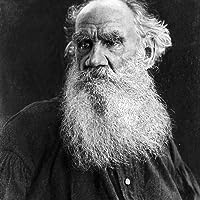
Lev Nikolayevich Tolstoy (Russian: Лев Николаевич Толстой; most appropriately used Liev Tolstoy; commonly Leo Tolstoy in Anglophone countries) was a Russian writer who primarily wrote novels and short stories. Later in life, he also wrote plays and essays. His two most famous works, the novels War and Peace and Anna Karenina, are acknowledged as two of the greatest novels of all time and a pinnacle of realist fiction. Many consider Tolstoy to have been one of the world's greatest novelists. Tolstoy is equally known for his complicated and paradoxical persona and for his extreme moralistic and ascetic views, which he adopted after a moral crisis and spiritual awakening in the 1870s, after which he also became noted as a moral thinker and social reformer. His literal interpretation of the ethical teachings of Jesus, centering on the Sermon on the Mount, caused him in later life to become a fervent Christian anarchist and anarcho-pacifist. His ideas on nonviolent resistance, expressed in such works as The Kingdom of God Is Within You, were to have a profound impact on such pivotal twentieth-century figures as Mohandas Gandhi and Martin Luther King, Jr.

Sir Arthur Ignatius Conan Doyle was born the third of ten siblings on 22 May 1859 in Edinburgh, Scotland. His father, Charles Altamont Doyle, a talented illustrator, was born in England of Irish descent, and his mother, born Mary Foley, was Irish. They were married in 1855. Although he is now referred to as "Conan Doyle", the origin of this compound surname (if that is how he meant it to be understood) is uncertain. His baptism record in the registry of St Mary's Cathedral in Edinburgh gives 'Arthur Ignatius Conan' as his Christian name, and simply 'Doyle' as his surname. It also names Michael Conan as his godfather. At the age of nine Conan Doyle was sent to the Roman Catholic Jesuit preparatory school, Hodder Place, Stonyhurst. He then went on to Stonyhurst College, leaving in 1875. From 1876 to 1881 he studied medicine at the University of Edinburgh. This required that he provide periodic medical assistance in the towns of Aston (now a district of Birmingham) and Sheffield. While studying, Conan Doyle began writing short stories. His first published story appeared in "Chambers' Edinburgh Journal" before he was 20. Following his graduation, he was employed as a ship's doctor on the SS Mayumba during a voyage to the West African coast. He completed his doctorate on the subject of tabes dorsalis in 1885. In 1885 Conan Doyle married Louisa (or Louise) Hawkins, known as "Touie". She suffered from tuberculosis and died on 4 July 1906. The following year he married Jean Elizabeth Leckie, whom he had first met and fallen in love with in 1897. Due to his sense of loyalty he had maintained a purely platonic relationship with Jean while his first wife was alive. Jean died in London on 27 June 1940. Conan Doyle fathered five children. Two with his first wife—Mary Louise (28 January 1889 – 12 June 1976), and Arthur Alleyne Kingsley, known as Kingsley (15 November 1892 – 28 October 1918). With his second wife he had three children—Denis Percy Stewart (17 March 1909 – 9 March 1955), second husband in 1936 of Georgian Princess Nina Mdivani (circa 1910 – 19 February 1987; former sister-in-law of Barbara Hutton); Adrian Malcolm (19 November 1910–3 June 1970) and Jean Lena Annette (21 December 1912–18 November 1997). Conan Doyle was found clutching his chest in the hall of Windlesham, his house in Crowborough, East Sussex, on 7 July 1930. He had died of a heart attack at age 71. His last words were directed toward his wife: "You are wonderful." The epitaph on his gravestone in the churchyard at Minstead in the New Forest, Hampshire, reads: STEEL TRUE BLADE STRAIGHT ARTHUR CONAN DOYLE KNIGHT PATRIOT, PHYSICIAN & MAN OF LETTERS Conan Doyle's house, Undershaw, located in Hindhead, south of London, where he had lived for a decade, had been a hotel and restaurant between 1924 and 2004. It now stands empty while conservationists and Conan Doyle fans fight to preserve it. A statue honours Conan Doyle at Crowborough Cross in Crowborough, where Conan Doyle lived for 23 years. There is also a statue of Sherlock Holmes in Picardy Place, Edinburgh, close to the house where Conan Doyle was born. Series: * Sherlock Holmes

David Herbert Richards Lawrence was an English writer of the 20th century, whose prolific and diverse output included novels, short stories, poems, plays, essays, travel books, paintings, translations, literary criticism, and personal letters. His collected works represent an extended reflection upon the dehumanizing effects of modernity and industrialisation. In them, Lawrence confronts issues relating to emotional health and vitality, spontaneity, human sexuality and instinct. Lawrence's opinions earned him many enemies and he endured official persecution, censorship, and misrepresentation of his creative work throughout the second half of his life, much of which he spent in a voluntary exile he called his "savage pilgrimage." At the time of his death, his public reputation was that of a pornographer who had wasted his considerable talents. E. M. Forster, in an obituary notice, challenged this widely held view, describing him as "the greatest imaginative novelist of our generation." Later, the influential Cambridge critic F. R. Leavis championed both his artistic integrity and his moral seriousness, placing much of Lawrence's fiction within the canonical "great tradition" of the English novel. He is now generally valued as a visionary thinker and a significant representative of modernism in English literature. http://en.wikipedia.org/wiki/D.H.\_Law...

People best know British writer George Robert Gissing for his novels, such as New Grub Street (1891), about poverty and hardship. This English novelist who published twenty-three novels between 1880 and 1903. From his early naturalistic works, he developed into one of the most accomplished realists of the late-Victorian era. Born to lower-middle-class parents, Gissing went to win a scholarship to Owens College, the present-day University of Manchester. A brilliant student, he excelled at university, winning many coveted prizes, including the Shakespeare prize in 1875. Between 1891 and 1897 (his so-called middle period) he produced his best works, which include New Grub Street, Born in Exile , The Odd Women , In the Year of Jubilee , and The Whirlpool . The middle years of the decade saw his reputation reach new heights: some critics count him alongside George Meredith and Thomas Hardy, the best novelists of his day. He also enjoyed new friendships with fellow writers such as Henry James, and H.G. Wells, and came into contact with many other up-and-coming writers such as Joseph Conrad and Stephen Crane.

Librarian Note: There is more than one author in the GoodReads database with this name. British writer Sir Walter Scott popularized and refined a genre of ballads and historical novels; his works include Waverley (1814) and Ivanhoe (1819). Sir Walter Alva Scott created and called a series. Scott arranged the plots and characters so that the reader enters into the lives of great and ordinary persons, caught in violent, dramatic changes. Work of Scott shows the influence of the 18th century Enlightenment. He thought of every basically decent human, regardless of class, religion, politics, or ancestry. A major theme tolerates. They express his theory in the need for social progress that rejects not the traditions of the past. He first portrayed peasant characters sympathetically and realistically and equally justly portrayed merchants, soldiers, and even kings. In central themes, cultures conflict and oppose. Normans and Saxons warred. In The Talisman (1825), Christians and Muslims conflict. He deals with clashes between the new English and the old Scottish culture. Other great include Old Mortality (1816), The Heart of Midlothian (1819), and Saint Ronan's Well (1824). His series includes Rob Roy (1817), A Legend of Montrose (1819), and Quentin Durward (1823). Amiability, generosity, and modesty made Scott popular with his contemporaries. He also famously entertained on a grand scale at Abbotsford, his Scottish estate.

Margaret Lucas Cavendish, Duchess of Newcastle, was the youngest child of a wealthy Essex family. At the age of 20 she became Maid of Honour to Queen Henrietta Maria and traveled with her into Persian exile in 1644. There she married William Cavendish, Marquis (later Duke) of Newcastle. Between 1653 and 1668 she published many books on a wide variety of subjects, including many stories that are now regarded as some of the earliest examples of science fiction.

Librarian Note: There is more than one author in the GoodReads database with this name. See this thread for more information. See also: Serbian: Tomas Man Thomas Mann was a German novelist, short story writer, social critic, philanthropist, essayist, and Nobel Prize laureate in 1929, known for his series of highly symbolic and ironic epic novels and novellas, noted for their insight into the psychology of the artist and the intellectual. His analysis and critique of the European and German soul used modernized German and Biblical stories, as well as the ideas of Goethe, Nietzsche, and Schopenhauer. His older brother was the radical writer Heinrich Mann, and three of his six children, Erika Mann, Klaus Mann and Golo Mann, also became important German writers. When Hitler came to power in 1933, Mann fled to Switzerland. When World War II broke out in 1939, he emigrated to the United States, from where he returned to Switzerland in 1952. Thomas Mann is one of the best-known exponents of the so-called Exilliteratur.

John Griffith Chaney (1876-1916), better known as Jack London, was an American novelist, journalist, and social activist. A pioneer of commercial fiction and American magazines, he was one of the first American authors to become an international celebrity and earn a large fortune from writing. He was also an innovator in the genre that would later become known as science fiction. His most famous works include The Call of the Wild and White Fang, both set in the Klondike Gold Rush, as well as the short stories, "To Build a Fire", "An Odyssey of the North", and "Love of Life". He also wrote about the South Pacific in stories such as "The Pearls of Parlay", and "The Heathen". London was part of the radical literary group, "The Crowd," in San Francisco and a passionate advocate of unionization, workers' rights, and socialism. He wrote several works dealing with these topics, such as his dystopian novel, The Iron Heel, his non-fiction exposé The People of the Abyss, War of the Classes, and Before Adam. London died November 22, 1916, in a sleeping porch in a cottage on his ranch. London's ashes were buried on his property, not far from the Wolf House. The grave is marked by a mossy boulder. The buildings and property were later preserved as Jack London State Historic Park, in Glen Ellen, California.

A close friend of Charles Dickens from their meeting in March 1851 until Dickens' death in June 1870, William Wilkie Collins was one of the best known, best loved, and, for a time, best paid of Victorian fiction writers. But after his death, his reputation declined as Dickens' bloomed. Now, Collins is being given more critical and popular attention than he has received for 50 years. Most of his books are in print, and all are now in e-text. He is studied widely; new film, television, and radio versions of some of his books have been made; and all of his letters have been published. However, there is still much to be discovered about this superstar of Victorian fiction. Born in Marylebone, London in 1824, Collins' family enrolled him at the Maida Hill Academy in 1835, but then took him to France and Italy with them between 1836 and 1838. Returning to England, Collins attended Cole's boarding school, and completed his education in 1841, after which he was apprenticed to the tea merchants Antrobus & Co. in the Strand. In 1846, Collins became a law student at Lincoln's Inn, and was called to the bar in 1851, although he never practised. It was in 1848, a year after the death of his father, that he published his first book, 'The Memoirs of the Life of William Collins, Esq., R.A'., to good reviews. The 1860s saw Collins' creative high-point, and it was during this decade that he achieved fame and critical acclaim, with his four major novels, 'The Woman in White' (1860), 'No Name' (1862), 'Armadale' (1866) and 'The Moonstone' (1868). 'The Moonstone', is seen by many as the first true detective novel T. S. Eliot called it "the first, the longest, and the best of modern English detective novels ..." in a genre invented by Collins and not by Poe.

Marcel Proust was a French novelist, best known for his 3000 page masterpiece À la recherche du temps perdu (Remembrance of Things Past or In Search of Lost Time), a pseudo-autobiographical novel told mostly in a stream-of-consciousness style. Born in the first year of the Third Republic, the young Marcel, like his narrator, was a delicate child from a bourgeois family. He was active in Parisian high society during the 80s and 90s, welcomed in the most fashionable and exclusive salons of his day. However, his position there was also one of an outsider, due to his Jewishness and homosexuality. Towards the end of 1890s Proust began to withdraw more and more from society, and although he was never entirely reclusive, as is sometimes made out, he lapsed more completely into his lifelong tendency to sleep during the day and work at night. He was also plagued with severe asthma, which had troubled him intermittently since childhood, and a terror of his own death, especially in case it should come before his novel had been completed. The first volume, after some difficulty finding a publisher, came out in 1913, and Proust continued to work with an almost inhuman dedication on his masterpiece right up until his death in 1922, at the age of 51. Today he is widely recognized as one of the greatest authors of the 20th Century, and À la recherche du temps perdu as one of the most dazzling and significant works of literature to be written in modern times.

Oscar Fingal O'Flahertie Wills Wilde was an Irish playwright, poet, and author of numerous short stories, and one novel. Known for his biting wit, and a plentitude of aphorisms, he became one of the most successful playwrights of the late Victorian era in London, and one of the greatest celebrities of his day. Several of his plays continue to be widely performed, especially The Importance of Being Earnest. As the result of a widely covered series of trials, Wilde suffered a dramatic downfall and was imprisoned for two years hard labour after being convicted of "gross indecency" with other men. After Wilde was released from prison he set sail for Dieppe by the night ferry. He never returned to Ireland or Britain, and died in poverty.
Vātsyāyana is the name of a Hindu philosopher in the Vedic tradition who is believed to have lived around 3rd century CE in India. His name appears as the author of the Kama Sutra and of Nyāya Sutra Bhāshya, the first commentary on Gotama's Nyāya Sutras. Hardly anything is known about him, although it is believed that his disciples went on his instructions, on the request of the Hindu Kings in the Himalayan range to influence the hill tribals to give up the pagan cult of sacrifices. He is said to have created the legend of Tara among the hill tribes as a tantric goddess. Later as the worship spread to the east Garo hills,the goddess manifest of a 'yoni' goddess Kamakhya was created. His interest in human sexual behavior as a medium of attaining spirituality was recorded in his treatise Kama Sutra. At the close of the Kama Sutra this is what he writes about himself: "After reading and considering the works of Babhravya and other ancient authors, and thinking over the meaning of the rules given by them, this treatise was composed, according to the precepts of the Holy Writ, for the benefit of the world, by Vatsyayana, while leading the life of a religious student at Benares, and wholly engaged in the contemplation of the Deity. This work is not to be used merely as an instrument for satisfying our desires. A person acquainted with the true principles of this science, who preserves his Dharma (virtue or religious merit), his Artha (worldly wealth) and his Kama (pleasure or sensual gratification), and who has regard to the customs of the people, is sure to obtain the mastery over his senses. In short, an intelligent and knowing person attending to Dharma and Artha and also to Kama, without becoming the slave of his passions, will obtain success in everything that he may do."

Upton Beall Sinclair, Jr. was an American author who wrote close to one hundred books in many genres. He achieved popularity in the first half of the twentieth century, acquiring particular fame for his classic muckraking novel, The Jungle (1906). To gather information for the novel, Sinclair spent seven weeks undercover working in the meat packing plants of Chicago. These direct experiences exposed the horrific conditions in the U.S. meat packing industry, causing a public uproar that contributed in part to the passage a few months later of the 1906 Pure Food and Drug Act and the Meat Inspection Act. The Jungle has remained continuously in print since its initial publication. In 1919, he published The Brass Check, a muckraking exposé of American journalism that publicized the issue of yellow journalism and the limitations of the “free press” in the United States. Four years after the initial publication of The Brass Check, the first code of ethics for journalists was created. Time magazine called him "a man with every gift except humor and silence." In 1943, he won the Pulitzer Prize for Fiction. Sinclair also ran unsuccessfully for Congress as a Socialist, and was the Democratic Party nominee for Governor of California in 1934, though his highly progressive campaign was defeated.


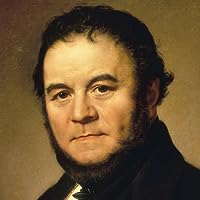
Henri-Marie Beyle, better known by his pen name Stendhal, was a 19th-century French writer. Known for his acute analysis of his characters' psychology, he is considered one of the earliest and foremost practitioners of realism in his two novels Le Rouge et le Noir (The Red and the Black, 1830) and La Chartreuse de Parme (The Charterhouse of Parma, 1839).

This note regards Alexandre Dumas, père, the father of Alexandre Dumas, fils (son). For the son, see Alexandre Dumas fils. Alexandre Dumas, père (French for "father", akin to Senior in English), born Dumas Davy de la Pailleterie, was a French writer, best known for his numerous historical novels of high adventure which have made him one of the most widely read French authors in the world. Many of his novels, including The Count of Monte Cristo, The Three Musketeers, The Man in the Iron Mask, and The Vicomte de Bragelonne were serialized. Dumas also wrote plays and magazine articles, and was a prolific correspondent. Dumas was of Haitian descent and mixed-race. His father, General Thomas-Alexandre Dumas Davy de la Pailleterie, was born in the French colony of Saint-Domingue (present-day Haiti) to Alexandre Antoine Davy de la Pailleterie, a French nobleman, and Marie-Cessette Dumas, a black slave. At age 14 Thomas-Alexandre was taken by his father to France, where he was educated in a military academy and entered the military for what became an illustrious career. Dumas' father's aristocratic rank helped young Alexandre Dumas acquire work with Louis-Philippe, Duke of Orléans, then as a writer, finding early success. He became one of the leading authors of the French Romantic Movement, in Paris. Excerpted from Wikipedia.

Sir Henry Rider Haggard, KBE was an English writer of adventure novels set in exotic locations, predominantly Africa, and the creator of the Lost World literary genre. His stories, situated at the lighter end of the scale of Victorian literature, continue to be popular and influential. He was also involved in agricultural reform and improvement in the British Empire. His breakout novel was King Solomon's Mines (1885), which was to be the first in a series telling of the multitudinous adventures of its protagonist, Allan Quatermain. Haggard was made a Knight Bachelor in 1912 and a Knight Commander of the Order of the British Empire in 1919. He stood unsuccessfully for Parliament as a Conservative candidate for the Eastern division of Norfolk in 1895. The locality of Rider, British Columbia, was named in his memory.

Librarian Note: There is more than one author by this name in the Goodreads database. Samuel Langhorne Clemens, better known by his pen name Mark Twain, was an American author and humorist. He is noted for his novels Adventures of Huckleberry Finn (1885), called "the Great American Novel", and The Adventures of Tom Sawyer (1876). Twain grew up in Hannibal, Missouri, which would later provide the setting for Huckleberry Finn and Tom Sawyer. He apprenticed with a printer. He also worked as a typesetter and contributed articles to his older brother Orion's newspaper. After toiling as a printer in various cities, he became a master riverboat pilot on the Mississippi River, before heading west to join Orion. He was a failure at gold mining, so he next turned to journalism. While a reporter, he wrote a humorous story, "The Celebrated Jumping Frog of Calaveras County," which proved to be very popular and brought him nationwide attention. His travelogues were also well-received. Twain had found his calling. He achieved great success as a writer and public speaker. His wit and satire earned praise from critics and peers, and he was a friend to presidents, artists, industrialists, and European royalty. However, he lacked financial acumen. Though he made a great deal of money from his writings and lectures, he squandered it on various ventures, in particular the Paige Compositor, and was forced to declare bankruptcy. With the help of Henry Huttleston Rogers, however, he eventually overcame his financial troubles. Twain worked hard to ensure that all of his creditors were paid in full, even though his bankruptcy had relieved him of the legal responsibility. Born during a visit by Halley's Comet, he died on its return. He was lauded as the "greatest American humorist of his age", and William Faulkner called Twain "the father of American literature". Excerpted from Wikipedia. AKA: Μαρκ Τουαίν (Greek)

There is more than one author with this name Herman Melville was an American novelist, short story writer, essayist, and poet. His first two books gained much attention, though they were not bestsellers, and his popularity declined precipitously only a few years later. By the time of his death he had been almost completely forgotten, but his longest novel, Moby Dick—largely considered a failure during his lifetime, and most responsible for Melville's fall from favor with the reading public—was rediscovered in the 20th century as one of the chief literary masterpieces of both American and world literature.

Marcus Aurelius Antoninus Augustus (often referred to as "the wise") was Emperor of the Roman Empire from 161 to his death in 180. He was the last of the "Five Good Emperors", and is also considered one of the more important Stoic philosophers. His two decades as emperor were marked by near continual warfare. He was faced with a series of invasions from German tribes, and by conflicts with the Parthian Empire in the east. His reign also had to deal with an internal revolt in the east, led by Avidius Cassius. Marcus Aurelius' work Meditations, written in Greek while on campaign between 170 and 180, is still revered as a literary monument to a government of service and duty and has been praised for its "exquisite accent and its infinite tenderness."

Joseph Rudyard Kipling was a journalist, short-story writer, poet, and novelist. Kipling's works of fiction include The Jungle Book (1894), Kim (1901), and many short stories, including The Man Who Would Be King (1888). His poems include Mandalay (1890), Gunga Din (1890), The Gods of the Copybook Headings (1919), The White Man's Burden (1899), and If— (1910). He is regarded as a major innovator in the art of the short story; his children's books are classics of children's literature; and one critic described his work as exhibiting "a versatile and luminous narrative gift". Kipling was one of the most popular writers in the United Kingdom, in both prose and verse, in the late 19th and early 20th centuries. Henry James said: "Kipling strikes me personally as the most complete man of genius (as distinct from fine intelligence) that I have ever known." In 1907, at the age of 41, he was awarded the Nobel Prize in Literature, making him the first English-language writer to receive the prize, and its youngest recipient to date. He was also sounded out for the British Poet Laureateship and on several occasions for a knighthood, both of which he declined. Awarded the Nobel Prize in Literature in 1907 "in consideration of the power of observation, originality of imagination, virility of ideas and remarkable talent for narration which characterize the creations of this world-famous author." Kipling kept writing until the early 1930s, but at a slower pace and with much less success than before. On the night of 12 January 1936, Kipling suffered a haemorrhage in his small intestine. He underwent surgery, but died less than a week later on 18 January 1936 at the age of 70 of a perforated duodenal ulcer. Kipling's death had in fact previously been incorrectly announced in a magazine, to which he wrote, "I've just read that I am dead. Don't forget to delete me from your list of subscribers."

The novels Lélia (1833) and Consuelo (1842) among works, plays, and essays of French writer George Sand, pen name of Amandine Aurore Lucie Dupin, baroness Dudevant, concern the freedom and independence of women. People recognize this best known, most popular memoirist and journalist, more renowned in Europe in her lifetime than Victor Hugo and Honoré de Balzac in England in the 1830s and 1840s, People recognize Sand of the most notable writers of the Romantic era of Europe. People celebrated this controversial life, which oftentimes overshadowed her creative production. Known for its blend of romance and realism, her effortless spontaneity proliferated without sacrificing style and form. Sand stated the primary happiness in life in love and so focused on relationships in most of her novels as she tackled the complexities of politics, society, and gender. People best know Sand for bold statements about the rights in 19th-century society, her exploration of contemporary social and philosophical issues, and her depiction of the lives and language of provincials. Set of influences of each period of her literary career focused on specific themes. Her rustic perhaps truly represented her form as an author. Her first period reflected her rebellion against the bonds of marriage and deal largely with the relationships between men and women. English poet Lord Byron and French philosopher Jean-Jacques Rousseau clearly influenced Sand with romantic novels, full of passionate personal revolt and ardent feminism, attitudes that went against societal conventions and outraged her early British and American critics. These extremely successful early Indiana , Lelia, and Jacques (1834) established Sand as an important literary voice for her generation. Pastorals, which depict rural scenes and peasant characters, form the last phase of her career. Her love of the French countryside and her sympathy with the peasants inspired La Mare au Diable (1846) and Francis the Waif (1847–1848), set in Berry. Gentle idealism distinguished these realistic pastorals in background detail; many critics finest considered them her finest. After her pastoral period, she continued until her death, but people remember few today. Unconventional life of George Sand in numerous ways: she fondly dressed in clothing of men to gain access to those parts of Paris, not decorous for ladies to go. She smoked in public to scandalize Parisian society. Lust affairs of Sand included high-profile relationships with the composer Frédéric François Chopin, the novelist Prosper Mérimée, and the poet and playwright Louis Charles Alfred de Musset.

Howard Phillips Lovecraft, of Providence, Rhode Island, was an American author of horror, fantasy and science fiction. Lovecraft's major inspiration and invention was cosmic horror: life is incomprehensible to human minds and the universe is fundamentally alien. Those who genuinely reason, like his protagonists, gamble with sanity. Lovecraft has developed a cult following for his Cthulhu Mythos, a series of loosely interconnected fictions featuring a pantheon of human-nullifying entities, as well as the Necronomicon, a fictional grimoire of magical rites and forbidden lore. His works were deeply pessimistic and cynical, challenging the values of the Enlightenment, Romanticism and Christianity. Lovecraft's protagonists usually achieve the mirror-opposite of traditional gnosis and mysticism by momentarily glimpsing the horror of ultimate reality. Although Lovecraft's readership was limited during his life, his reputation has grown over the decades. He is now commonly regarded as one of the most influential horror writers of the 20th Century, exerting widespread and indirect influence, and frequently compared to Edgar Allan Poe. — Wikipedia

Elizabeth Cleghorn Gaskell, née Stevenson (29 September 1810 – 12 November 1865), often referred to simply as Mrs. Gaskell, was an English novelist and short story writer during the Victorian era. Her novels offer a detailed portrait of the lives of many strata of society, including the very poor, and as such are of interest to social historians as well as lovers of literature. AKA: Елізабет Гаскелл (Ukrainian)

Russian writer Aleksei Maksimovich Peshkov (Russian: Алексей Максимович Пешков) supported the Bolshevik revolution of 1917 and helped to develop socialist realism as the officially accepted literary aesthetic; his works include The Life of Klim Samgin (1927-1936), an unfinished cycle of novels. This Soviet author founded the socialist realism literary method and a political activist. People also nominated him five times for the Nobel Prize in literature. From 1906 to 1913 and from 1921 to 1929, he lived abroad, mostly in Capri, Italy; after his return to the Soviet Union, he accepted the cultural policies of the time.